Third-dose COVID-19 vaccine studies give organ transplant recipients hope
Advertisement
Read this article for free:
or
Already have an account? Log in here »
To continue reading, please subscribe:

Digital Subscription
One year of digital access for only $205*
- Enjoy unlimited reading on winnipegfreepress.com
- Read the E-Edition, our digital replica newspaper
- Access News Break, our award-winning app
- Play interactive puzzles
*First annual payment billed as $205.00 + GST for one year. This annual subscription will automatically renew at $233.00 + GST every 52 weeks (10% off the regular annual price of $259.35). Offer available to new and qualified returning subscribers only. Cancel any time.
To continue reading, please subscribe:
Add Free Press access to your Brandon Sun subscription for only an additional
$1 for the first 4 weeks*
- Enjoy unlimited reading on winnipegfreepress.com
- Read the E-Edition, our digital replica newspaper
- Access News Break, our award-winning app
- Play interactive puzzles
*Your next Brandon Sun subscription payment will increase by $1.00 and you will be charged $17.95 plus GST for four weeks. After four weeks, your payment will increase to $24.95 plus GST every four weeks.
Read unlimited articles for free today:
or
Already have an account? Log in here »
Hey there, time traveller!
This article was published 28/06/2021 (1906 days ago), so information in it may no longer be current.
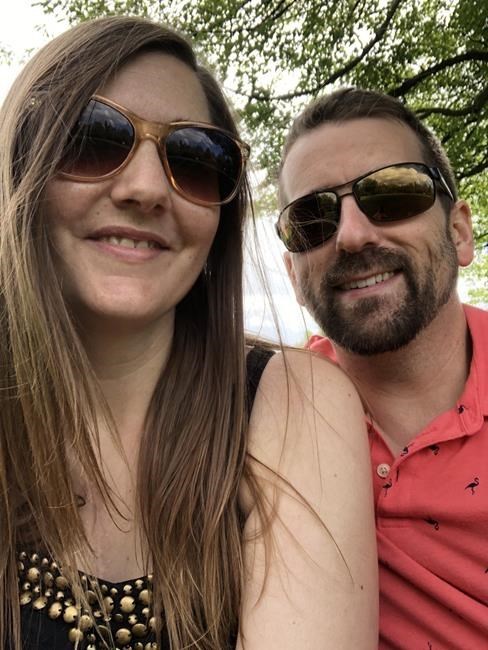
It’s been more than one month since Tina Proulx received a second dose of a COVID-19 vaccine. But while other fully vaccinated Canadians venture out from their pandemic cocoons, the double-lung transplant recipient mostly stays put.
Proulx, who takes medication that keeps her body from rejecting her new lungs while suppressing her immune system, isn’t sure how much protection she gets from two jabs of a COVID-19 vaccine.
But she hopes there’ll be a way to boost that immunity in the future.
Recent small studies from the United States and France suggest that while regular, two-dose series of mRNA vaccines don’t produce many COVID-19 antibodies in organ transplant recipients, a third dose can elevate antibody levels in some, potentially offering higher levels of protection. Toronto’s University Health Network is conducting its own randomized trial study, with results expected next month.
Canada’s National Advisory Committee on Immunization currently recommends a two-dosed series, preferably of an mRNA vaccine, for immunosuppressed individuals. But the agency said in a recent statement it “continues to closely monitor emerging evidence.”
Proulx said just knowing scientists are evaluating how vaccines work in immunocompromised people gives her hope. And she wouldn’t hesitate to get an extra dose if Health Canada authorized it.
“I’ll take a third, a fourth, a fifth, I’ll take as many doses as they need me to,” the Ottawa resident said. “Anything to get that same confidence everybody else has.”
Proulx, now 38, was diagnosed at 19 with pulmonary hypertension, a condition in which blood vessels in the lungs are narrowed, causing the heart to work harder to circulate blood. She lived with the condition for years before receiving a new set of lungs in 2015.
When COVID-19 first started circulating last year, Proulx’s doctor told her there was a 30 to 50 per cent chance she wouldn’t survive if she caught the virus. And while vaccines have helped slow transmission, Proulx said knowing she’s likely not as protected as others gives her “a lot of concerns.”
Dr. Deepali Kumar, a transplant infectious disease physician at UHN, said that’s a worry facing many of her patients, who need to be more cautious until scientists get a clearer understanding of vaccine effectiveness among the immunocompromised.
The U.S. study, which involved just 30 participants who received different vaccines at varying intervals, showed eight had no antibodies after two doses, but they developed some following a third shot. Six others who had some antibody activity after a two-dose series, saw those levels amplified by an extra jab.
The French study, which doled out Pfizer-BioNTech on a set schedule, saw boosts in antibody prevalence among 67 of 99 transplant recipients one month after their third dose.
While the studies show promise, Kumar said more research is needed.
UHN’s trial involves 120 participants, 60 of which received a third Moderna vaccine two months after dose 2, while the other half got a placebo. Kumar hopes the systematic approach to UHN’s study will offer additional insight.
But, she added, antibody levels don’t necessarily reflect how protected a person is.
“That’s the big gap,” Kumar said.
“It would make sense that if antibodies are lower, protection is also lower. But one of the problems is … we don’t have an antibody level to say, ‘OK this level will protect you.’ We don’t have that number.”
COVID-19 vaccines also seem to generate T-cell responses, Kumar said, and those, like antibodies, help stave off the virus.
T-cell levels are harder to measure, said Steven Kerfoot, an immunologist with Western University, and most studies won’t include them.
“A real immune response is large and complex,” he said. “Your T-cells are different than my T-cells. So it’s not a simple test.”
Kerfoot said that while the third-dose studies showed boosted antibodies among some participants, it didn’t work for everyone. That means many will likely still be susceptible even after a potential third dose.

Proulx said organ transplant recipients have always had to rely on those around them to protect themselves, noting that COVID-19 community transmission drops as more people are vaccinated.
While Proulx’s life hasn’t changed much since she got her second dose last month — she and husband Joel still rely on curbside pick-up rather than venturing into stores or restaurants — she’s looking forward to being able to see friends and hug her mom, which she hasn’t done in 16 months.
As provinces start to reopen, Proulx said she’s not as concerned as she was when previous lockdowns were lifted.
“It has been very, very difficult watching other people move on when we’ve basically been in Phase 1 (of restrictions) this entire time,” she said. “But there are a lot of people vaccinated now and if we can control the spread amongst everybody else, that puts transplant patients in a better place.”
This report by The Canadian Press was first published June 28, 2021.