EXPLAINER: What’s the history of the Olympics protest rule?

Advertisement

Advertise with us

TOKYO (AP) — The simple act of taking a knee felt like something more monumental when it happened on Olympic soccer pitches in Japan on the opening night of action.

Read this article for free:


or

Already have an account? Log in here »

To continue reading, please subscribe:

Subscribe and receive a limited-edition Free Press branded hat or tote.

Digital Subscription

One year of digital access for only $205*

  • Enjoy unlimited reading on winnipegfreepress.com
  • Read the E-Edition, our digital replica newspaper
  • Access News Break, our award-winning app
  • Play interactive puzzles

*First annual payment billed as $205.00 + GST for one year. This annual subscription will automatically renew at $233.00 + GST every 52 weeks (10% off the regular annual price of $259.35). Offer available to new and qualified returning subscribers only. Cancel any time.

To continue reading, please subscribe:

Add Free Press access to your Brandon Sun subscription for only an additional

$1 for the first 4 weeks*

  • Enjoy unlimited reading on winnipegfreepress.com
  • Read the E-Edition, our digital replica newspaper
  • Access News Break, our award-winning app
  • Play interactive puzzles
Start now

*Your next Brandon Sun subscription payment will increase by $1.00 and you will be charged $17.95 plus GST for four weeks. After four weeks, your payment will increase to $24.95 plus GST every four weeks.

Hey there, time traveller!
This article was published 22/07/2021 (1852 days ago), so information in it may no longer be current.

TOKYO (AP) — The simple act of taking a knee felt like something more monumental when it happened on Olympic soccer pitches in Japan on the opening night of action.

Players from the United States, Sweden, Chile, Britain and New Zealand women’s teams went to a knee before their games Wednesday night, anti-racism gestures the likes of which had not been seen before on the Olympic stage. They figured to be the first of many of these sort of demonstrations over the three-week stay in Tokyo.

The Olympic rule banning such demonstrations at the Games has been hotly debated and contested for decades, and those issues reached a flashpoint over the past two years. What resulted were changes in the rules, and the willingness of some sports organizations to enforce them.

FILE - In this Oct. 17, 2018, file photo, a statue in honor of former Olympians Tommie Smith, left, and John Carlos is seen on the campus of San Jose State University in San Jose, Calif. Smith and Carlos raised their black-gloved fists while their national anthem played during the 200-meters medals ceremony at the Mexico City Olympics in 1968. Rule 50 of the IOC charter states: “No kind of demonstration or political, religious or racial propaganda is permitted in any Olympic sites, venues or other areas.” (AP Photo/Tony Avelar, File)

How have protests and demonstrations at the Games evolved over the years? Here’s a brief rundown.

WHAT: The Olympics have always billed themselves as a nonpolitical entity designed to bring countries together to celebrate sports and international unity. One of the best-recognized symbols of that nonpolitical ideal is a prohibition of “propaganda” at the Games. Rule 50 of the IOC charter states: “No kind of demonstration or political, religious or racial propaganda is permitted in any Olympic sites, venues or other areas.”

WHO: The ideals of the rule were most notably put to the test before it was officially enshrined in the Olympic charter. American sprinters Tommie Smith and John Carlos raised their black-gloved fists while their national anthem played during the 200-meters medals ceremony at the Mexico City Olympics in 1968. They would not only eventually be sent home for disregarding the ban on demonstrations, but ended up being ostracized from the Olympic movement for nearly a half century. Not until 2016 did the U.S. Olympic Committee bring them to an official event. Not until 2019 did it enshrine them in its hall of fame.

WHEN: The basic structure of Rule 50 was written into the Olympic charter in 1975. At that time, it was actually part of Rule 55 and it stated: “Every kind of demonstration or propaganda, whether political, religious or racial, in the Olympic areas is forbidden.” It would be refined and rewritten over the years. Only a few months ago, in the face of mounting pressure to do away with the rule, the IOC made its latest tweak, saying it would allow some demonstrations but only “prior to the start of competitions” and not on the medals podium. The IOC has also given discretion to the international agencies that run the individual sports on how — and whether — to enforce the bans.

WHERE: The rule became a sticking point two summers ago, a half a world away from Tokyo, in Lima, Peru. It was on the medals stands at the Pan-American Games that U.S. hammer thrower Gwen Berry raised her fist and U.S. fencer Race Imboden took a knee. They both received letters from the U.S. Olympic and Paralympic Committee that put them on a yearlong probation and, with the Tokyo Games scheduled for the following year, sent a message to other American athletes who were thinking of doing anything similar. The coronavirus pandemic pushed the Games back by 12 months, and the killing of George Floyd in the United States — and the activism that followed — prompted a thorough rethinking of the rule. The USOPC decided it would no longer sanction athletes who violated Rule 50, thus placing pressure on the IOC, which often depends on the national committees to enforce its rules at the Games.

WHY: While the USOPC was undergoing its review, the IOC also tasked its athletes commission to rethink the rule. The commission sent out a worldwide survey that found broad support for the rule as it was written. Following that lead, the IOC chose to keep the rule largely intact. It set up the possibility for tension throughout the Games in Tokyo, where, in addition to the soccer teams, Berry and U.S. sprinter Noah Lyles had telegraphed themselves as among the athletes to watch. Lyles wore a black glove and raised his fist at the starting line at Olympic trials, while Berry turned away from the flag during a playing of the national anthem.
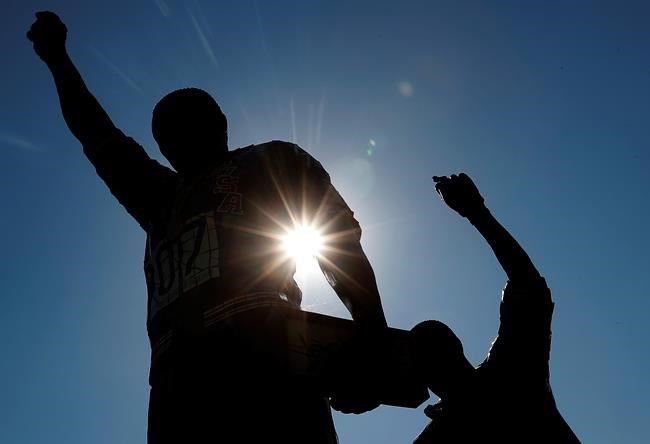
FILE - In this Oct. 17, 2018, file photo, a statue in honor of former Olympians Tommie Smith, left, and John Carlos is seen on the campus of San Jose State University in San Jose, Calif. Smith and Carlos raised their black-gloved fists while their national anthem played during the 200-meters medals ceremony at the Mexico City Olympics in 1968. Rule 50 of the IOC charter states: “No kind of demonstration or political, religious or racial propaganda is permitted in any Olympic sites, venues or other areas.” (AP Photo/Tony Avelar, File)

___

More AP Olympics: https://apnews.com/hub/2020-tokyo-olympics and https://twitter.com/AP_Sports

Report Error Submit a Tip

More Stories

RCMP searching for missing woman from Split Lake

1 minute read Saturday, Aug. 15, 2026

Thompson RCMP are asking for help from the public to find a 37-year-old woman who has not been heard from since late July.

Melanie Beardy, from Split Lake First Nation, was last in contact on July 26, said an RCMP news release Saturday. Beardy, who was in Thompson, was reported missing last Sunday and RCMP said both police and her family are worried for her well-being.

Attempts to find Beardy have been unsuccessful, said RCMP.

She’s described as 5’4 with a large build and long, black hair usually worn in a ponytail, said Mounties. She has a tattoo on her chest that reads: “Elvis,” and has a tattoo of a dreamcatcher on her left forearm.

Foster mom pleads guilty to assault that left six-year-old-girl paralyzed

Dean Pritchard 4 minute read Preview

Foster mom pleads guilty to assault that left six-year-old-girl paralyzed

Dean Pritchard 4 minute read Friday, Aug. 14, 2026

A Winnipeg foster mother has admitted to violently assaulting her ill foster daughter and leaving her paralyzed after the girl resisted the woman’s efforts to provide her with medication, a court has heard.

Marilyn Keno, 26, pleaded guilty Friday to one count of aggravated assault.

Keno remains in custody and will be sentenced at a later date following the completion of a court-ordered pre-sentence report.

The maximum sentence for aggravated assault is 14 years in prison. Crown attorney Alanna Littman and defence lawyer Jeremy Kostiuk did not disclose what sentences they will be recommending.

Read
Friday, Aug. 14, 2026

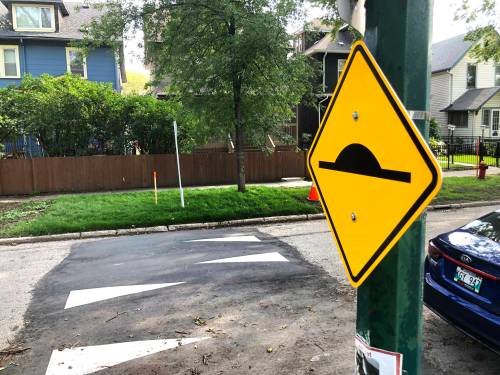
West Kildonan Industrial residents call for speed bumps after child hit by truck

Morgan Modjeski 3 minute read Preview

West Kildonan Industrial residents call for speed bumps after child hit by truck

Morgan Modjeski 3 minute read Saturday, Aug. 15, 2026

Residents in the West Kildonan Industrial neighbourhood are calling on the city to install speed bumps in their area after a child was hit and dragged by a vehicle Thursday.

Katelyn Bemister lives near the area where the child — who was hospitalized as a result of the incident and has been upgraded to stable condition — was struck. She says people frequently speed in the area.

“They’re going really fast, and they’re not really paying attention at all to the pedestrians in the area,” says Bemister.

In video supplied to the Free Press by a resident, the child can be seen riding a bike down a sidewalk along the 500 block of North Point Boulevard.

Read
Saturday, Aug. 15, 2026

Men’s recovery home dedicated to ‘homeless hero’ Faron Hall’s memory

Scott Billeck 14 minute read Preview

Men’s recovery home dedicated to ‘homeless hero’ Faron Hall’s memory

Scott Billeck 14 minute read Friday, Aug. 14, 2026

Faron Hall never got the chance to begin recovery. Once heralded as Winnipeg’s “homeless hero” after twice plunging into the Red River to save strangers from drowning, Hall told St. Boniface Street Links executive director Marion Willis shortly before his death in 2014 that he wanted help for his alcoholism.

Read
Friday, Aug. 14, 2026

Rise of social media reflects rise of self-promotion — to the detriment of genuine storytelling

Reviewed by Matt Henderson 4 minute read Preview

Rise of social media reflects rise of self-promotion — to the detriment of genuine storytelling

Reviewed by Matt Henderson 4 minute read Saturday, Aug. 15, 2026

A conversation is overheard between two people; one congratulates the other on their success, evident through countless posts on LinkedIn, but the other confesses the prolific aggrandizement is due to slumping success.

A young man on an airplane spends three hours poring over selfies taken on a vacation, zooming in on his biceps and using AI to retouch photos before posting on Instagram.

Anonymous and cowardly trolls on Reddit attempt to end another person’s career.

All this “storytelling” was observed in one day by this reviewer.

Read
Saturday, Aug. 15, 2026

Impaired driving victim honoured

Morgan Modjeski 5 minute read Preview

Impaired driving victim honoured

Morgan Modjeski 5 minute read Saturday, Aug. 15, 2026

Ten years after he was killed in a collision involving an impaired driver in 2016, Robbie Anderson’s name has been added to MADD Canada’s Manitoba Memorial honouring those killed in drunk and drug-impaired-related crashes.

His older brother Chris Anderson, was one of two dozen people who gathered at the Glen Eden Funeral Home and Cemetery in West St. Paul Saturday to remember their loved ones, 86 victims whose names are etched into the granite monument near the heart of the graveyard.

“It’s heavy,” said Anderson when asked what it was like to be part of the ceremony and see his brother’s name added. “It’s been something I’ve been thinking about for a while.”

Grateful for MADD’s work and its efforts to honour Robbie, who was 27 when he died, Anderson said his brother, represented the “absolute best of us.”

Read
Saturday, Aug. 15, 2026