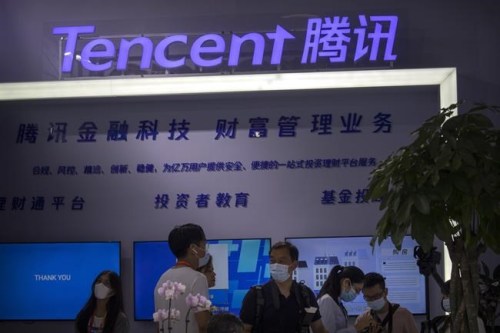
China’s Tencent ordered to end exclusive music contracts
Advertisement
Read this article for free:
or
Already have an account? Log in here »
To continue reading, please subscribe:

Digital Subscription
One year of digital access for only $205*
- Enjoy unlimited reading on winnipegfreepress.com
- Read the E-Edition, our digital replica newspaper
- Access News Break, our award-winning app
- Play interactive puzzles
*First annual payment billed as $205.00 + GST for one year. This annual subscription will automatically renew at $233.00 + GST every 52 weeks (10% off the regular annual price of $259.35). Offer available to new and qualified returning subscribers only. Cancel any time.
To continue reading, please subscribe:
Add Free Press access to your Brandon Sun subscription for only an additional
$1 for the first 4 weeks*
- Enjoy unlimited reading on winnipegfreepress.com
- Read the E-Edition, our digital replica newspaper
- Access News Break, our award-winning app
- Play interactive puzzles
*Your next Brandon Sun subscription payment will increase by $1.00 and you will be charged $17.95 plus GST for four weeks. After four weeks, your payment will increase to $24.95 plus GST every four weeks.
Read unlimited articles for free today:
or
Already have an account? Log in here »
Hey there, time traveller!
This article was published 23/07/2021 (1885 days ago), so information in it may no longer be current.
BEIJING (AP) — Internet giant Tencent was ordered by regulators to end exclusive contracts with music copyright holders, adding to increased enforcement of anti-monopoly and other rules as Beijing tightens control over booming online industries.
Tencent controls more than 80% of “exclusive music library resources” following its 2016 acquisition of China Music Group, the State Administration for Market Regulation said Saturday. It said that gives Tencent the ability to get better terms than competitors receive or to limit the ability of rivals to enter the market.
Tencent Holdings Ltd., best known abroad for its WeChat messaging service, has a sprawling business empire that includes games, music and video. It is among the world’s 10 most valuable publicly traded companies, with a stock market value of $680 billion.

In order to “restore market competition,” Tencent must end exclusive music copyright contracts within 30 days, the market regulator said in a statement. The company is barred from requiring providers to give better terms than competitors receive.
Tencent promised on its social media account to “conscientiously abide by the decision.”
Regulators are stepping up enforcement of anti-monopoly, data security, financial and other rules against Tencent, e-commerce giant Alibaba Group and other companies that dominate entertainment, retail and other industries.
The enforcement has hurt the stock market value of some companies. Shares in ride-hailing service Didi Global Inc., which made its U.S. stock market debut last month, are down 21% after regulators announced a probe of its “network security” and ordered the company to overhaul handling of customer data.

Regulators have publicly warned major companies not to use their market dominance to keep out new competitors.
Tencent was blocked by regulators on July 10 from combining its game platforms Douyu and Huya on the grounds that might reduce competition.
On Wednesday, the Chinese internet regulator reprimanded Tencent, Alibaba, microblog platform Sina Weibo and e-commerce service Xiaohongshu for allowing sexually suggestive stickers or short videos of children to be distributed on their services.
___
AP researcher Henry Hou contributed to this report.