

Canada’s attorney general says U.S. has ‘very high’ standards on extradition evidence
Advertisement
Read this article for free:
or
Already have an account? Log in here »
To continue reading, please subscribe:
Digital Subscription
One year of digital access for only $1.44 a week*
- Enjoy unlimited reading on winnipegfreepress.com
- Read the E-Edition, our digital replica newspaper
- Access News Break, our award-winning app
- Play interactive puzzles
*Billed as $5.77 plus GST every four weeks. After 52 weeks, price increases to the regular rate of $19.95 plus GST every four weeks. Offer available to new and qualified returning subscribers only. Cancel any time.
To continue reading, please subscribe:
Add Free Press access to your Brandon Sun subscription for only an additional
$1 for the first 4 weeks*
- Enjoy unlimited reading on winnipegfreepress.com
- Read the E-Edition, our digital replica newspaper
- Access News Break, our award-winning app
- Play interactive puzzles
*Your next Brandon Sun subscription payment will increase by $1.00 and you will be charged $17.95 plus GST for four weeks. After four weeks, your payment will increase to $24.95 plus GST every four weeks.
Read unlimited articles for free today:
or
Already have an account? Log in here »
Hey there, time traveller!
This article was published 05/08/2021 (1903 days ago), so information in it may no longer be current.
VANCOUVER – The actions of the United States in the extradition case against Huawei executive Meng Wanzhou should not be “questioned lightly”, says a lawyer representing Canada’s attorney general.
Monika Rahman responded Thursday in British Columbia Supreme Court to arguments made by Meng’s lawyers who say the United States mischaracterized and omitted evidence to establish a case of fraud.
The United States has a “very high” standard and “discretion” on what evidence to put forth when making its case for extradition, Rahman said.
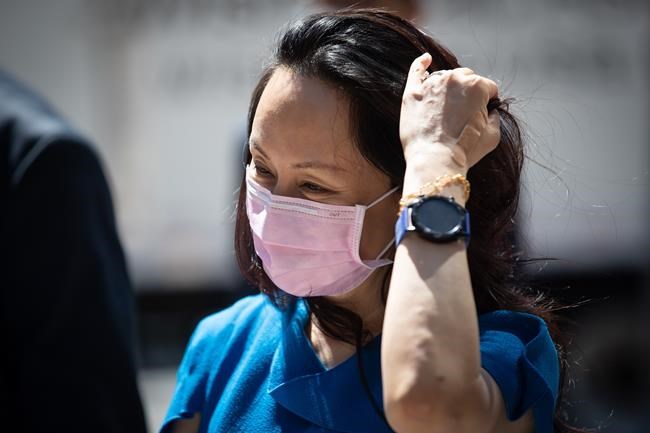
The court “cannot possibly grant a stay of proceedings,” she said, noting there is “no evidence of anything other than what is presumed in extradition hearings.”
Lawyers for the attorney general have told Associate Chief Justice Heather Holmes in previous arguments that the threshold for an abuse of process claim set out by the Supreme Court of Canada says there must be prejudice to the accused’s right to a fair trial or to the integrity of the justice system.
Meng was arrested while passing through Vancouver’s airport in December 2018. She remains free on bail while the hearing is underway.
Her lawyers have argued in court that the United States has misused the extradition process and the case against her should be stayed.
She is accused of misrepresenting Huawei’s relationship with technologies firm Skycom during a 2013 meeting with HSBC, putting the bank at risk of violating U.S. sanctions against Iran.
Both Meng and Huawei deny the charges.
The argument is expected to be the final arguments from Meng’s lawyers on alleged misconduct before the actual committal or extradition hearing that is scheduled for next week.
Thursday’s arguments centred around a PowerPoint presentation Meng showed to HSBC executives that said Huawei was conscious of the sanctions and was complying. The attorney general contends that the presentation was designed to falsely distance Huawei from Skycom.
Meng’s lawyers said the United States cherry-picked information from the PowerPoint and omitted slides in the presentation where she described Huawei as having a “normal and controllable” relationship with Skycom.
Rahman told the court that the word “controllable” was open to interpretation.
In written submissions to the court, the attorney general says any meaning from the ambiguous word “controllable” must be made in the context of the entire presentation and there is no basis to conclude that the United States misled the court.
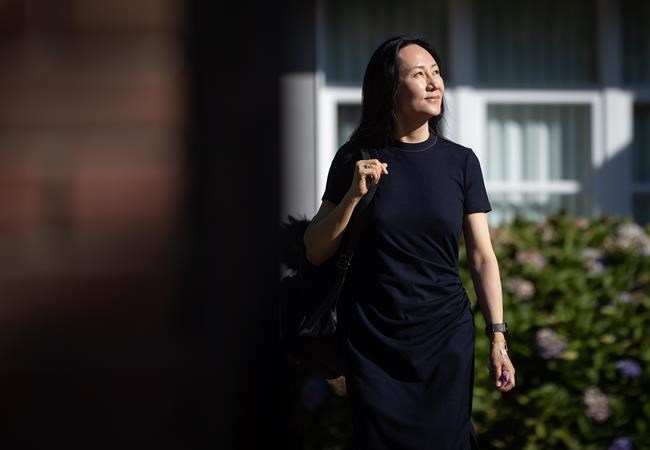
“There is no evidentiary foundation for a finding of misconduct or other abusive circumstances in relation to the requesting state’s summary of the PowerPoint presentation,” it says.
There is no evidence that the records of the case were “prepared in such a careless and cavalier manner” and the summary is “designed to meet a requesting state’s limited burden on committal,” it says.
“A summary, by its nature, is a selection,” says the document.
“The mere absence of certain evidence from the summary does not establish misconduct. Omission of irrelevant evidence cannot establish misconduct, much less justify a stay of proceedings.”
In July, Holmes ruled against allowing documents obtained by Meng’s legal team from HSBC through a court agreement in Hong Kong that include internal email chains and spreadsheets.
Documents presented to the court by Meng’s lawyers and released to the media on Wednesday say the United States is a “repeat misleader,” that it mischaracterized evidence and omitted other information in an effort to establish a case of fraud.
Rahman told the court the United States acted honourably and while there is a duty of “candour” there is no obligation to include all the evidence.
This report by The Canadian Press was first published Aug. 5, 2021.