Mixed bag: Erratic Pandemic Olympics wind to a nuanced end
Advertisement
Read this article for free:
or
Already have an account? Log in here »
To continue reading, please subscribe:

Digital Subscription
One year of digital access for only $205*
- Enjoy unlimited reading on winnipegfreepress.com
- Read the E-Edition, our digital replica newspaper
- Access News Break, our award-winning app
- Play interactive puzzles
*First annual payment billed as $205.00 + GST for one year. This annual subscription will automatically renew at $233.00 + GST every 52 weeks (10% off the regular annual price of $259.35). Offer available to new and qualified returning subscribers only. Cancel any time.
To continue reading, please subscribe:
Add Free Press access to your Brandon Sun subscription for only an additional
$1 for the first 4 weeks*
- Enjoy unlimited reading on winnipegfreepress.com
- Read the E-Edition, our digital replica newspaper
- Access News Break, our award-winning app
- Play interactive puzzles
*Your next Brandon Sun subscription payment will increase by $1.00 and you will be charged $17.95 plus GST for four weeks. After four weeks, your payment will increase to $24.95 plus GST every four weeks.
Read unlimited articles for free today:
or
Already have an account? Log in here »
Hey there, time traveller!
This article was published 08/08/2021 (1864 days ago), so information in it may no longer be current.
TOKYO (AP) — It began with a virus and a yearlong pause. It ended with a typhoon blowing through and, still, a virus. In between: just about everything.
The Tokyo Olympics, christened with “2020” but held in mid-2021 after being interrupted for a year by the coronavirus, glided to their conclusion in a COVID-emptied stadium Sunday night as an often surreal mixed bag for Japan and for the world.
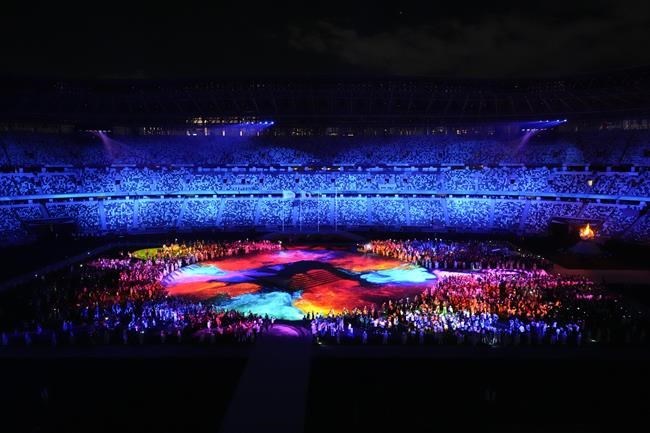
A rollicking closing ceremony with the theme “Worlds We Share” — an optimistic but ironic notion at this human moment — featured everything from stunt bikes to intricate light shows as it tried to convey a “celebratory and liberating atmosphere” for athletes after a tense two weeks. It was set to pivot to a live feed from Paris, host of the 2024 Summer Games. And with that, the strangest Olympic Games on record began closing their books for good.
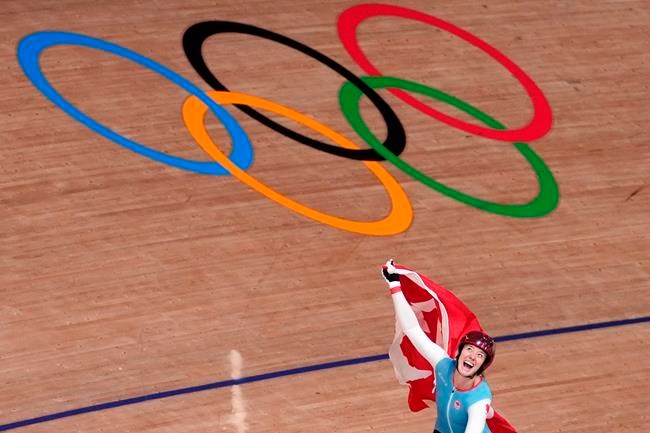
Held in the middle of a resurging pandemic, rejected by many Japanese and plagued by months of administrative problems, these Games presented logistical and medical obstacles like no other, offered up serious conversations about mental health — and, when it came to sport, delivered both triumphs and a few surprising shortfalls.
From the outset, expectations were middling at best, apocalyptic at worst. Even Thomas Bach, president of the International Olympic Committee, said he’d worried that these could “become the Olympic Games without a soul.” But, he said Friday, “what we have seen here is totally different.”
“You could experience and feel and see and hear how much they enjoyed to be together here again,” Bach said.
At these Games, even the word “together” was fraught. Spectators were kept at bay. A patchwork of rules kept athletes masked and apart for much of medal ceremonies, yet saw them swapping bodily fluids in some venues. That was less about being remiss than about being real: Risks that could be mitigated were, but at the same time events had to go on.
Athletes’ perseverance became a central story. Mental health claimed bandwidth as never before, and athletes revealed their stories and struggles in vulnerable, sometimes excruciating fashion.
Japan’s fourth Olympics, held 57 years after the 1964 Games reintroduced the country to the world after its World War II defeat, represented a planet trying to come together at a historical moment when disease and circumstance and politics had splintered it apart.
The closing ceremony Sunday reflected that — and, at times, nudged the proceedings toward a sci-fi flavor. As athletes stood in the arena for the final pomp, digital scoreboards at either end of the stadium featured what organizers called a “fan video matrix,” a Zoom call-like screen of videos uploaded by spectators showing themselves cheering at home.
Even the parade of athletes carrying national flags — thousands of Olympians, masked and unmasked, clustering together before fanning out into the world again — was affected. Volunteers carried some flags into the stadium, presumably because of rules requiring athletes to leave the country shortly after their events concluded.
In front of such formidable backdrops, athletic excellence burst through, from the Games’ first gold medal (China’s Yang Qian in the 10-meter air rifle on July 24) to their last (Serbia defeating Greece in men’s water polo on Sunday afternoon).
Among the highlights: Allyson Felix taking a U.S.-record 11th medal in track, then stepping away from the Olympic stage. American quintuple gold medalist Caeleb Dressel’s astounding performance in the pool. The emergence of surfing,skateboarding and sport climbing as popular, and viable, Olympic sports. Host country Japan’s medal haul — 58, its most ever.
Any Olympics is a microcosm of the world it reflects. These Games’ runup, and the two weeks of the Games themselves, featured tens of thousands of spit-in-a-vial COVID tests for athletes, staff, journalists and visitors. That produced barely more than 400 positives, a far cry from the rest of non-Olympic bubble Japan, where surges in positive cases provoked the government to declare increasingly widespread states of emergency.
And, of course, there was that other microcosm of human life that the Games revealed — the reckoning with mental and emotional health, and the pressure put on Earth’s top-tier athletes to compete hard and succeed at almost any cost. The interruption of that pressurized narrative, led by the struggles of gymnast Simone Biles and tennis player Naomi Osaka in particular, permeated these Games and ignited the spark of an athlete-driven conversation about stress, tolerance and inclusivity that everyone expects to continue.
While Tokyo is handing off the Summer Games baton to Paris for 2024, the delay has effectively crammed two Olympics together. The next Winter Games convenes in just six months in another major Asian metropolis — Beijing, Japan’s rival in East Asia and home to a much more authoritarian government that is expected to administer its Games in a more draconian and restrictive way, virus or no virus.
In Paris on Sunday, people gathered in a fan zone near the Eiffel Tower, waving small French flags. The scene was a contrast to Tokyo, where fans have occasionally been able to sneak peeks at events, but for the most part haven’t been able to attend or gather in big crowds to cheer athletes.
In recent weeks, lots of people — officials, athletes, journalists — have been chewing over how these Tokyo Games will be remembered. That’s up to history, of course, but there are hints.
The runup was messy and disputed. The days of competition were fraught but, in general, without incident other than sporting milestones. Even a moderate earthquake rumbled through and was quickly forgotten. The expenses — upwards of $15 billion — were colossal and will echo in Tokyo long after athletes are gone.
What are the Olympic Games supposed to be? A politics-free sporting event, as the IOC insists? A bonanza for sponsors and broadcasters? One small step toward world peace? Despite all the yarn-spinning, their identity remains up in the air and that fundamental question remains.

But as the cauldron is snuffed out Sunday night after the Pandemic Olympics conclude, it’s easy to argue that Tokyo can take its place as a Games that didn’t fail — as one that overcame a lot to even happen at all. And as vaccines roll out, variants emerge and lockdowns re-emerge, another city and government — Beijing, the Chinese capital — must grapple with the very same question.
In the meantime, the program for Tokyo’s closing ceremony, outlining its “Worlds We Share” theme, captured the effect of the pandemic and the virtual worlds and separation anxiety to which it has given birth.
“We are in a new normal, and this edition of the Games were a different affair,” it said. “Even if we cannot be together, we can share the same moment. And that is something that we will never forget.”
___
Ted Anthony, director of new storytelling and newsroom innovation for The Associated Press, was AP’s director of Asia-Pacific news from 2014 to 2018. This is his sixth Olympics. Follow him on Twitter at http://twitter.com/anthonyted
Related Articles
Japan's PM thanks people for safe Olympics during pandemic




Advertisement Advertise With Us
Advertisement Advertise With Us