EXPLAINER: Hit by Ida, New Orleans faces weeks without power
Advertisement
Read this article for free:
or
Already have an account? Log in here »
To continue reading, please subscribe:

Digital Subscription
One year of digital access for only $205*
- Enjoy unlimited reading on winnipegfreepress.com
- Read the E-Edition, our digital replica newspaper
- Access News Break, our award-winning app
- Play interactive puzzles
*First annual payment billed as $205.00 + GST for one year. This annual subscription will automatically renew at $233.00 + GST every 52 weeks (10% off the regular annual price of $259.35). Offer available to new and qualified returning subscribers only. Cancel any time.
To continue reading, please subscribe:
Add Free Press access to your Brandon Sun subscription for only an additional
$1 for the first 4 weeks*
- Enjoy unlimited reading on winnipegfreepress.com
- Read the E-Edition, our digital replica newspaper
- Access News Break, our award-winning app
- Play interactive puzzles
*Your next Brandon Sun subscription payment will increase by $1.00 and you will be charged $17.95 plus GST for four weeks. After four weeks, your payment will increase to $24.95 plus GST every four weeks.
Read unlimited articles for free today:
or
Already have an account? Log in here »
Hey there, time traveller!
This article was published 30/08/2021 (1828 days ago), so information in it may no longer be current.
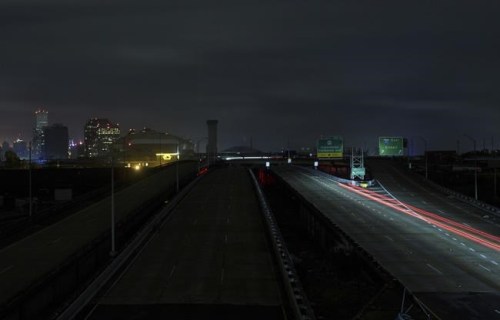
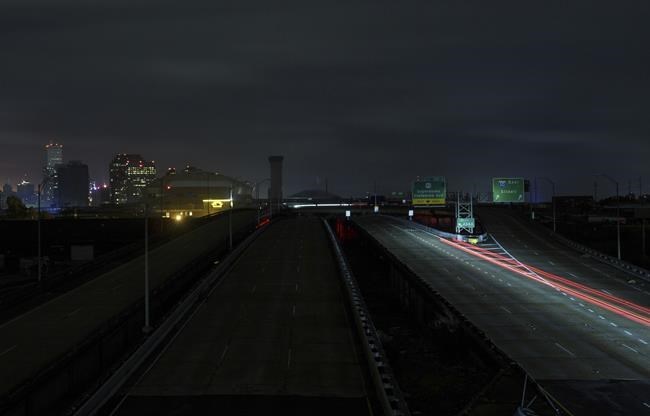
WASHINGTON (AP) — Hurricane Ida knocked out all eight transmission lines that deliver power to New Orleans, leaving the entire city without electricity as the powerful storm pushed through on Sunday and early Monday with winds that reached 150 miles per hour. Some of the hardest-hit areas won’t see power restored for weeks. A look at what that means for the coastal city and its residents and businesses.
WHAT HAPPENED?
The hurricane blew ashore on the 16th anniversary of Katrina, the 2005 storm that breached New Orleans’ levees, devastated the city and was blamed for 1,800 deaths. The office of Louisiana Gov. John Bel Edwards said Ida caused “catastrophic” damage to the power grid, forcing hospitals, businesses and private residents to rely on generators or go without refrigeration or air conditioning even as temperatures soar to close to 90 degrees. Ida was one of the strongest storms to make landfall in Louisiana and retained hurricane status nearly to Mississippi.
Officials in New Orleans and surrounding areas were encouraging people who evacuated ahead of the storm to stay away in the immediate aftermath, because it remains unsafe to return amid downed power lines, flooded homes, snapped trees and other destruction.
WHAT WILL IT TAKE TO GET POWER BACK?
The power company that serves the region said it could be weeks before some hard-hit areas see power restored. The power company, New Orleans-based Entergy, says it is working to provide backup power for water and sewer services, and the city says it is using its own generators at drainage pumping stations, but it’s not clear how long those efforts can sustain.
More than 11,000 Entergy workers, supplemented by 25,000 workers from at least 32 states and the District of Columbia, were working to restore power. As officials begin to assess damage, power will restored in a way that gets service to the greatest number of customers as safely and quickly as possible, Entergy said.
But the company faces a massive challenge. As of early Monday, 216 substations, 207 transmission lines and more than 2,000 miles of transmission lines were out of service, the company said. One transmission tower that spans the Mississippi River and had withstood Hurricane Katrina was felled during Ida, Entergy said.
Road closures, flooding and high winds were affecting crews’ ability to reach some areas and could delay power restoration in those communities. Entergy said.
“Transmission lines are very fragile in New Orleans,” said Logan Atkinson Burke, executive director of the Alliance for Affordable Energy, an advocacy group. The group said in a 2019 report that Entergy’s aging transmission and distribution lines, complicated by the coastal region’s lakes and wetlands, result in an unusual number of outages — even without extreme weather.
ECHOES OF HURRICANES PAST
Ida came ashore 16 years after Katrina and a year after Hurricane Laura wrecked southwest Louisiana, leaving Lake Charles and other communities without power for weeks. Even as Ida was bearing down on New Orleans, marks of Laura’s devastation remained evident in blue-tarped roofs, damaged homes and boarded-up businesses that still dot the region.
Laura, which then was the most powerful storm to impact Louisiana since before the Civil War, struck the southwestern parishes on Aug. 27, 2020, as a fierce Category 4 storm. Less than two months later, Hurricane Delta swept into the same area as a Category 2. Historic flooding followed in May.
“These are lessons we have to learn over and over again,” said Shelley Welton, an associate professor at the University of South Carolina School of Law who studies climate change and energy law. Whether it’s a deadly freeze in Texas, a wildfire in California or a hurricane in Louisiana, “the connective thread is we need to build infrastructure to better withstand stronger storms that we know are coming” as a consequence of climate change, she said.
‘CASCADING FAILURES’
Just as the deep-freeze in Texas caused extensive suffering and death from cold, Ida will likely cause extreme suffering from excessive heat, Welton and others said. The storm also was affecting water and sewer service, cell-phone service and even 911 service in what Welton called “cascading failures.”
In New Orleans, water and sewer officials said they lost all Entergy power, but teams were working quickly to make up for this with self-generated power sources, as well as backup generators located at drainage pumping stations.
Still, problems were being reported. The New Orleans suburb of Jefferson Parish was estimating it could take at least five days to restore the water system there.
With widespread cell service outages, many people were frantically trying to reach friends and relatives and were unsuccessful. Just because you can’t get reach a loved one by phone, “that does not necessarily mean that they are not OK,” said Christina Stephens, a spokeswoman for Edwards. “We know that much of this is a communications problem.”
AT&T said Monday its wireless network in Louisiana was operating at 85% of normal, describing “significant outages” in New Orleans and Baton Rouge from power supply disruptions, flooding and storm damages. A mobile tower was sent to the governor’s emergency preparedness office to help get their phones up and running again.
WILL CONGRESS STEP IN?
Louisiana Sen. Bill Cassidy said the catastrophe is the latest example of why his state – and the nation – need a nearly trillion-dollar infrastructure bill that was already passed by the Senate earlier this month. “New Orleans is now a case in point” of the need to harden the nation’s infrastructure and improve resiliency, the Republican told CNBC’s “Squawk Box” on Monday.
“If we’re going to make our country more resilient to natural disasters, whatever they are, we have to start preparing now,” Cassidy said. “We can’t look in the rearview mirror and say, ‘Well I wish we were prepared.’ We’ve got to start now for next year’s hurricane, next year’s wildfire, next year’s tornado. That infrastructure package is part of that.”
The bill provides about $50 billion to protect against droughts and floods and weatherize utilities and other infrastructure. It also includes about $60 billion to upgrade the electric grid and build thousands of miles of transmission lines to expand use of renewable energy.
House Speaker Nancy Pelosi has said the House will vote on the bipartisan measure next month.
___
Associated Press writer Melinda Deslatte in Baton Rouge contributed to this report.
Related Articles
Ida's sweltering aftermath: No power, no water, no gasoline
Advertisement Advertise With Us
Advertisement Advertise With Us