

Port of Churchill celebrates first grain shipment in six years

Advertisement
Read this article for free:
or
Already have an account? Log in here »
To continue reading, please subscribe:

Digital Subscription
One year of digital access for only $205*
- Enjoy unlimited reading on winnipegfreepress.com
- Read the E-Edition, our digital replica newspaper
- Access News Break, our award-winning app
- Play interactive puzzles
*First annual payment billed as $205.00 + GST for one year. This annual subscription will automatically renew at $233.00 + GST every 52 weeks (10% off the regular annual price of $259.35). Offer available to new and qualified returning subscribers only. Cancel any time.
To continue reading, please subscribe:
Add Free Press access to your Brandon Sun subscription for only an additional
$1 for the first 4 weeks*
- Enjoy unlimited reading on winnipegfreepress.com
- Read the E-Edition, our digital replica newspaper
- Access News Break, our award-winning app
- Play interactive puzzles
*Your next Brandon Sun subscription payment will increase by $1.00 and you will be charged $17.95 plus GST for four weeks. After four weeks, your payment will increase to $24.95 plus GST every four weeks.
Read unlimited articles for free today:
or
Already have an account? Log in here »
For the first time since 2020, Prairie grain is scheduled this week to ship out of the Port of Churchill.
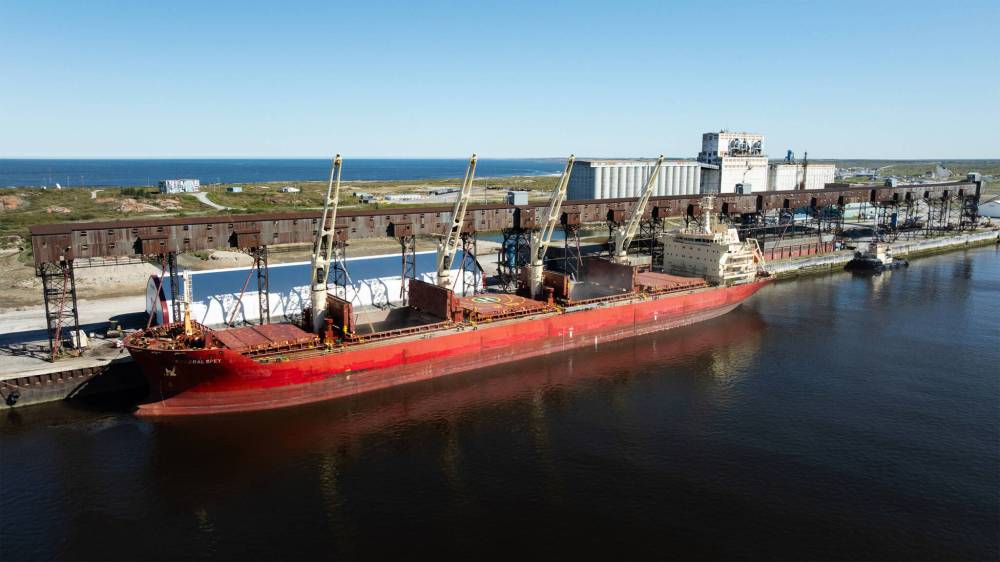
Approximately 30,000 tonnes of Canadian durum wheat from Saskatchewan-based AGT Foods is being loaded at the northern Manitoba port and will be shipped to customers in Europe. Stakeholders gathered at the port on Monday to celebrate the milestone.
Federal Northern and Arctic Affairs Minister Rebecca Chartrand alluded to the ongoing Canada-United States trade war in her remarks.

Ruth Bonneville / Free Press Files
Federal Northern and Arctic Affairs Minister Rebecca Chartrand.
“What you’re seeing behind me right now is Team Canada working together,” she said. “We have federal, we have provincial, we have municipal and we have Indigenous governments that are all working together.”
The Port of Churchill and the Hudson Bay Railway are owned by OneNorth, a partnership of 29 First Nations and 12 northern communities, and operated by Arctic Gateway Group.
Denver-based OmniTrax, the former owner, closed the deep-water port in 2016, and the railway washed out the following year.
Chartrand speculated what might have happened if the federal government hadn’t brokered a deal in 2018 to transfer the ownership to local hands, which has led to Arctic Gateway and various levels of government working to revitalize the port and rebuild a customer base.
“The people behind us have seen this as an opportunity to rebuild, and to do so through infrastructure that would be owned by northern and Indigenous communities,” she said. “And today that determination is delivering results.”
For War Lake First Nation Chief Betsy Kennedy, seeing the ship and the train cars that delivered the grain to the port was “deeply personal.” She was born in a community along the railway, which has provided jobs for Indigenous people for decades.
“We have federal, we have provincial, we have municipal and we have Indigenous governments that are all working together.”
“This time, the northern First Nations and the northern communities are leading the way,” she said. “We came together to take back control of the Port of Churchill and the Hudson Bay (Railway).
“My grandfather worked on this railway and so did my father,” she added. “One of the last things they said was they would like the opportunity to own this railway — and I’m glad that I’m here as the witness that we have accomplished that for them.”
Churchill mayor and Arctic Gateway Group board member Mike Spence noted the celebration was taking place on Aug. 31, eight years to the day the federal government reached a deal with OmniTrax.
“It’s a remarkable day,” he said. “We northerners, Indigenous people, are leading the way in making a difference (and showing) that you can take control of your destiny and really have that vision of moving ahead.”
Manitoba’s economic history cannot be told without recognizing the contributions of Indigenous peoples, said Fox Lake Cree Nation chief Morris Beardy.
“For generations, our people have navigated these waters and maintained trade routes and connected communities across the North,” he said. “The Cree (and) the Dene built trade networks and collaborative relationships across the region, sharing their knowledge with the first Europeans and helping communities prosper through mutual respect and co-operation.”
SUPPLIED
Approximately 30,000 tonnes of Canadian durum wheat supplied by Saskatchewan-based AGT Foods is being loaded onto a ship at the Port of Churchill and will be shipped to customers in Europe later this week.
That same spirit is important today, he added. “The Port of Churchill and the rail line that serves it remain critical to northern Manitoba, creating jobs that are driving economic development and connecting Canada to national and international markets.”
Manitoba Minister of Transportation and Infrastructure Lisa Naylor said at a time when Canada is facing continued trade uncertainty and growing challenges from the U.S., “there has never been a more important moment” to expand and diversify Canada’s trade opportunities and strengthen the country’s relationships with new markets.
“We know there’s a strong demand for Canadian products around the world and Churchill is uniquely positioned to help connect those products to the global market,” she said.
Chris Avery, president and chief executive officer at Arctic Gateway, said “a lot of tremendous efforts” paved the way for the Port of Churchill’s first grain shipment in six years.
“Today, if this was an American-owned set of infrastructure, we wouldn’t be having this same conversation,” Avery said.
“We came together to take back control of the Port of Churchill and the Hudson Bay (Railway).”
Arctic Gateway Group announced in a news release Monday it is continuing construction, engineering and modernization work across the Port of Churchill and Hudson Bay Railway.
Studies have confirmed year-round shipping operations from the port are possible with existing ice-strengthened vessel technology. Rights-holder consultations and ecological and environmental impact assessments are in the works. Work also continues on refacing and rehabilitation of the port’s wharf, a project that aims to strengthen the long-term integrity and reliability of its marine infrastructure.
Meanwhile, consulting and engineering firm SYSTRA Canada is undertaking engineering work examining the next stage of the railway’s modernization, identifying the improvements required to bring the railway to modern industrial weight standards capable of connecting with Canada’s Class 1 rail network.

Arctic Gateway Group has added an extra weekly freight train run to better support northern communities and growing demand along the corridor. Track rehabilitation and maintenance continues across the network.
The ongoing work and the grain shipment have led to excitement in the Churchill community, said Minister of Agriculture Ron Kostyshyn. He recalled visiting the Port of Churchill a number of times from 2011 to 2016.
“You could see the excitement in the community,” he said. “You could see the excitement of people that were involved working here. And I’ll just sum up by saying, it’s come back. The excitement’s come back to Churchill, to the north and to the people that need to celebrate the … historical event that’s happening today.”
SUPPLIED
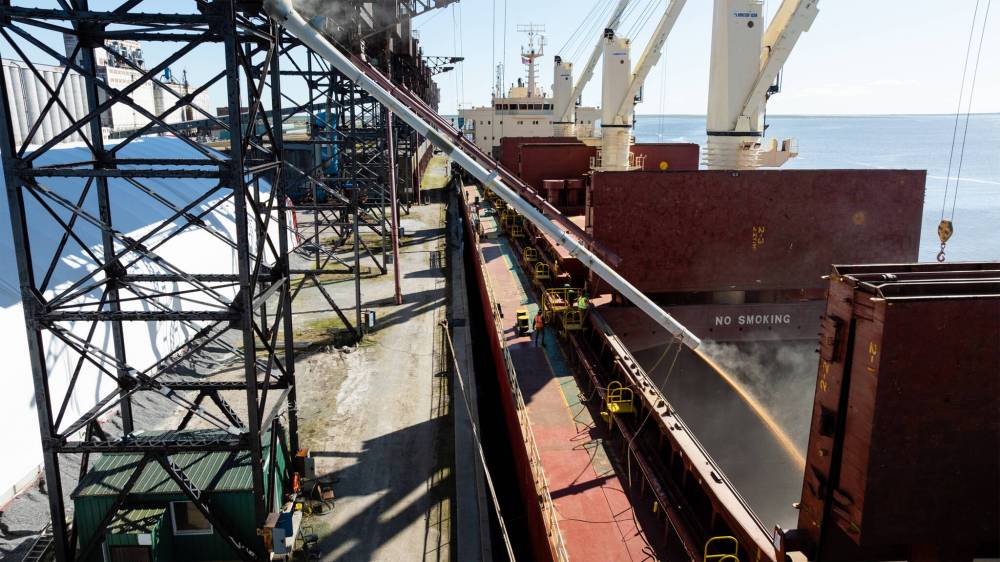
The Canadian durum wheat is the first grain export to leave Port of Churchill since 2020.
In addition to grain shipments, potash, nickel concentrate and zinc concentrate are also slated to leave the Port of Churchill this year.
aaron.epp@freepress.mb.ca
Aaron Epp reports on business for the Free Press. After freelancing for the paper for a decade, he joined the staff full-time in 2024. Read more about Aaron.
Every piece of reporting Aaron produces is reviewed by an editing team before it is posted online or published in print — part of the Free Press‘s tradition, since 1872, of producing reliable independent journalism. Read more about Free Press’s history and mandate, and learn how our newsroom operates.
Our newsroom depends on a growing audience of readers to power our journalism. If you are not a paid reader, please consider becoming a subscriber.
Our newsroom depends on its audience of readers to power our journalism. Thank you for your support.
Aaron Epp reports on business for the Free Press. After freelancing for the paper for a decade, he joined the staff full-time in 2024. Read more about Aaron.
Every piece of reporting Aaron produces is reviewed by an editing team before it is posted online or published in print — part of the Free Press‘s tradition, since 1872, of producing reliable independent journalism. Read more about Free Press’s history and mandate, and learn how our newsroom operates.
Our newsroom depends on a growing audience of readers to power our journalism. If you are not a paid reader, please consider becoming a subscriber.
Our newsroom depends on its audience of readers to power our journalism. Thank you for your support.
Related Articles
Trump’s tariff tantrum, geopolitical turmoil could be blessings in disguise for Manitoba’s diversified economy


Advertisement Advertise With Us
Advertisement Advertise With Us