B.C. subsidizes energy drilling on caribou habitat it promised to protect, study says

Advertisement

Advertise with us

British Columbia is subsidizing oil and gas well drilling on the same land it has promised to protect for caribou, new research has found.

Read this article for free:


or

Already have an account? Log in here »

To continue reading, please subscribe:

Subscribe and receive a limited-edition Free Press branded hat or tote.

Digital Subscription

One year of digital access for only $205*

  • Enjoy unlimited reading on winnipegfreepress.com
  • Read the E-Edition, our digital replica newspaper
  • Access News Break, our award-winning app
  • Play interactive puzzles

*First annual payment billed as $205.00 + GST for one year. This annual subscription will automatically renew at $233.00 + GST every 52 weeks (10% off the regular annual price of $259.35). Offer available to new and qualified returning subscribers only. Cancel any time.

To continue reading, please subscribe:

Add Free Press access to your Brandon Sun subscription for only an additional

$1 for the first 4 weeks*

  • Enjoy unlimited reading on winnipegfreepress.com
  • Read the E-Edition, our digital replica newspaper
  • Access News Break, our award-winning app
  • Play interactive puzzles
Start now

*Your next Brandon Sun subscription payment will increase by $1.00 and you will be charged $17.95 plus GST for four weeks. After four weeks, your payment will increase to $24.95 plus GST every four weeks.

Hey there, time traveller!
This article was published 01/10/2021 (1799 days ago), so information in it may no longer be current.

British Columbia is subsidizing oil and gas well drilling on the same land it has promised to protect for caribou, new research has found.

“The B.C. government has made a lot of commitments to caribou habitat restoration and it’s not really working,” said Adriana DiSilvestro, a University of British Columbia graduate student and lead author on the project.

“The fact there are oil and gas operations being subsidized in areas the federal government has deemed critical habitat is a piece to this puzzle.”
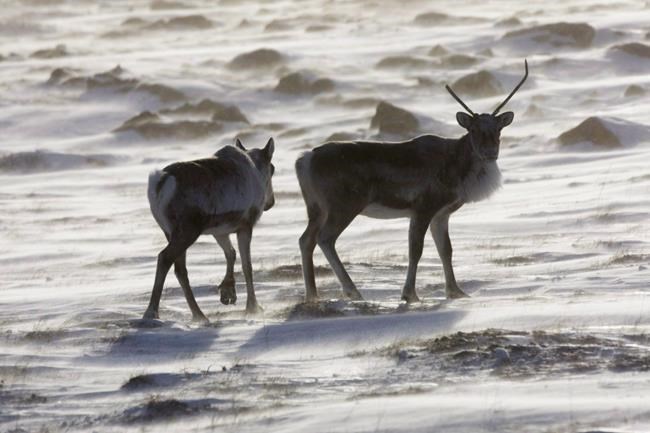
Wild caribou roam the tundra near The Meadowbank Gold Mine located in the Nunavut Territory of Canada on March 25, 2009. THE CANADIAN PRESS/Nathan Denette

DiSilvestro and her colleagues first identified wells in northeastern B.C. and located them on federal maps showing critical habitat for woodland caribou, a threatened species for which the province has promised the federal government to develop a recovery plan.

The team then used government and industry data to determine which of those wells had benefited from a government subsidy. Those subsidies include programs such as the Deep Well Royalty Program, which covers part of the drilling and completion costs for these wells up to $2.8 million per well and can be used to reduce royalties by half.

DiSilvestro said the research shows 3,114 active oil and gas wells within critical caribou habitat in B.C. Of these, 1,678 wells — just over half — are run by companies that have received assistance from one of three provincial subsidy programs over the past three years.

Previous research has identified industrial use as a major driver of caribou habitat loss and herd declines. Energy and logging both damage the old-growth forest caribou rely on and create easy pathways for predators to reach formerly safe hideouts.

“We conclude that public funds are subsidizing caribou extinction,” the report says.

Of B.C.’s 53 caribou herds, 14 are stable or increasing while 25 herds are either shrinking or have disappeared. No data exists for the rest. Some First Nations have been forced to step in with extreme conservation measures, such as penning up pregnant caribou cows until they can safely calve.

In February 2020, B.C. signed a so-called Section 11 conservation agreement with Ottawa that promised “commitments related to habitat protection and restoration.” That agreement, under the Species At Risk Act, was seen as an alternative to the federal government stepping in to impose protections under an emergency protection order.

In an emailed response, Meghan McRae of the Ministry of Energy, Mines and Low Carbon Innovation pointed to a series of programs the province funds to remediate old wells, including $27 million from industry to clean up wells for which no owner currently exists.

“The province is working with First Nations, local governments, industry, and stakeholders to identify acceptable outcomes for caribou recovery as well as continued resource development in B.C.,” she said.

“We continue to work with the federal government on our efforts of conservation and recovery of caribou herds.”

DiSilvestro said the findings suggest that conservation agreements made with one handbe undercut by programs from the other.

“We can say pretty clearly that (Section 11) agreement isn’t working. The continued subsidization of industry in these areas is a major factor in (caribou) decline.”

Alberta and Saskatchewan also have Section 11 agreements with Ottawa, promising caribou recovery efforts and habitat protection.

The International Institute for Sustainable Development and Environmental Defence has calculated that Alberta spent about $1.6 billion a year in fossil fuel subsidies between 2016 and 2019. Its work does not detail where that money has been spent.

It doesn’t have equivalent data for Saskatchewan.

This report by The Canadian Press was first published Oct. 1, 2021.

— Follow Bob Weber on Twitter at @row1960

Report Error Submit a Tip

More Stories

Councillors want city to revamp homeless camp approach

Scott Billeck 5 minute read Preview

Councillors want city to revamp homeless camp approach

Scott Billeck 5 minute read 5:07 PM CDT

Three Winnipeg councillors say the city uses lack of housing as an excuse to drop the ball on managing public spaces affected by the homeless crisis.

Sherri Rollins, Cindy Gilroy and John Orlikow want bureaucrats to develop a co-ordinated, proportionate and measured approach to maintaining safe, accessible and usable public spaces.

On Friday, they put forward a motion at the final city centre committee meeting before the Oct. 28 election. Gilroy is the only one seeking re-election, in the Daniel McIntyre ward.

“Right now, we have de facto designated encampments. We have increasing social disorder that much of the sector is pointing toward our own policy and blaming it for causing the disruption to the whole entirety of the city and spreading the problem,” said Rollins (Fort Rouge-East Fort Garry).

Read
5:07 PM CDT

Canada’s first drive-thru-only McDonald’s opens in Winnipeg

Aaron Epp 4 minute read Preview

Canada’s first drive-thru-only McDonald’s opens in Winnipeg

Aaron Epp 4 minute read Wednesday, Sep. 2, 2026

One Grimace and dozens of smiles were on display Wednesday as McDonald’s staff and supporters celebrated the grand opening of the fast-food chain’s first drive-thru-only restaurant in Canada.

Read
Wednesday, Sep. 2, 2026

Steinem’s life a lesson in audacity, generosity, courage

Jen Zoratti 5 minute read Preview

Steinem’s life a lesson in audacity, generosity, courage

Jen Zoratti 5 minute read 11:58 AM CDT

I wish I could tell you the first time I heard the word “feminist,” it was from Gloria Steinem, but it was definitely from a Spice Girl.

Props, though, to the Spice Girls for actually using the F word. So many people these days are afraid of it — afraid of using it, afraid of identifying with it, afraid of claiming it for themselves.

Gloria Steinem wasn’t, and she made it so we wouldn’t be either.

The trailblazing American journalist and feminist activist died this week. She was 92. She was a lion, a woman who fought for rights and freedoms that many subsequent generations take for granted — and which, in the last decade especially, have been increasingly threatened.

Read
11:58 AM CDT

Class delayed a day after mould found in Tyndall Park school

Maggie Macintosh 6 minute read Preview

Class delayed a day after mould found in Tyndall Park school

Maggie Macintosh 6 minute read Yesterday at 7:31 PM CDT

The first day of school has been postponed at École Stanley Knowles School after teachers discovered mould on chairs, rugs and other items when they were setting up their classrooms.

Families were alerted Thursday afternoon that an “HVAC malfunction” required extensive cleanup and, as a result, a one-day delay to the new year.

“I called it a couple weeks ago — it smelled really strong of mould,” said Amanda Bell, a mother who’s gone to the building regularly all summer to drop off and pick up her children from the on-site daycare.

Bell recalled she and her partner got a whiff of “wet mould” in a first-floor hallway near the library in mid-August and flagged it to an employee who told them they’d contact a custodian.

Read
Yesterday at 7:31 PM CDT

$8.7-million detox centre called ‘high-priced drunk tank’

Carol Sanders 4 minute read Preview

$8.7-million detox centre called ‘high-priced drunk tank’

Carol Sanders 4 minute read Updated: 6:08 PM CDT

The new facility to detain people in a drug psychosis for up to 72 hours is operating the way it should, the government said Friday, even though just 26 people have been held for that purpose since it opened.

“The (protective care centre) is doing what it’s meant to do: support people, meet them where they’re at, provide a caring environment,” Addictions Minister Bernadette Smith said after updated data were posted online.

The vast majority of those detained at the 20-room facility at 190 Disraeli Fwy. were recovering from alcohol intoxication, the update shows.

In total, 4,425 people were detained from the time the site opened on Dec. 2, 2025, until June 30, for an average of less than five hours.

Read
Updated: 6:08 PM CDT

NDP defends involvement of U.S. company in Hydro project

Chris Kitching 5 minute read Preview

NDP defends involvement of U.S. company in Hydro project

Chris Kitching 5 minute read Wednesday, Sep. 2, 2026

A U.S. company that donated to Donald Trump’s 2025 presidential inauguration could build Manitoba Hydro’s proposed $3-billion natural gas turbines, which has drawn criticism from an environmental group amid the NDP government’s pushback to tariffs.

Read
Wednesday, Sep. 2, 2026