Rural mystique
Rough yet refined, barns transport us to place of memory and musing
Advertisement
Read this article for free:
or
Already have an account? Log in here »
To continue reading, please subscribe:

Digital Subscription
One year of digital access for only $205*
- Enjoy unlimited reading on winnipegfreepress.com
- Read the E-Edition, our digital replica newspaper
- Access News Break, our award-winning app
- Play interactive puzzles
*First annual payment billed as $205.00 + GST for one year. This annual subscription will automatically renew at $233.00 + GST every 52 weeks (10% off the regular annual price of $259.35). Offer available to new and qualified returning subscribers only. Cancel any time.
To continue reading, please subscribe:
Add Free Press access to your Brandon Sun subscription for only an additional
$1 for the first 4 weeks*
- Enjoy unlimited reading on winnipegfreepress.com
- Read the E-Edition, our digital replica newspaper
- Access News Break, our award-winning app
- Play interactive puzzles
*Your next Brandon Sun subscription payment will increase by $1.00 and you will be charged $17.95 plus GST for four weeks. After four weeks, your payment will increase to $24.95 plus GST every four weeks.
Read unlimited articles for free today:
or
Already have an account? Log in here »
Hey there, time traveller!
This article was published 09/10/2021 (1765 days ago), so information in it may no longer be current.
An excerpt from The Truth About The Barn (Great Plains Publications).
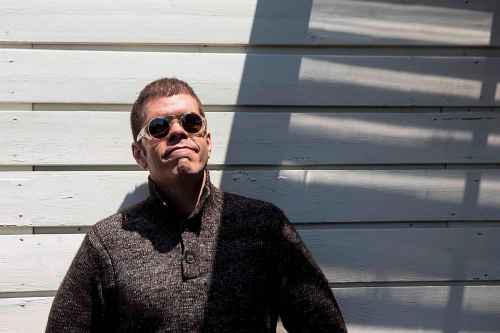
David Elias is one of more than 50 writers, live events, and interactive community features in this year’s hybrid Winnipeg International Writers Festival. To watch videos of Elias, prepared specifically for the festival, visit thinairfestival.ca.
The Truth About The Barn offers answers to important questions about how barns came into being, why they look the way they do, why they’re worth reflecting on, and what possible future they may have. Chapters investigate the barn’s place in culture and religion, art and literature. Psychological and philosophical implications are explored. Readers are treated to an occasional recollection of the author’s own experiences with barns.
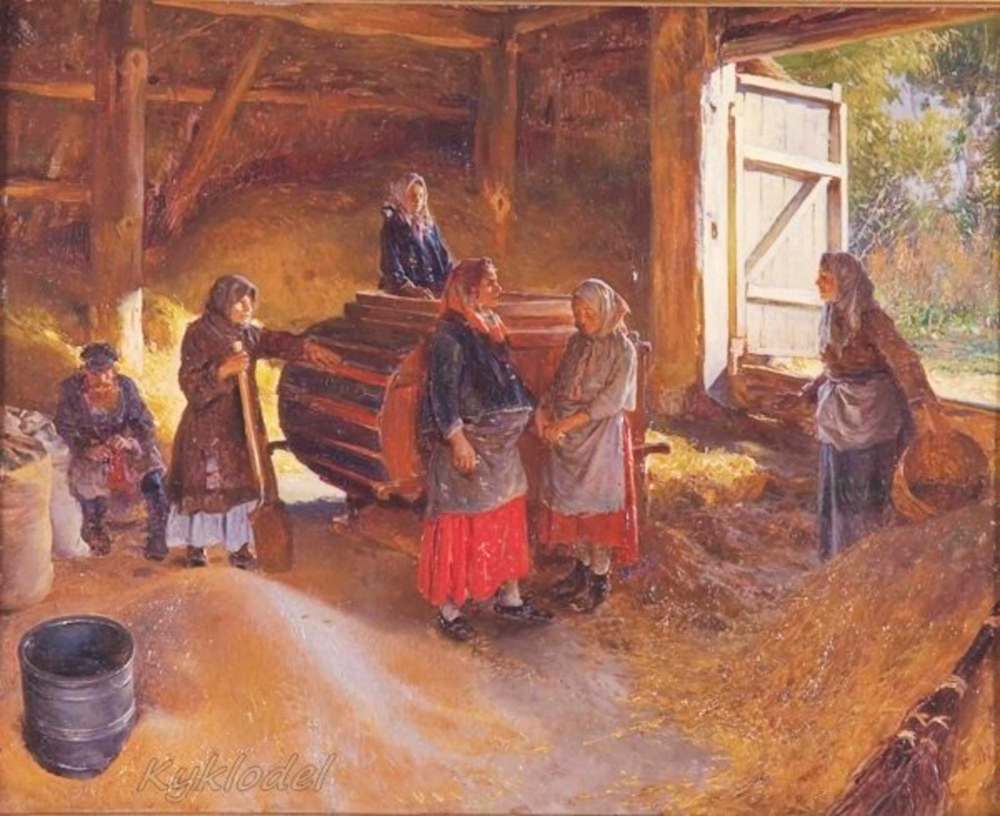
Outer Charm, Inner Bigness…
There’s a certain mystique about a barn that allows you to experience it in ways that other buildings don’t allow. For me, it begins with a unique aesthetic: rough yet refined, humble yet haughty. The place has a certain smell to it. A certain sound. You can taste the inside of a barn. Allow yourself to wander through its dark and cavernous interior, run your hand along a rough-hewn timber, climb up into the hay loft, linger in the not-quite-silent gloom, and you feel yourself in the presence of a place with a soul. There’s a quiet dignity about it that cultivates contemplation, renders agitation indecorous. You feel yourself getting in touch with something. You can’t say just what it is but its essence is within your grasp. Nestled in the bosom of the barn, you sense a wholesome presence, the calm reassurance of your own organic existence.
Part of it has to do with all that natural wood, exposed rafters and beams lit up by a well-placed shaft of sunlight, a wagon wheel leaned against the far wall next to a few sacks of grain, a wooden ladder up along the wall, and in the alcove a bucket hanging from a rope over the well. In the cow stall a straw hat hangs on a peg over a pair of denim overalls, and on the rustic wooden floor a milking stool alongside a couple of galvanized pails and some rubber boots. Through an open door you enter a shop with old horse collars and harnesses on the wall, a work bench strewn with tools. There are shovels and axes and pitch forks leaned against the walls, a testament to the daily chores of milking and feeding and other simple labours.
Step into a barn like that and you can be transported to a place that’s not so much a storehouse of hay and livestock as a repository of memory and musing. That may be something of a sentimental notion but if you doubt the nostalgia inherent in such an idea try a little experiment. Ask someone you suspect of having a barn in their past to share a recollection they may have, then watch as a vivid memory comes flooding back, perhaps a carefully preserved childhood reminiscence accompanied by an elaborate anecdote that has an element of dreaminess to it. It is also possible that someone’s expression might cloud over with the memory of something less agreeable or even traumatic. You never quite know what you’re going to get.
Whether it’s a shiny new one (rare these days) all dressed in red and trimmed with glossy white windows, or a grey and ancient relic along a country road with its weathered roof sagging gracefully, the sight of a barn catches people’s attention in a way few other buildings do. Each one seems to possess a character and charm all its own.
Mortality Close at Hand…
When it comes to romanticizing the idyllic aspects of country life what better symbol of the pastoral than a red barn with its white trim and inviting hay loft? It remains a time-honoured mainstay in books, movies, and other media, a popular setting that comes in many forms. There are sod barns, log barns, stone barns and straw barns; tobacco barns, dairy barns and horse barns; bank barns, crib barns, round barns and hexagonal barns. There’s even something known as a housebarn, which is exactly what it sounds like. A few of them can still be found in the Mennonite villages of southern Manitoba where I grew up. Watch for them as you make your way along the solitary tree-lined street: two buildings merged into one and nestled under a common roof, usually with the house nearest to the street and the attached barn in behind. I never got to live in one myself but I would have welcomed the chance. There was something about the idea that always appealed to me, and still does. If that sounds odd it’s only that there a lot of barns in my past, in fact, in my youth I managed to develop a close personal relationship with a quite a number of them, mostly because I spent an inordinate amount of time there as a farm boy performing menial and often unpleasant tasks. I never imagined that in later years I’d come to think of them as places of quiet refuge and even spiritual reflection.

These days a certain element of gravitas often seems to accompany my entrance into a barn. The tides and currents of my own mortality, whose murky waters I tread awkwardly at the best of times, seem a little easier to navigate there. The atmosphere evokes something of the grave as I imagine it must be. It’s dark. I’m surrounded by earth and wood, the musty smell of age and decay. I hear water dripping someplace. Hums and echoes filter in that seem both near and far away, the muffled movements of possible machines or animals mixed in with the strangely muted voices of people I love.

Crossing Over…
In many an older barn one of the first things you come across as you enter through the wide doors is the threshing floor. You find yourself walking across a platform of heavy wooden planks laid down before you, shiny from wear, edges rounded and smoothed, softened into something Dali might have painted. This is where in times past countless stalks of barley and rye and wheat, bundled into sheaves and carried in from the fields, would have been brought to be beaten with a flail by people like my grandmother and her mother before her. Here was where the precious grain was gleaned and separated from the chaff.
The straw left behind would have been pitched up into the loft above my grandmother’s head, or it might have been taken outside to be burned or baled. It was the grain left behind on the threshing floor that mattered. Sometimes the women were so efficient in their flailing that the grain accumulated on the floor until it threatened to spill out into the yard. But before that happened one of the women would take notice and pause long enough from her labour to get hold of a sturdy plank, kept on hand for just such an occasion, and slide it across the doorway. Such a board would thereafter have been stepped over and referred to as the threshold, a term which today carries little of that original meaning.
David Elias is the author of seven books, including Elizabeth of Bohemia: A Novel about Elizabeth Stuart, the Winter Queen (ECW, 2019). It was a finalist for the Margaret Lawrence Award for Fiction at the Manitoba Book Awards. He works as a mentor and creative writing instructor in Winnipeg.