

Ethics take a back seat to money
Human-rights record ignored as Saudi investment fund purchases Newcastle United
Advertisement
Read this article for free:
or
Already have an account? Log in here »
To continue reading, please subscribe:

Digital Subscription
One year of digital access for only $205*
- Enjoy unlimited reading on winnipegfreepress.com
- Read the E-Edition, our digital replica newspaper
- Access News Break, our award-winning app
- Play interactive puzzles
*First annual payment billed as $205.00 + GST for one year. This annual subscription will automatically renew at $233.00 + GST every 52 weeks (10% off the regular annual price of $259.35). Offer available to new and qualified returning subscribers only. Cancel any time.
To continue reading, please subscribe:
Add Free Press access to your Brandon Sun subscription for only an additional
$1 for the first 4 weeks*
- Enjoy unlimited reading on winnipegfreepress.com
- Read the E-Edition, our digital replica newspaper
- Access News Break, our award-winning app
- Play interactive puzzles
*Your next Brandon Sun subscription payment will increase by $1.00 and you will be charged $17.95 plus GST for four weeks. After four weeks, your payment will increase to $24.95 plus GST every four weeks.
Read unlimited articles for free today:
or
Already have an account? Log in here »
Hey there, time traveller!
This article was published 15/10/2021 (1760 days ago), so information in it may no longer be current.
“Just because we can, does it mean we should?”
It’s a question — a variance on Jeff Goldblum’s famous line from Jurassic Park — that seems especially prescient these days.
Employers, paying the minimum to keep employees coming to work; logging companies, emboldened by the police, harvesting old growth forests; billionaires, having won a fortune off the backs of the desperate, sheltering wealth and avoiding taxation.
As late capitalism careens toward its end game — whatever that will look like — such ethical quandaries will become more and more entangled with the forces of the market. And, as we’ve seen, they’ll be mostly ignored entirely, igniting labour war, environmental actions and contempt for the powerful.
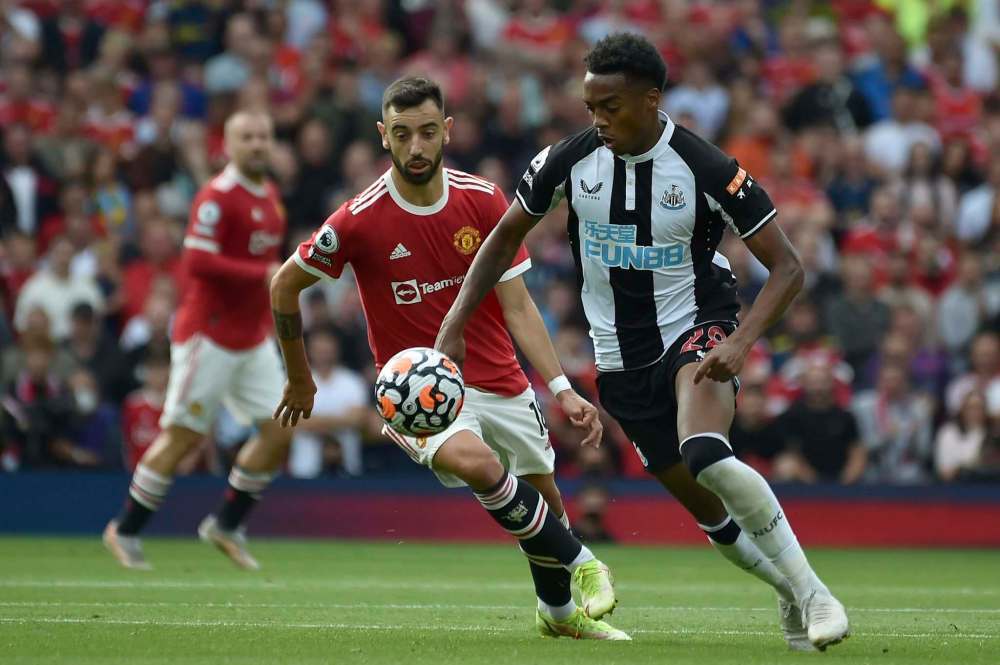
It’s a problem, a tension, that spread into the world of sports last week with the purchase of Newcastle United by Saudi Arabia’s Public Investment Fund (PIF).
The transaction, which paid outgoing and unpopular owner Mike Ashley £300 million for an 80 per cent stake in the Premier League outfit, was controversially approved by top-flight administration, which welcomed both Ashley’s exit and the Magpies’ new status as the richest club in the world.
They took the money, but should they have?
The PIF, not coincidentally, has enhanced its reach and profile as chairman and Saudi crown prince Mohammed bin Salman, the kingdom’s de facto leader, has grown in prominence and looked westward for investment opportunities. Disney, Facebook and Starbucks are previous recipients of PIF funds, which is increasingly keen to diversify its portfolio from oil.
As an added benefit, the financing distracts from an appalling human-rights record.
In its latest report, Amnesty International revealed that abuses in Saudi Arabia only intensified in recent years, citing the harassment and detention of government opposition, women’s rights activists, journalists, the Shia minority and critics of the kingdom’s handling of the COVID-19 pandemic.
“Virtually all known Saudi Arabian human-rights defenders inside the country were detained or imprisoned at the end of (2020),” it stated. “Migrant workers were even more vulnerable to abuse and exploitation because of the pandemic, and thousands were arbitrarily detained in dire conditions, leading to an unknown number of deaths.”
Now, it’s tempting to play a game of whataboutism, and there’s actually some value in that.
What about World Cup hosts Qatar and the migrant workers who have been abused, who have even died, throughout stadium construction? What about Manchester City’s repressive Abu Dhabi owners? What about the Chinese Communist Party’s proprietorship of club football in that country?
What about so-called “feel-good” story Sheriff Tiraspol, topplers of Real Madrid in the Champions League but also blatantly corrupt actors in the breakaway region of Transnistria? Closer to home, what about unapologetic racists and homophobes owning teams and coaching in the NFL?
What about them, indeed.
What they don’t do is cancel each other out. Instead, they each serve to remind us that tyrants, authoritarians and the mega-rich — the powerful — can do as they please, everyone else be damned.
And they can do it, but should they? That question again.
The Premier League, in allowing the PIF to buy Newcastle, now has a partner that deployed a hit squad to murder and dismember Washington Post journalist Jamal Khashoggi. It is a willing participant in Saudi Arabia’s bid to launder its reputation through sports.
Not that it cares a jot. Nor does UEFA, whose clubs across the region are frequent targets for sovereign wealth investment.
Consider UEFA president Aleksander Ceferin’s 2020 remarks to Reuters, in which he said if the investments are within financial regulation, he is “not concerned.” He added: “I would love to have even more revenues because it is good for the development of football.”
In other words, prospective financiers must meet a financial test, but not an ethical one.

Just because the money is offered, does it mean they should take it?
Again, to paraphrase Goldblum: Football, and the Premier League in this instance, was so preoccupied with whether or not they could, they didn’t stop to think if they should.
jerradpeters@gmail.comTwitter @JerradPeters
Our newsroom depends on a growing audience of readers to power our journalism. If you are not a paid reader, please consider becoming a subscriber.
Our newsroom depends on its audience of readers to power our journalism. Thank you for your support.
Our newsroom depends on a growing audience of readers to power our journalism. If you are not a paid reader, please consider becoming a subscriber.
Our newsroom depends on its audience of readers to power our journalism. Thank you for your support.
Related Articles
Marseille fans pay their Bernard Tapie tributes




Advertisement Advertise With Us
Advertisement Advertise With Us