

There’s no time limit on remembering the sacrifices of those who fought
Advertisement
Read this article for free:
or
Already have an account? Log in here »
To continue reading, please subscribe:

Digital Subscription
One year of digital access for only $205*
- Enjoy unlimited reading on winnipegfreepress.com
- Read the E-Edition, our digital replica newspaper
- Access News Break, our award-winning app
- Play interactive puzzles
*First annual payment billed as $205.00 + GST for one year. This annual subscription will automatically renew at $233.00 + GST every 52 weeks (10% off the regular annual price of $259.35). Offer available to new and qualified returning subscribers only. Cancel any time.
To continue reading, please subscribe:
Add Free Press access to your Brandon Sun subscription for only an additional
$1 for the first 4 weeks*
- Enjoy unlimited reading on winnipegfreepress.com
- Read the E-Edition, our digital replica newspaper
- Access News Break, our award-winning app
- Play interactive puzzles
*Your next Brandon Sun subscription payment will increase by $1.00 and you will be charged $17.95 plus GST for four weeks. After four weeks, your payment will increase to $24.95 plus GST every four weeks.
Read unlimited articles for free today:
or
Already have an account? Log in here »
Hey there, time traveller!
This article was published 10/11/2021 (1776 days ago), so information in it may no longer be current.
To lose our memories, as the epidemic of cognitive impairment among the aged has shown, is to lose ourselves.
Memory is the “treasury and guardian of all things,” Cicero said. Aeschylus called memory “the mother of all wisdom.”
What we trouble ourselves to remember helps define us.
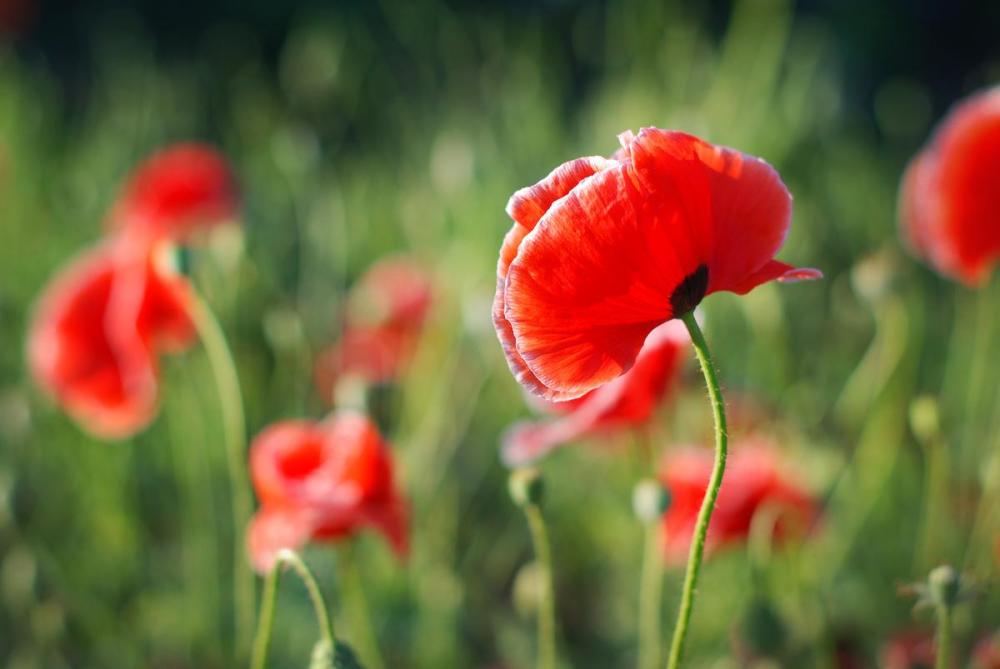
And so, another Remembrance Day rolls around, occurring as participants in the Second World War dwindle to a frail few, as those with firsthand memory of that horror die away.
Soon, all who saw those times, all who gave their lives, their bodies, their children, their innocence, will be gone.
The torch is passing, the duty handed on to generations that did not know the sacrifice, but enjoyed the rewards of freedom’s victories.
To sustain communal memory takes commitment. Passing memory on from generation to generation demands endless retellings.
Statistics grow numbing. But stories – from the world wars, or Korea, from Afghanistan and Iraq — remain vivid.
A grade-school teacher could do worse each November than read aloud the stories, not of a battle but of a soldier, the stories of what it was like.
Something like the accounting by Greg Clark of the trenches of the First World War.
“Day and night, week after month after year for four years – never changing; this band of deathly stealth in which no man moved or spoke loudly.
“There was the weird unearthly howling of shells… the crack and explosion of shells.
“We had no garbage disposal, no sewage disposal… year after year… the latrines… the smell… I don’t think it was possible to exaggerate the number of rats… and (they) added that last mad feature… huge, monstrous rats living on this garbage…
“The tension never for one moment relaxed… You never knew at what moment one of those perfectly meaningless sounds… would get you.”
How fallible is human memory? How quickly do events fade from active recall into the vast past of history?
In recent years, surveys have found that more than half of millennials do not know that six million Jews were murdered by Nazi Germany during the Holocaust. Almost half could not name one of the death camps.
Old soldiers of the world wars usually scoffed at mentions of their heroism. Their duty was obvious, they said. The contest stood in their place and time. It could not be avoided.
But even if many did not talk much afterwards, they did not want the deaths of their comrades and their sacrifice forgotten.
In Canada, if war memory had a custodian, it was John McCrae, author of In Flanders Fields.
The day before the soldier-doctor-poet wrote the poem, a lieutenant named Alexis Helmer was killed.
It was the tenth day of a bombardment in May, 1915. Shelling the previous night had been heavy. Come morning, Helmer left his dugout to inspect.
He died instantly when a heavy shell exploded beside him.

The fighting continued. The Germans attacked with gas. The allies were down to 12 guns, guns used so hard, the histories report, that “their springs were going soft, (and) the buffer oil in their recoil cylinders was beginning to boil and smoke.”
It was a long time before Lt. Helmer’s dismembered body could be recovered.
He was 22. He had a photo of his girlfriend with him when he died. A shell fragment had torn a hole through it.
That battle, that death, inspired McCrae’s enduring work of art.
And when its author warned against “breaking faith with us who die,” he put no time limit on that sacred obligation.
Related Articles
"I just hope for a better world": Winnipeggers mark Remembrance Day
Advertisement Advertise With Us
Advertisement Advertise With Us