Support flows to ‘changed’ Texas synagogue after standoff

Advertisement

Advertise with us

DALLAS (AP) — The tight-knit congregation at a Texas synagogue where four people were held hostage by an armed captor during a 10-hour standoff over the weekend traces its roots back to a gathering organized over 20 years ago by a handful of families who were new to the area.

Read this article for free:


or

Already have an account? Log in here »

To continue reading, please subscribe:

Subscribe and receive a limited-edition Free Press branded hat or tote.

Digital Subscription

One year of digital access for only $205*

  • Enjoy unlimited reading on winnipegfreepress.com
  • Read the E-Edition, our digital replica newspaper
  • Access News Break, our award-winning app
  • Play interactive puzzles

*First annual payment billed as $205.00 + GST for one year. This annual subscription will automatically renew at $233.00 + GST every 52 weeks (10% off the regular annual price of $259.35). Offer available to new and qualified returning subscribers only. Cancel any time.

To continue reading, please subscribe:

Add Free Press access to your Brandon Sun subscription for only an additional

$1 for the first 4 weeks*

  • Enjoy unlimited reading on winnipegfreepress.com
  • Read the E-Edition, our digital replica newspaper
  • Access News Break, our award-winning app
  • Play interactive puzzles
Start now

*Your next Brandon Sun subscription payment will increase by $1.00 and you will be charged $17.95 plus GST for four weeks. After four weeks, your payment will increase to $24.95 plus GST every four weeks.

Hey there, time traveller!
This article was published 17/01/2022 (1701 days ago), so information in it may no longer be current.

DALLAS (AP) — The tight-knit congregation at a Texas synagogue where four people were held hostage by an armed captor during a 10-hour standoff over the weekend traces its roots back to a gathering organized over 20 years ago by a handful of families who were new to the area.

“It was a Jewish holiday and we were just feeling kind of isolated and unsure who else was living here that was Jewish,” Anna Salton Eisen, a founder and former president of Congregation Beth Israel, said Sunday.

Since that start in 1998, the congregation in the Fort Worth suburb of Colleyville has grown to about 140 families, built its own synagogue and hired a rabbi known throughout the area for building bridges with other faiths.
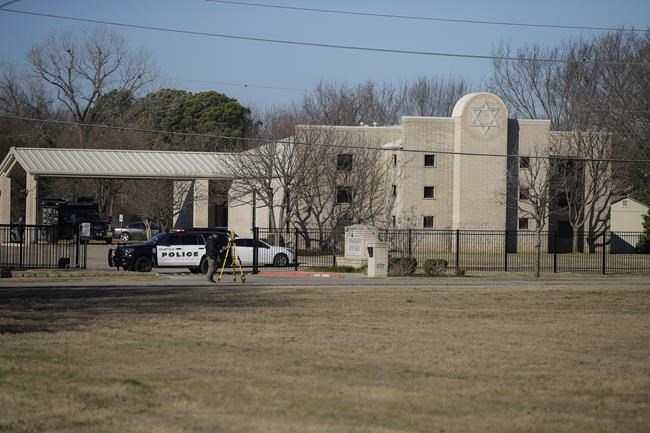
Law enforcement process the scene in front of the Congregation Beth Israel synagogue, Sunday, Jan. 16, 2022, in Colleyville, Texas. A man held hostages for more than 10 hours Saturday inside the temple. The hostages were able to escape and the hostage taker was killed. FBI Special Agent in Charge Matt DeSarno said a team would investigate
Law enforcement process the scene in front of the Congregation Beth Israel synagogue, Sunday, Jan. 16, 2022, in Colleyville, Texas. A man held hostages for more than 10 hours Saturday inside the temple. The hostages were able to escape and the hostage taker was killed. FBI Special Agent in Charge Matt DeSarno said a team would investigate "the shooting incident." (AP Photo/Brandon Wade)

Eisen said she has been bowled over by the intensity of the support the congregants have gotten during the hostage ordeal, but that she also has gotten a “painful awakening” that “our history is now going to be changed.”

Eisen, who noted security at their synagogue has been taken “very seriously, very seriously” for a long time, said a message of support from a member the Tree of Life synagogue in Pittsburgh, where 11 worshippers were killed in a 2018 attack, made her realize “this is part of who we are and how we move forward and respond to this is something we have to think about.”

Rabbi Jeffrey Myers of Tree of Life, who survived the massacre there, America’s deadliest antisemitic attack, said in a statement that alongside the relief that the Texas hostages were safe, “my heart is heavy.”

“While everyone is physically safe, they are also forever changed,” Myers said. “My own community knows too well the pain, trauma and lost sense of security that comes when violence forces its way in, especially into our sacred spaces.”

The standoff in Texas ended around 9 p.m. Saturday when the last three hostages, who included Rabbi Charlie Cytron-Walker, escaped from the gunman and an FBI SWAT team rushed in. The captor, Malik Faisal Akram, 44, was killed. A fourth hostage was released earlier.

Cytron-Walker told “CBS Mornings” that he threw a chair at his captor and they rushed out. He credited past security training for getting them out safely.

Cytron-Walker said returning to the synagogue “won’t necessarily be an easy thing but it’s a really important thing.”

At a service held Monday evening at a nearby Methodist church, Cytron-Walker said the amount of “well-wishes and kindness and compassion” has been been overwhelming.

“While very few of us are doing OK right now, we’ll get through this,” he said.

Andrew Marc Paley, a Dallas rabbi who was called to the scene to help families and hostages upon their release, said that by all accounts, Cytron-Walker was a calm and comforting presence during the ordeal.

“He made every effort to those who were with him to sort of remain calm and to, you know, diffuse the situation to the best they can,” he said.

Jawaid Alam, president of the Islamic Center of Southlake, told the Fort Worth Star-Telegram that Cytron-Walker is a personal friend who has promoted peace and cooperation across faiths.

“He is a peace-loving person, a Rabbi and Jewish leader, but a true friend of the Muslim community,” Alam said.

The rabbi at Congregation Shaarey Zedek, the synagogue in East Lansing, Michigan, that Cytron-Walker attended while growing up said in a message to congregants there that she was with his mother on Saturday as the ordeal unfolded.

Rabbi Amy Bigman wrote in the message that while it was difficult to see another instance of antisemitism, they have taken comfort in the outpouring of “prayers and good wishes.” She wrote that while she knew the events in Texas “raised our sense of alarm,” she hoped her congregants would not stay away and noted security had been “greatly increased” over the years.
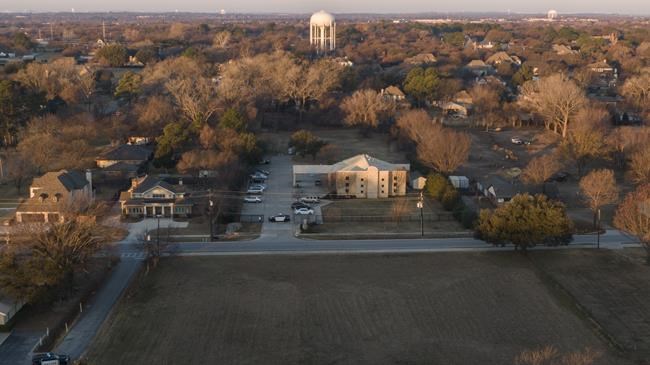
An aerial view of police standing in front of the Congregation Beth Israel synagogue, Sunday, Jan. 16, 2022, in Colleyville, Texas. A man held hostages for more than 10 hours Saturday inside the temple. The hostages were able to escape and the hostage taker was killed. FBI Special Agent in Charge Matt DeSarno said a team would investigate
An aerial view of police standing in front of the Congregation Beth Israel synagogue, Sunday, Jan. 16, 2022, in Colleyville, Texas. A man held hostages for more than 10 hours Saturday inside the temple. The hostages were able to escape and the hostage taker was killed. FBI Special Agent in Charge Matt DeSarno said a team would investigate "the shooting incident." (AP Photo/Brandon Wade)

Halie Soifer, CEO of the Jewish Democratic Council of America, also grew up attending Congregation Shaarey Zedek and remembered Cytron-Walker’s leadership as a student in the youth group.

“From everything I can tell, he’s very similar today to what he was like then, which is someone who is driven by a sense of deeply rooted Jewish values and activism and belief that we’re all equal and efforts to build ties and care for others,” Soifer said.

Cytron-Walker has been the Texas synagogue’s first full-time rabbi since 2006. The synagogue’s website says the married father of two loves welcoming everyone from “interfaith families to LGBT individuals and families to those seeking to find a spiritual home in Judaism, along with all others.”

“We have newcomers, we have people who have been here a longtime and have seen each other’s children grow up and have been together through all the ups and downs — the joys and hardships of life,” Eisen said. “We’re tight-knit, we’re not a very large congregation.”

Eisen said she knew they were welcome in the community, but didn’t quite realize how much until the outpouring came as the ordeal unfolded.

“Now I really feel welcome here. It was a life-changing thing,” she said.

Eisen, who has been cautious about going out during the pandemic to protect her mother, a Holocaust survivor who turns 100 on Saturday, said she started watching the Facebook livestream of the hostage-taking during the services when alerted by another member.

“It felt impossible to watch and impossible not to watch,” she said.

It was especially hard, she said, to tell her mother what had happened. “It was so difficult for me, because she thought this can’t happen here,” Eisen said.

___

Associated Press writers Paul J. Weber in Austin, Texas, Peter Smith in Pittsburgh and David Eggert in Lansing, Michigan, contributed to this report.

Report Error Submit a Tip

The Free Press acknowledges the financial support it receives from members of the city’s faith community, which makes our coverage of religion possible.
More Stories

Treating the disease we simply won’t insure

Rafiq Andani 5 minute read 2:00 AM CDT

There is a condition affecting tens of thousands of Canadians. In 2024, one national measure estimated that almost 120,000 people had the condition. The estimate captures only part of the problem.

A father and son arrested last month are accused of travelling across Canada — and using courier services and Canada Post — to supply their Winnipeg drug-trafficking operation, a recent court filing shows.

Support flows to 'changed' Texas synagogue after standoff

Jamie Stengle, The Associated Press 6 minute read Preview

Support flows to 'changed' Texas synagogue after standoff

Jamie Stengle, The Associated Press 6 minute read Monday, Jan. 17, 2022

DALLAS (AP) — The tight-knit congregation at a Texas synagogue where four people were held hostage by an armed captor during a 10-hour standoff over the weekend traces its roots back to a gathering organized over 20 years ago by a handful of families who were new to the area.

“It was a Jewish holiday and we were just feeling kind of isolated and unsure who else was living here that was Jewish,” Anna Salton Eisen, a founder and former president of Congregation Beth Israel, said Sunday.

Since that start in 1998, the congregation in the Fort Worth suburb of Colleyville has grown to about 140 families, built its own synagogue and hired a rabbi known throughout the area for building bridges with other faiths.

Eisen said she has been bowled over by the intensity of the support the congregants have gotten during the hostage ordeal, but that she also has gotten a “painful awakening” that “our history is now going to be changed.”

Read
Monday, Jan. 17, 2022

Retired sportscaster Scott Oake determined as fundraising for women's addictions treatment facility enters home stretch

Melissa Martin 5 minute read Preview

Retired sportscaster Scott Oake determined as fundraising for women's addictions treatment facility enters home stretch

Melissa Martin 5 minute read Thursday, Sep. 10, 2026

For now, the patch of land just east of the Victoria Hospital doesn’t look like much: just a field of rocks, mounded dirt, and concrete piles driven into the earth. Yet when Scott Oake looks over the site, he can already imagine how it will look in just over a year’s time, when the new Anne Oake Family Recovery Centre is expected to open.

It’s easier to picture this time around. In 2020, when the recently-retired CBC sportscaster and his late wife, Anne, were building their first labour of intermingled grief and love, the Bruce Oake Recovery Centre for men, it was hard for him to wrap his mind around how a raw construction site could transform into a welcoming addictions treatment facility.

When that centre opened in 2021, Oake found it looked “almost identical” to the architect’s renderings. So it’s easy to hope the Anne Oake Centre will be the same. It will be the first facility of its kind, its founders believe, not only in Canada but in North America: a place where 50 to 70 women can pursue sobriety while staying with their children.

“At Bruce Oake there’s a culture of love, and most of all a culture of hope,” Oake said, speaking at the site Thursday after a media conference to announce the final push of the centre’s fundraising campaign. “I can feel it every time I walk into that building. And I know it will be the same here.”

Read
Thursday, Sep. 10, 2026

The port of Churchill — but done right

Editorial 4 minute read Preview

The port of Churchill — but done right

Editorial 4 minute read Saturday, Sep. 12, 2026

The seagoing grain carrier wasn’t christened with a champagne bottle. There was no confetti or streamers. Nevertheless, the Aug. 31 event marking the first shipment of grain to be loaded at the Port of Churchill since 2020 was celebrated like the launch of a brand new vessel.

The presence of the federal minister of northern and arctic affairs, provincial cabinet ministers and leaders and elders from several northern First Nations signalled that the fast-tracked process of refurbishing and buffing up Manitoba’s deep-water seaport gem is gaining momentum.

For OneNorth, the partnership of 29 First Nations and 12 northern communities which owns the Port of Churchill and the Hudson Bay Railway (both operated by the Arctic Gateway Group) the event heralded a new beginning. It’s been eight years since OneNorth purchased the port and railroad, and six years since grain was moved by rail through Manitoba and then by ship to European markets. Two more grain shipments, plus shipments of potash and critical minerals, will continue through the fall.

When Prime Minister Mark Carney solicited the premiers to suggest “nation-building” projects following his election in 2025, Premier Wab Kinew pitched a Manitoba trade corridor that would move wheat, critical minerals, potash and energy (oil or liquid natural gas) through the Port of Churchill.

Read
Saturday, Sep. 12, 2026

Downtown no place to be after dark, huge majority of Winnipeggers say in survey

Joyanne Pursaga 8 minute read Preview

Downtown no place to be after dark, huge majority of Winnipeggers say in survey

Joyanne Pursaga 8 minute read Friday, Sep. 11, 2026

Most Winnipeggers are afraid to walk alone downtown and believe the city needs more police officers, a new survey finds.

Winnipeg Police Service released its 2026 citizen survey Friday.

Downtown safety appears to remain a major concern, with just 44 per cent saying they feel very or reasonably safe walking alone in the area during the day. The number plummets to eight per cent overall at night, down from nine per cent in 2024, the last time the survey was conducted.

This year, 14 per cent of men felt very or reasonably safe walking alone downtown at night, compared to just three per cent of women.

Read
Friday, Sep. 11, 2026