Denmark ends most virus restrictions, as Sweden extends them
Advertisement
Read this article for free:
or
Already have an account? Log in here »
To continue reading, please subscribe:

Digital Subscription
One year of digital access for only $205*
- Enjoy unlimited reading on winnipegfreepress.com
- Read the E-Edition, our digital replica newspaper
- Access News Break, our award-winning app
- Play interactive puzzles
*First annual payment billed as $205.00 + GST for one year. This annual subscription will automatically renew at $233.00 + GST every 52 weeks (10% off the regular annual price of $259.35). Offer available to new and qualified returning subscribers only. Cancel any time.
To continue reading, please subscribe:
Add Free Press access to your Brandon Sun subscription for only an additional
$1 for the first 4 weeks*
- Enjoy unlimited reading on winnipegfreepress.com
- Read the E-Edition, our digital replica newspaper
- Access News Break, our award-winning app
- Play interactive puzzles
*Your next Brandon Sun subscription payment will increase by $1.00 and you will be charged $17.95 plus GST for four weeks. After four weeks, your payment will increase to $24.95 plus GST every four weeks.
Read unlimited articles for free today:
or
Already have an account? Log in here »
Hey there, time traveller!
This article was published 26/01/2022 (1719 days ago), so information in it may no longer be current.
COPENHAGEN, Denmark (AP) — Denmark’s government said Wednesday it will scrap most pandemic restrictions next week, even as neighboring Sweden extended its own measures for another fortnight.
Danish Prime Minister Mette Frederiksen said that as of Feb. 1 Danes will enjoy free access to restaurants, cafes, museums and nightclubs, while mask use will cease to be mandatory.
“We say goodbye to the restrictions and welcome the life we knew before” the pandemic, Frederiksen said. “As of Feb. 1, Denmark will be open.”
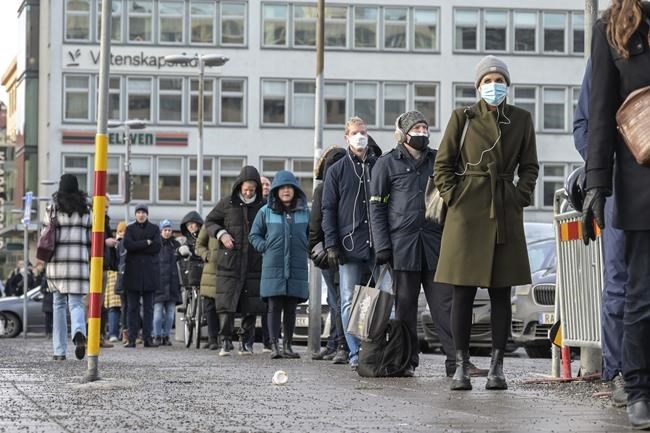
Denmark currently requires face masks on public transportation, in shops, for standing clients in restaurant indoor areas, and for people entering hospitals, health care facilities and retirement homes. As of Feb. 1, the government will only recommend mask use in hospitals, health care facilities and homes for the elderly.
Frederiksen said that while the omicron variant is surging in Denmark, it is not placing a heavy burden on the health system and the country has a high vaccination rate.
“It may seem strange that we want to remove restrictions given the high infection rates,” she said. “But fewer people become seriously ill.”
Denmark has in recent weeks seen more than 46,000 daily cases on average, but only 40 people are currently in hospital intensive care units — down from 80 a few weeks ago — Health Minister Magnus Heunicke said.
Heunicke urged Danes to get tested regularly. ”We continue with a strong epidemic surveillance. Then we … can react quickly if necessary.”
Frederiksen warned that Denmark could see a rise in infections in the coming weeks, adding that a fourth vaccination shot might prove necessary.
The restrictions being scrapped next week were originally introduced in July but were removed about ten weeks later after a successful vaccination drive. They were reintroduced when infections soared.
In 2020, Denmark became one of the first European countries to close schools because of the pandemic, and sent home all public employees without critical functions.
Earlier Thursday, Sweden extended several coronavirus restrictions for two weeks.
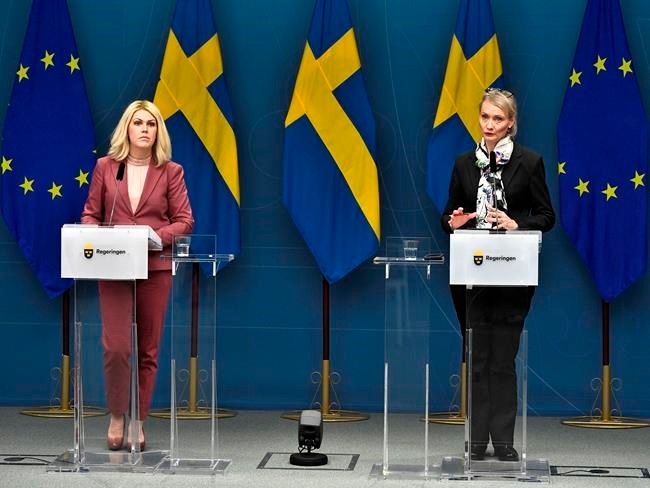
Social Affairs Minister Lena Hallengren said the country, which had previously stood out among European nations for its comparatively hands-off pandemic response, has “an extremely record high spread of infection.”
Karin Tegmark Wisell, head of Sweden’s Public Health Agency, said infections are expected to decline in a couple of weeks. She said Sweden had 270,000 new infections in the past week and that “our assessment is that, during this period, at least half a million can fall ill per week.”
Sweden has ordered cafes, bars and restaurants to close at 11 p.m., and urged people to work from home when possible.
In another Scandinavian country, Finland, Prime Minister Sanna Marin tweeted that “the government will assess the necessity of (the) restrictions.” She added that it “should consider opening low-risk cultural and sports events with a COVID pass and extending the opening hours of restaurants on a quicker schedule than was previously estimated.”
___
Follow all AP stories on the pandemic at https://apnews.com/hub/coronavirus-pandemic.