A taste of home
Chinese emigrants dish up familiar flavours in far-flung corners of the globe
Advertisement
Read this article for free:
or
Already have an account? Log in here »
To continue reading, please subscribe:

Digital Subscription
One year of digital access for only $205*
- Enjoy unlimited reading on winnipegfreepress.com
- Read the E-Edition, our digital replica newspaper
- Access News Break, our award-winning app
- Play interactive puzzles
*First annual payment billed as $205.00 + GST for one year. This annual subscription will automatically renew at $233.00 + GST every 52 weeks (10% off the regular annual price of $259.35). Offer available to new and qualified returning subscribers only. Cancel any time.
To continue reading, please subscribe:
Add Free Press access to your Brandon Sun subscription for only an additional
$1 for the first 4 weeks*
- Enjoy unlimited reading on winnipegfreepress.com
- Read the E-Edition, our digital replica newspaper
- Access News Break, our award-winning app
- Play interactive puzzles
*Your next Brandon Sun subscription payment will increase by $1.00 and you will be charged $17.95 plus GST for four weeks. After four weeks, your payment will increase to $24.95 plus GST every four weeks.
Read unlimited articles for free today:
or
Already have an account? Log in here »
Hey there, time traveller!
This article was published 29/01/2022 (1684 days ago), so information in it may no longer be current.
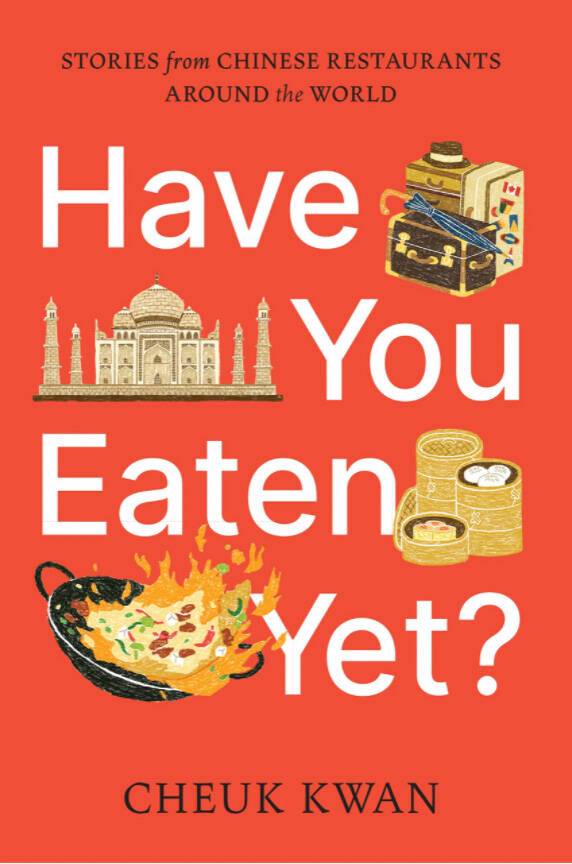
Spoken in Mandarin or Cantonese, the question “Have you eaten yet?” is a colloquial greeting that shows the importance of food in Chinese culture. Filmmaker, director and writer Cheuk Kwan aptly uses this phrase as the title of his book that details the history and personal experiences of Chinese restaurant owners from around the world.
Kwan bases his book on the 15-part documentary series, Chinese Restaurants, which he produced. Calling himself a card-carrying member of the Chinese diaspora, Kwan grew up in Singapore, Hong Kong and Japan, then attended university in the United States before moving to Canada. In his film series and book, Kwan explores the stories of Chinese families and individuals who have travelled far from their roots to open businesses in far-flung locales such as Argentina, Brazil, Canada, Cuba, India, Israel, Madagascar, Mauritius, Norway, Peru, South Africa, and Trinidad and Tobago. Interwoven with each story is some history on Chinese exploration and immigration patterns that resulted in Chinese settlement in all corners of the world. Kwan states that there are 40 million Chinese living in countries other than China.
“Family-run Chinese restaurants are global icons of immigration, community and good food,” Kwan writes. “They are found in every corner of the world: cultural outposts of brave sojourners and purveyors of dim sum, Peking duck and surprising culinary hybrids. Running a Chinese restaurant is the easiest path for new Chinese immigrants to integrate into the host society. It’s a unique trade where no other nationalities can compete, and it provides work for new arrivals, whether legal or illegal, helping them get on their feet.”
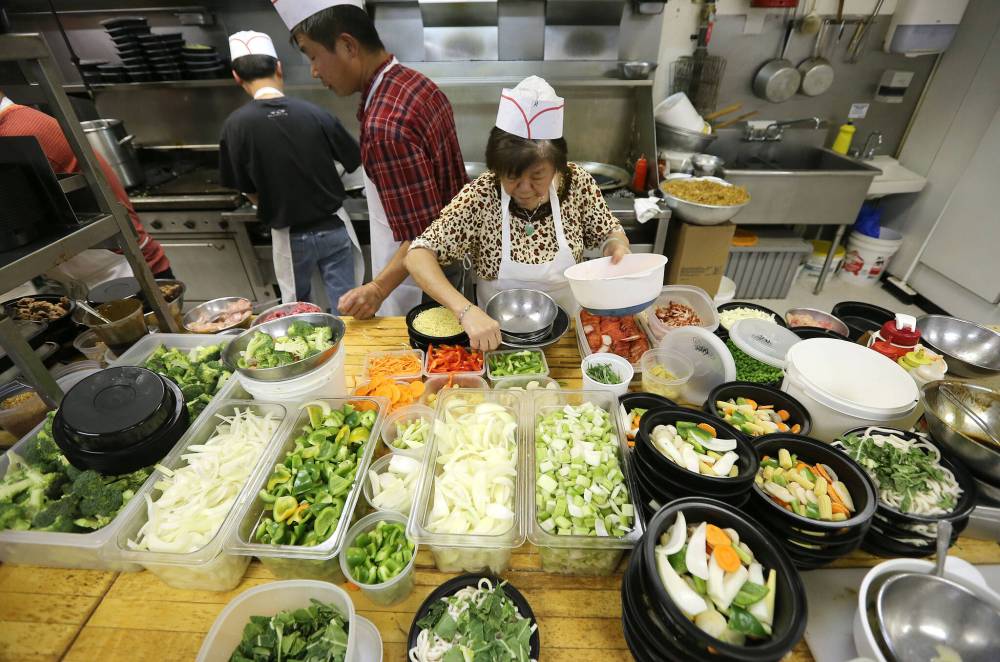
Kwan asks the question: are these Chinese emigrants defined by their nationality, or their ethnicity? He discovers that the answer varies with each person he meets during his travels.
Perhaps to acknowledge the years he’s spent living in Canada, Kwan’s book opens with a chapter on Noisy Jim, the late owner of the New Outlook Café in Outlook, Sask. Jim had taken over ownership of the restaurant in 1959, but it was owned by his “paper father.” Kwan explains how Chinese boys and men used the identities of deceased immigrants to come to Canada after the federal government passed the Chinese Exclusion Act in 1923. Jim became an important fixture in the small rural community, helping to raise money for the local high school hockey team. Kwan returned to Outlook to attend Jim’s funeral with relatives coming from across Canada, six pallbearers and 12 honourary pallbearers, with the local hockey team members acting as colour guards.
This chapter will bring to mind the Chinese restaurants that were part of many small communities across western Canada, and were sometimes the only restaurant (and the owners the sole Chinese family) in that town. Chinese dishes that had no place in traditional Chinese cooking, such as sweet and sour chicken balls, lemon chicken, chow mein and fried rice, were prepared to suit Canadians’ tastebuds.
Kien Wong and his family fled from Vietnam’s Ho Chi Minh City in 1978 and joined a freighter filled with 2,700 refugees seeking a port. Refused entry to Thailand, Malaysia and the Philippines, after 30 days 13 countries announced they would accept the refugees, and the Wongs ended up in Tel Aviv, Israel. First working at a Ford plant, Wong needed money to pay for his daughters’ university education, so opened the Yan Yan restaurant.
“Actually, it’s not hard to open a Chinese restaurant,” Wong tells Kwan. “If you can make almond chicken, green pepper and beef, sweet and sour pork, throw in spring rolls and salad, you’re in business. Israelis only want to eat these dishes.”
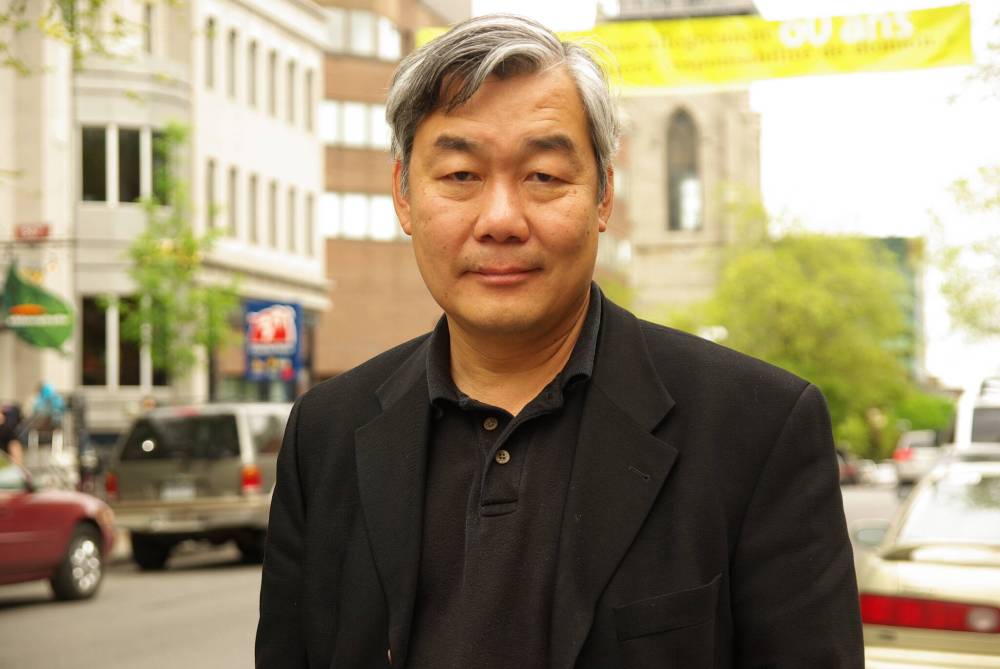
Israel is home to Jewish immigrants from Europe, the Middle East, the former Soviet Union and Asia, and Jewish migration to China began via the Silk Road in the eighth century. Kwan contends that the Jewish, Chinese and Indian peoples are the three largest diasporic people.

Even though Wong himself was born in Vietnam and never lived in China, he feels compelled to help Chinese migrant workers who come to Israel on two-year visas to work in Chinese state-owned companies — modern day indentured labourers. When asked who he really is, Wong replies that he has three nationalities — Chinese, Vietnamese and Israeli — but that he’s still Chinese.
Michael Wong and partner Chung Ting Lee operate Lille Buddha in Tromsø, Norway, located 350 kilometres inside the Arctic Circle. Supplies have to be shipped or trucked in from Oslo, which is 1,700 kilometres away. The restaurant’s menu features a mix of Cantonese and Sichuanese dishes favoured by the local Norwegians.
Like many of the restaurants owners Kwan interviews, the couple don’t plan on handing the business to their children, preferring they have a good education and more career opportunities. “And it becomes clear to me what Wong and Ting have been forced to give up,” Kwan writes. “They, like so many other immigrants, have chosen to put their family life aside, at least for a while, to guarantee a bright future for their children.”
Have You Eaten Yet? is filled with many more interesting personal stories interspersed with historical information on China and the movement of its people. At times, however, it’s difficult to figure out whose life story is being told, since each chapter covers the lives of numerous people, including Kwan’s own film crew.
Andrea Geary is a freelance writer living in Winnipeg.