1 month after oil spill, Lima’s beaches empty, cleanup slow
Advertisement
Read this article for free:
or
Already have an account? Log in here »
To continue reading, please subscribe:

Digital Subscription
One year of digital access for only $205*
- Enjoy unlimited reading on winnipegfreepress.com
- Read the E-Edition, our digital replica newspaper
- Access News Break, our award-winning app
- Play interactive puzzles
*First annual payment billed as $205.00 + GST for one year. This annual subscription will automatically renew at $233.00 + GST every 52 weeks (10% off the regular annual price of $259.35). Offer available to new and qualified returning subscribers only. Cancel any time.
To continue reading, please subscribe:
Add Free Press access to your Brandon Sun subscription for only an additional
$1 for the first 4 weeks*
- Enjoy unlimited reading on winnipegfreepress.com
- Read the E-Edition, our digital replica newspaper
- Access News Break, our award-winning app
- Play interactive puzzles
*Your next Brandon Sun subscription payment will increase by $1.00 and you will be charged $17.95 plus GST for four weeks. After four weeks, your payment will increase to $24.95 plus GST every four weeks.
Read unlimited articles for free today:
or
Already have an account? Log in here »
Hey there, time traveller!
This article was published 15/02/2022 (1684 days ago), so information in it may no longer be current.
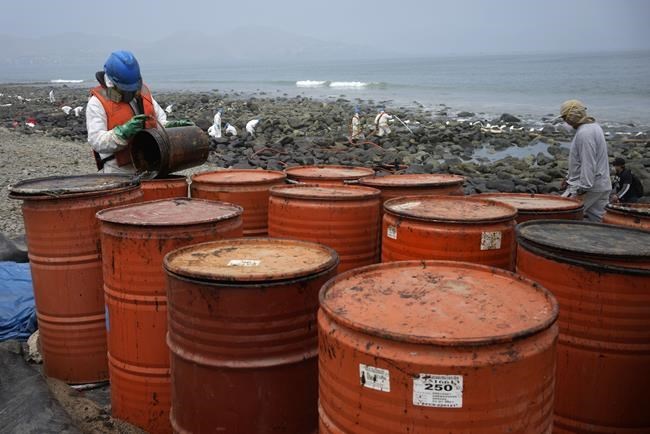
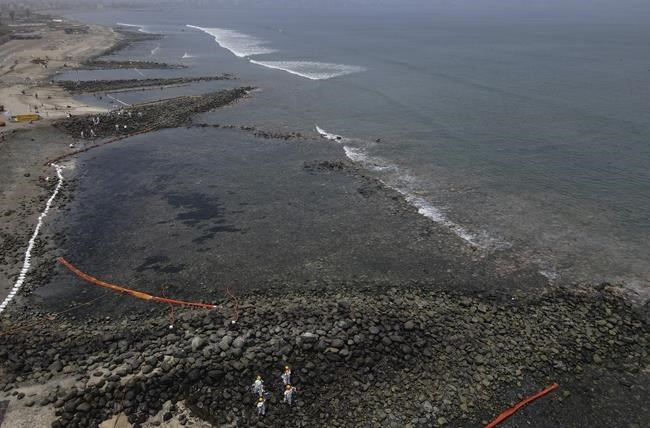
LIMA, Peru (AP) — Dozens of beaches near Lima were deserted and thousands of fishermen remained without work Tuesday, one month after an oil spill at a refinery created what the United Nations called the worst ecological disaster in Peru’s recent history.
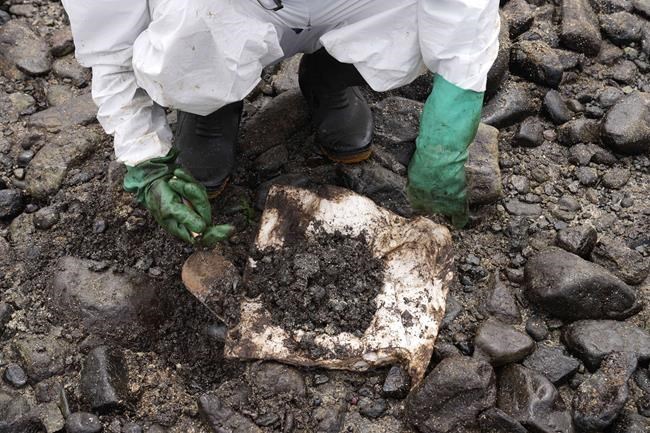
Clean up of the oil is going slowly, with Peruvian authorities saying that less than a quarter of the 11,900 barrels spilled into Pacific Ocean on Jan. 15 has been collected. Spanish oil company Repsol says only 10,300 barrels spilled that day at its La Pampilla refinery in front of Peru’s capital.
Environment Minister Modesto Montoya on Monday said that 2,000 barrels have been recovered. Repsol did not immediately respond to requests for comment on the number of barrels collected.
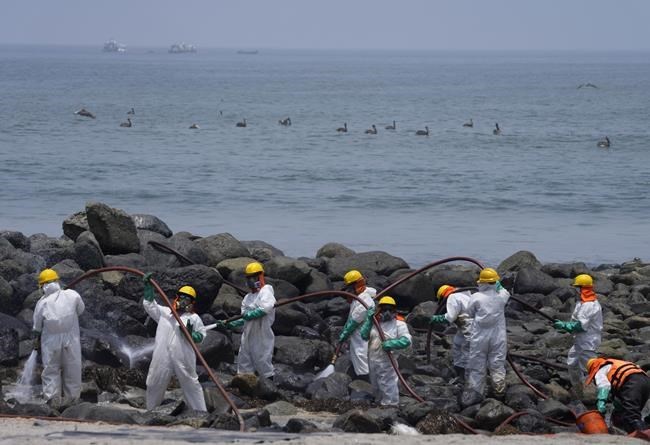
Chocolate-colored foam bobs on the waters in front of Lima, its appearance a product of the “physical-chemical” reaction between the spilled oil and moving seawater, said Montoya, citing experts from a U.N. multidisciplinary team that has analyzed the spill.
Thousands of fishermen sit idly by, unable to harvest the fish and shellfish they normally extract from the roughly 113 square kilometers (44 square miles) affected by the spill, according to authorities. It is an area larger than the city of Paris.
“We don’t get an answer from anyone, they just give us crumbs” of information, said fisherman Ricardo Estrada, 38, standing on the pier in Ancón, one of 24 polluted beaches on Peru’s coast.
Ancón’s beach, which has a boardwalk that is normally bursting with tourists this time of year, is now empty.
“It looks like an empty cathedral,” said Estrada, who has an 8-year-old son and cares for his elderly parents. He looks at a dead seabird that lies on the pier where fish are normally sold.
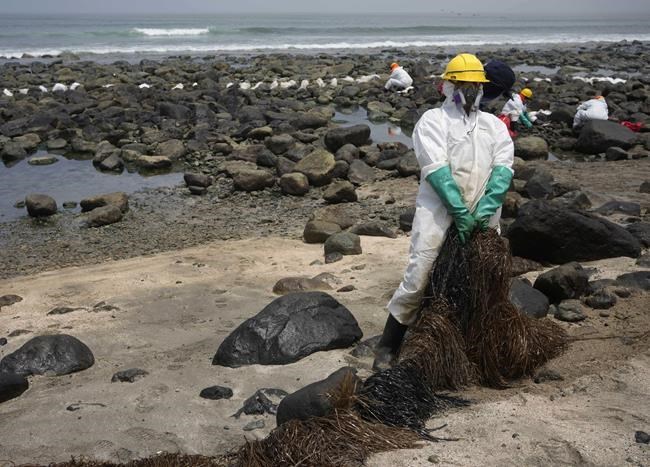
“The animals keep dying,” he said.
Officials say at least 1,200 oil-covered birds have been found, including cormorants, Peruvian boobies, Humboldt penguins, pelicans and seagulls. Peru’s National Service for Protected Natural Areas says another 260 birds were found dead.
Peru’s government still does not have a full estimate of the economic damage caused by the spill. President Pedro Castillo has changed environment ministers three times amid the environmental disaster, with one minister lasting just three days.
At the end of January, a judge prohibited the local director of Repsol, Jaime Fernández-Cuesta, three company managers and a state official from leaving Peru for 18 months. They are being investigated for alleged environmental crimes.

The unemployed fishermen attended a Mass in Lima’s cathedral last weekend. They brought with them their empty nets and asked the government not to forget them.
The spill took place while crude oil was being unloaded at the refinery from the Italian ship Mare Doricum.
Repsol blames the ship for the spill, but Fratelli d’Amico Armatori SpA, the company that owns the ship, told The Associated Press on Tuesday that “it is important that we do not provide information that is incorrect or misleading.”
“We can confirm that our evaluation of the tests to date shows that all onboard protocols and procedures were followed by the vessel at the time of unloading and from the moment oil was observed in the water,” the Italian company said. The ship has been seized by Peruvian authorities.
Repsol’s La Pampilla refinery is the most important one in Peru and supplies fuel to 40% of the country.