Is a better Winnipeg on the horizon?
Read this article for free:
or
Already have an account? Log in here »
To continue reading, please subscribe:

Digital Subscription
One year of digital access for only $205*
- Enjoy unlimited reading on winnipegfreepress.com
- Read the E-Edition, our digital replica newspaper
- Access News Break, our award-winning app
- Play interactive puzzles
*First annual payment billed as $205.00 + GST for one year. This annual subscription will automatically renew at $233.00 + GST every 52 weeks (10% off the regular annual price of $259.35). Offer available to new and qualified returning subscribers only. Cancel any time.
To continue reading, please subscribe:
Add Free Press access to your Brandon Sun subscription for only an additional
$1 for the first 4 weeks*
- Enjoy unlimited reading on winnipegfreepress.com
- Read the E-Edition, our digital replica newspaper
- Access News Break, our award-winning app
- Play interactive puzzles
*Your next Brandon Sun subscription payment will increase by $1.00 and you will be charged $17.95 plus GST for four weeks. After four weeks, your payment will increase to $24.95 plus GST every four weeks.
Read unlimited articles for free today:
or
Already have an account? Log in here »
It’s no surprise that a city with the country’s most famous intersection would find itself at a crossroads.
While candidates in the upcoming municipal election may be promising safer streets, smoother streets, and even streets with more housing, Winnipeggers aren’t buying it.
Instead, two recent polls commissioned by the Free Press paint a gloomy picture of the Winnipeg electorate, suggesting a state of malaise has taken root.
According to a new Abacus Data (formerly Probe Research) poll, voters are uninspired by their election-box choices, with 51 per cent saying they are undecided about who to vote for mayor. Another 13 per cent say they don’t plan to cast a ballot at all. Meanwhile, a June poll by Probe found two-thirds of Winnipeggers expressed unhappiness with the state of the city, saying the quality of life has deteriorated over the past four years.
Against that backdrop, we asked four Free Press columnists to weigh in on the challenges ahead and how the city can become better. Tom Brodbeck cautions against candidates’ promises without price tags, Rebecca Chambers seeks a city hall that supports, not ignores, inner-city neighbourhoods, Niigaan Sinclair says addressing the often-strained relationship with Winnipeg’s Indigenous population remains paramount, while Brent Bellamy calls for a vision of hope.
JOHN WOODS / FREE PRESS
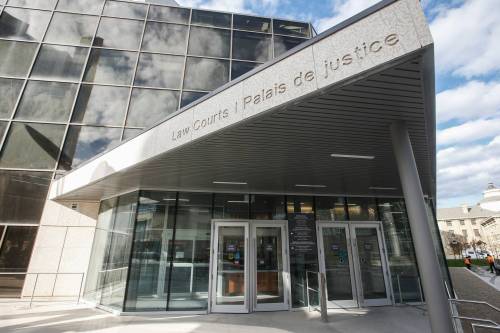
How do we pay for promises?
By Tom Brodbeck
Winnipeg voters are going to hear plenty of promises during this year’s municipal election about fixing roads, improving public safety and making transit better.
What they need to hear is how candidates intend to pay for them.
That is the fundamental problem facing city hall, and it’s one no mayoral or council candidate should be allowed to dodge.
The city needs more money, there is no getting around that.
Property taxes will have to continue to rise to keep pace with inflation, population growth and the growing cost of delivering municipal services. Anyone promising otherwise is either ignoring reality or hoping voters will.
But raising property taxes cannot be the only answer.
Winnipeg has a uniquely difficult fiscal problem. Provincial and federal governments have access to income and sales taxes, which grow along with the economy. When people earn more, governments collect more income tax. When consumers spend more, governments collect more sales tax.
Cities don’t have that advantage.
Winnipeg relies heavily on property taxes, and property-tax revenue does not automatically grow as the economy grows.
The city can have a booming economy, rising incomes and record consumer spending, yet still find itself struggling to pay for the basics unless it raises property taxes or finds new sources of revenue.
That is why the provincial government needs to give Winnipeg access to some form of consumption tax.
The city has been discussing that possibility with the province for years. But so far, it has gone nowhere.
Maybe those discussions will eventually produce results. They should.
But in the meantime, Winnipeg cannot build its financial future around hopes the province will finally come to the table on this crucial fiscal need.
So the question becomes: What can the city do on its own to improve its fiscal position and avoid the frequent deficits it’s been posting in recent years (covered in large part by drawing down reserves)?
There are no doubt savings to be found at the city. The problem is finding them without simply cutting services and pretending that is fiscal reform.
For starters, every major municipal service should be regularly subjected to a serious review of what it costs, what it delivers and whether there is a less expensive way to achieve the same result.
That doesn’t mean arbitrarily slashing budgets by five or 10 per cent across the board. Across-the-board cuts are the lazy politician’s version of fiscal discipline. They treat efficient programs and wasteful ones exactly the same.
The city needs to get much better at determining what works and what doesn’t.
Are programs meeting their objectives? Are they duplicating services offered by another level of government or different civic department? Are there outdated programs that have continued simply because no one has bothered to ask whether they are still needed?
Those are the kinds of questions an incoming mayor and council should be asking.
Winnipeg should also take a hard look at how it delivers services.
Governments have a tendency to accumulate layers of administration, procedures and bureaucracy. Every department, agency and program may have a reason for existing. That doesn’t mean the entire structure still makes sense.
Technology should also be playing a much bigger role in finding efficiencies. There are services that can be delivered faster and more cheaply online.
There are administrative processes that can be automated. There are opportunities to share services and purchasing power with other governments and public institutions.
None of that will produce a magical pile of money overnight. But the city’s fiscal problems weren’t created overnight, either.
And then there is infrastructure.
Winnipeg’s infrastructure deficit is one of its biggest financial problems because delaying repairs only makes them more expensive.
For years, politicians have been tempted to defer maintenance because it’s easier politically to cut back on repairs than to raise taxes.
The pothole that doesn’t get fixed this year becomes a bigger and more expensive problem later. The underground pipe that isn’t replaced before it fails eventually has to be repaired in an emergency, usually at a much higher cost.
That is not saving money. It is passing the bill to future taxpayers.
The city needs a more disciplined, long-term approach to infrastructure planning, including finding ways to make better use of its existing assets before rushing to build new ones.
Every new road, bridge, building and facility creates future maintenance costs. City council needs to stop evaluating capital projects based solely on what they cost to build and start paying closer attention to what they will cost to maintain for decades.
Winnipeggers want better roads. They want safer streets and neighbourhoods. They want reliable transit. They also want taxes kept under control.
All of those things are reasonable. But they are not free.
The debate in this election should not be over which candidate can make the most promises without talking about the price tag. It should be about who has the most credible plan for putting Winnipeg on a sustainable financial footing.
tom.brodbeck@freepress.mb.ca
JOHN WOODS / FREE PRESS
Inner city needs to matter at city hall
By Rebecca Chambers
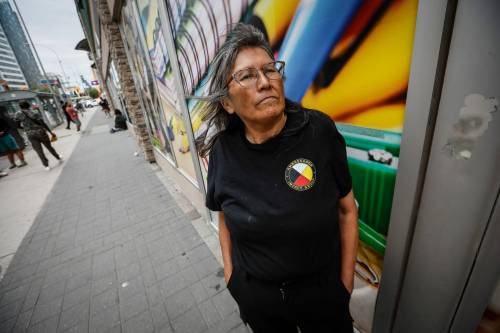
A couple of months ago, I wrote a column in the form of a wish list for West Broadway, a bit of a spicy open letter directed to the mayor, reminding him of the basic needs of inner-city Winnipeggers that have gone unmet. Things like youth sports programming, better street lighting and improved recreation.
Usually, when I receive letters of encouragement (or critique) from readers I try to respond to each one. But the volume of responses to that column was daunting, and I fell short in getting back to everyone. I realize now part of my surprise was a realization that what happens in the inner city matters so much to other Winnipeggers. Again and again, readers told me what area of the city they’re writing from, and the care and concern they have when visiting or thinking about neighbourhoods like mine. All over Winnipeg, people want a healthy city and they want their fractured home town made whole.
It is a strange realization to arrive at an understanding that your experience doesn’t matter, that you’ve internalized it. It’s a position that makes for a disorienting experience when folks say they care. But living in West Broadway and feeling like we’re on our own in the eyes of those in power, as I said in my previous column, is a signal to close ranks and shrink the circle of care we know we can rely on. When we don’t see the impact of broader acts of governance, we cease to believe our own voices and lives matter outside of our immediate contacts. I can only imagine it’s the same in parts of Point Douglas, the North End, Elmwood and other overlooked, and therefore muted, areas of our city.
It’s easy to throw stereotypes at voters of the inner city. Lazy, uneducated, uninvolved, ignorant to the power of their vote. But when we accept that these neighbourhoods have become insular, that they are laterally strong but hierarchically forgotten, the low voter turnout makes sense.
Having served on neighbourhood boards in the past, I can say this is not down to a lack of trying. Inner-city residents are called upon again and again to fight for their neighbourhood pool to stay open, to fight for their library branch to maintain hours, to fight for their neighbourhood associations to retain funding. These fights can fatigue the few who are privileged enough to take up arms, and the dismissive handling of concerns from the inner city is a damaging pattern.
The insular nature of these communities makes it difficult to establish city-wide connections and conversations, which is how the multitude of responses to my previous column came to surprise me and fortify this one. Our shared way of life in these communities makes our needs unique. We live in little villages of people who — compared to most Winnipeggers in other areas — remain closer to home, drive less, rely on transit to a greater degree, encounter difference and danger more often, and spend more time on our front steps engaging with one another. Because of their small size and generally abundant amenities, these little villages should be fertile locales in which to foster a sense of ownership and belonging. But we can’t do it alone.
We need help with housing. The mayor and council repeatedly tell us housing is a provincial responsibility, but it’s civic policies that prevent demolition of derelict housing without a building permit. With many inner-city property owners unable to afford the cost of demolition (let alone the cost of building plans), the structures remain, rotting in place and further degrading our quality of life. Despite the recent announcements of streamlining housing permits and accelerating approvals, little has been said about the inner city. One may suspect these recent announcements will only increase sprawl on the city’s outskirts, further bleeding the inner city of tax dollars and amenities.
Many of us don’t drive. Many of us cannot afford children’s after-school activities. Neighbourhood organizations can only do so much, so we need to activate hierarchical structures that can support them. We need neighbourhood recreation centres that take into consideration how far families can travel and how far children can go independently. This is not a handing off of parental responsibilities but a basic request for equitable access to recreational opportunities for youth whose parents don’t drive in a city with insufficient public transportation.
We need transit that follows our patterns of travel, not a system that provides equal coverage to a city of very unequal transit usage. This one should have been a no-brainer, but alas, the Free Press discovered last year that no neighbourhood lost more bus stops during the Winnipeg Transit overhaul than the North End.
In short, we need to matter. People who matter are taken into account. They are allowed to speak. They are never ignored. Others make time for them. People who matter are cared for and their comfort is planned for. As our readers show, the inner city matters a great deal to people all over Winnipeg. It’s time it also mattered at city hall.
rebecca.chambers@winnipegfreepress.com
JOHN WOODS / FREE PRESS
Relationship with Indigenous Winnipeggers key to city’s vitality
By Niigaan Sinclair
Last week, five former mayors took the stage at a business-centred conference called “Edmonton Then and Now: The Leaders Who Shaped this City.”
The former Edmonton mayors took turns talking about issues they tackled, from construction projects and light-rail transit, to public safety, taxes and social services, and offered advice to current mayor Andrew Knack and his city council.
Former mayor Stephen Mandel delivered the bluntest assessment of the state of Edmonton.
Calling that city’s core a “craphole,” Mandel said: “Tears come to my eyes when I see what’s going on … The only thing downtown that has anything is the arena. If you didn’t have the arena downtown, you could blow it up and no one would know.”
I don’t know much about Mandel or his years as mayor of Edmonton from 2004 to 2013 but, with due respect, I think some might care if the city’s core was blown up.
Try, for example, the 5,000 homeless people — of which 65 per cent are Indigenous, according to Homeward Trust Edmonton. Their friends and families, which number tens of thousands more, probably would care too.
With callous, inhumane and cold civic “leaders” like these, who needs enemies?
There are 66 candidates running in our municipal election next month, yet Winnipeg voters have likely heard more about candidates running in provincial elections in Québec (Oct. 5) and British Columbia (Oct. 24), advocates in Alberta’s referendum (Oct. 19) or the hundreds of individuals involved in the U.S. mid-term elections (Nov. 3) than those vying to become our city’s next mayor or one of 15 councillors.
Some of this can be blamed on the amount of attention media has paid to the local campaign, but the fact no candidate has proposed ideas bold enough to grab voters’ attention is equally a problem.
Especially when one considers Winnipeg’s most pressing issue.
Hint: it isn’t construction projects, light-rail transit, public safety, taxes or social services.
But rather, it’s an issue that impacts all of those: the city’s relationship with Indigenous peoples.
Is there any issue more central, more crucial, or more critical than how our civic leaders can and will work with Indigenous peoples?
At approximately 90,000 people, one-fifth of Winnipeg’s citizenry is Indigenous, making it the largest urban Indigenous population in Canada. Indigenous Winnipeggers are the fastest-growing demographic in the region, with the majority under the age of 35.
Winnipeg’s mayor and councillors shape the city’s social, economic and political life. These strands, in every conceivable way, are intricately woven throughout the city’s core, directly impacting its Indigenous citizens.
Indigenous Winnipeggers constitute the most important potential labour market in the city who need — thanks to a long history of problematic policies and practices — training and opportunities, particularly considering private and public sector labour shortages.
Winnipeg has committed to the Truth and Reconciliation Commission’s 94 calls to action and much of this is found in the delivery of the city’s Indigenous Accord, which calls on everyone in every industry to commit to working with and alongside Indigenous peoples.
Working with Indigenous Winnipeggers involves far more than addressing safety concerns, housing and infrastructure in areas like the North End and North Point Douglas, yet these critical areas impact nearly every program, service and employee in the city.
Winnipeg has come a long way in the decade since being labelled “Canada’s Most Racist City” by Maclean’s magazine, but racism still infects a great deal of the infrastructure of the city and one simply can’t just “blow it up”; one has to propose and try solutions.
In fact, Winnipeg is home to many of this country’s most innovative and bravest ideas to assuage the struggles of Indigenous urban life while empowering all citizens to work, live and grow together.
There are the Indigenous-led, multi-million-dollar downtown developments by the Manitoba Métis Federation and the Southern Chiefs Organization.
There are the urban reserves established by Peguis First Nation, Long Plain First Nation and, of course, the Naawi Oodena project that will reimagine the 160 acres of the former Kapyong Barracks. All of these initiatives have provided critical investment in the city.
There’s the opening of the first-ever Indigenous-led supervised consumption site.
Or how about the dozen or so Indigenous-led safety patrols that facilitate a more positive relationship with vulnerable citizens than do police and paramedics?
Indigenous leaders have also partnered with civic leadership to address the complicated issues of homelessness, addiction, hunger and housing.
Simply put, Winnipeg’s mayor and council cannot be incompetent in how they deal with Indigenous peoples.
In fact, the expertise required in understanding how to work ethically, responsibly and creatively with Indigenous peoples could be the most critical skill brought to the council table. Anyone without it, frankly, doesn’t deserve a second thought.
As candidates knock on your front door in the hopes of gaining your vote, it’s vital to ask how they will work with Indigenous Winnipeggers. Period.
niigaan.sinclair@winnipegfreepress.com
JOHN WOODS / FREE PRESS
Shaping better city starts with real vision
By Brent Bellamy
Last Saturday, the Free Press ran a front-page headline that read, An uninspired electorate, reporting that almost two-thirds of city voters are either undecided or planning not to vote in next month’s civic election.
This isn’t unusual. Engagement in municipal elections is often low, as campaigns can become uninspired debates about potholes, taxes, crime and traffic. These things matter, but they describe the city as a collection of problems to be managed, rather than inspiring us with a greater vision of what our city might become. Winnipeg voters may not be apathetic. They may simply be uninspired.
Engaging voters with big-picture thinking doesn’t necessarily mean promising mega-projects or billion-dollar transformations. Vision is not a list of promises. It’s a way of thinking that asks what kind of city we want to be, then uses the answers to shape the decisions that will get us there.
Too often, elections are framed around solving immediate concerns. We forget that we are not just voting on today’s issues; we are electing the people who will make decisions that shape what our city will become in the future, defining the city that the next generations will inherit from us. This means we have a responsibility to think beyond our own priorities and consider what kind of city our children and grandchildren will want to live in.
Because of this, a vision for our city that should be demanded of all candidates is one that makes the next generations want to stay, build a life and fall in love with our city. A vision that consistently asks a simple question during civic decision-making: Would this make a young person or young family more likely to build their future in Winnipeg?
This question gives us a different way to think about almost every aspect of city-building. It connects housing to transportation, transportation to neighbourhood design, neighbourhood design to local businesses, and all of it to the quality of daily life and our sense of connection to each other.
If we want young people to choose Winnipeg, we should understand what they are looking for when they consider where to put down roots. Increasingly, young people are choosing neighbourhoods, here and in other cities, where they can walk to a coffee shop, meet friends on the street, take transit or ride a bike to work, discover a new restaurant, and feel part of a larger community.
Across North America, including in Winnipeg, young people are demonstrating a generational shift toward more urban living, with a greater preference for diverse, higher-density neighbourhoods where shops, restaurants, services, employment and education are within walking distance of home.
We can see this preference within Winnipeg itself. Almost twice as many young adults live in walkable, urban neighbourhoods such as Osborne Village, Corydon-Earl Grey and Broadway-Assiniboine than the city average. Residents in these neighbourhoods use public transit twice as often and walk or bike to work three to four times more often than the city average. Higher-density neighbourhoods make these mobility options more viable. A lifestyle less reliant on driving can be more affordable, significantly reducing household transportation costs and allowing young families to spend more of their income on other quality-of-life priorities, like housing, travel or recreation.
If we want young people to choose Winnipeg, this lifestyle option must be made more available to them. Otherwise, we should not be surprised when they move to other cities to find it.
Yet we still resist by fighting the construction of more diverse housing options in our neighbourhoods, like multiplexes and rental apartments, because they don’t fit a perceived character. We often care more about traffic or parking than we do about offering people a place to live. When we do this, we are telling young families who can’t afford a single-family house that they are not welcome here, and that their children don’t deserve the opportunity to enjoy the parks, schools, community centres and social networks current residents love.
When we say no to higher density, we are saying no to supporting local businesses and walkable neighbourhood main streets that are a vital piece of social infrastructure in most Canadian cities. They are places where people can walk, eat, socialize, linger, shop, see and be seen. Vibrant, active and walkable streets and public spaces provide moments of discovery and delight, with the opportunities for social connection young people crave. The unscheduled encounters. The walk to the corner store. The neighbour met on the sidewalk. The bench in the park. The coffee shop where familiar faces begin to become friends. The public space where something is happening without an invitation.
Yet Winnipeg has only fragments of these types of streets, a few blocks here and there, not enough to create the continuous, varied street life that makes an urban neighbourhood feel complete. This is because most of our neighbourhoods don’t have enough people living close enough together to support them.
Those social experiences may be one of the most important things a city can provide to a generation progressively more concerned about loneliness. Young adulthood can be isolating in a world of increasing digital socialization. A city cannot solve loneliness, but it can create a sense of belonging and familiarity that facilitates social connection. It can invest in community centres, public spaces and “third places” that bring young people together. It can support artistic and cultural organizations that provide experiences to enrich their lives and foster an emotional attachment to the city. It can make the spaces and places of everyday life beautiful, creating a sense of pride in the communities we share.
Demanding a city-building vision from our civic leadership that prioritizes the desires of young people is the kind of thinking that could give Winnipeg a more compelling future. They aren’t looking for a city with fewer potholes, but one where they can find a home, a job, a favourite neighbourhood, a local coffee shop, a great place to meet friends and a reason to stay. A city where building a future is not a compromise, but an opportunity they are excited to choose.
Perhaps that’s what voters are waiting to hear. They may not be looking for another promise to manage the city a little better. They may be waiting for someone to describe a Winnipeg worth falling in love with, not just today, but for the generations that will inherit it.
brent.bellamy@winnipegfreepress.com

Tom Brodbeck is an award-winning author and columnist with over 30 years experience in print media.

Rebecca explores what it means to be a Winnipegger by layering experiences and reactions to current events upon our unique and sometimes contentious history and culture. Her column appears alternating Saturdays.

Niigaan Sinclair is Anishinaabe from Peguis First Nation and a professor in the Department of Indigenous Studies at the University of Manitoba. He's been a columnist for the Free Press since 2018.

Brent Bellamy is creative director for Number Ten Architectural Group.
Our newsroom depends on a growing audience of readers to power our journalism. If you are not a paid reader, please consider becoming a subscriber.
Our newsroom depends on its audience of readers to power our journalism. Thank you for your support.