

Amid the Ukraine crises, the world must not turn its back on others in need
Advertisement
Read this article for free:
or
Already have an account? Log in here »
To continue reading, please subscribe:

Digital Subscription
One year of digital access for only $205*
- Enjoy unlimited reading on winnipegfreepress.com
- Read the E-Edition, our digital replica newspaper
- Access News Break, our award-winning app
- Play interactive puzzles
*First annual payment billed as $205.00 + GST for one year. This annual subscription will automatically renew at $233.00 + GST every 52 weeks (10% off the regular annual price of $259.35). Offer available to new and qualified returning subscribers only. Cancel any time.
To continue reading, please subscribe:
Add Free Press access to your Brandon Sun subscription for only an additional
$1 for the first 4 weeks*
- Enjoy unlimited reading on winnipegfreepress.com
- Read the E-Edition, our digital replica newspaper
- Access News Break, our award-winning app
- Play interactive puzzles
*Your next Brandon Sun subscription payment will increase by $1.00 and you will be charged $17.95 plus GST for four weeks. After four weeks, your payment will increase to $24.95 plus GST every four weeks.
Read unlimited articles for free today:
or
Already have an account? Log in here »
Hey there, time traveller!
This article was published 04/04/2022 (1648 days ago), so information in it may no longer be current.
A humanitarian tragedy is underway in Afghanistan. Some nine million people are on the brink of starvation. It’s so bad, says UN Secretary General Antonio Gutteres, that some have been reduced to selling their children or body parts to survive.
You’d think that would get the world’s attention. But when the UN held a “donors conference” to drum up emergency aid for Afghanistan last week, it came up way short. The goal was $4.4 billion (U.S.), but 41 countries pledged just $2.4 billion (Canada kicked in an extra $50 million).
Afghanistan, sadly, isn’t alone among crisis-torn countries that are going begging these days. A donors conference was held a month ago to collect aid funds for Yemen, where a seven-year war has created what the UN says is the world’s most acute humanitarian disaster.
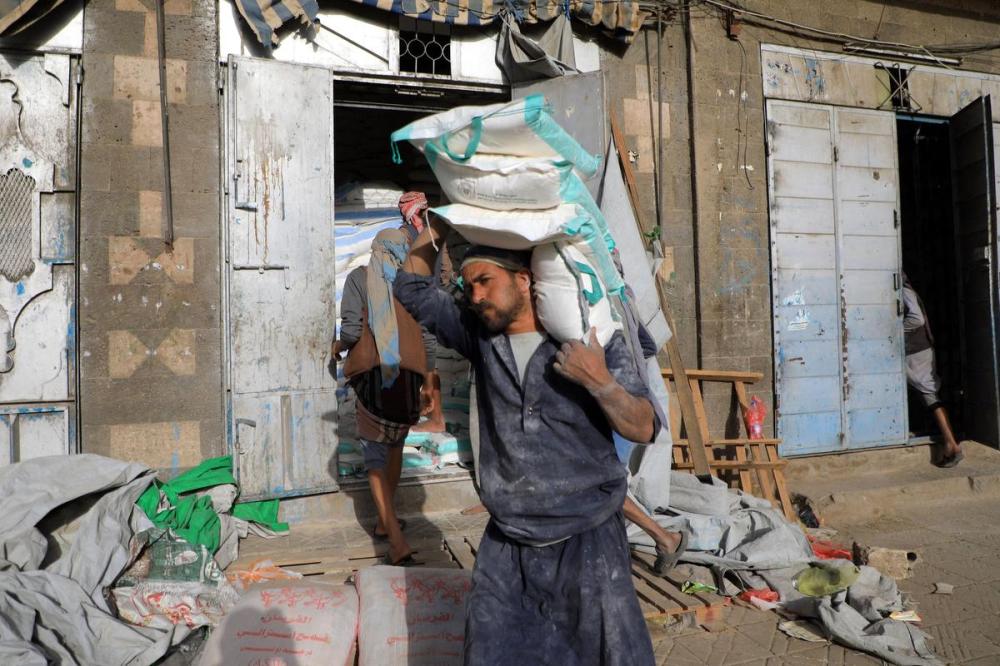
That conference managed to raise less than a third of what it was seeking — just $1.3 billion (U.S.) out of a goal of $4.3 billion.
It’s never easy to collect billions for long-running humanitarian disasters that can seem unsolvable. But right now there’s an additional issue: the intense focus of world leaders, world donors and the world’s news media on the war in Ukraine is sucking attention and dollars away from many other regions where millions are also suffering and dying.
Aside from Afghanistan and Yemen, there’s Ethiopia, whose government is waging a vicious war against rebels in the northern region of Tigray.
The UN High Commissioner for Human Rights reported a few weeks ago that 40 per cent of the population of Tigray faces acute hunger. Thousands of civilians have been killed and the government is engaged in massive violations of human rights, it said. To make matters worse, the government has imposed a blockade on humanitarian aid to the worst-hit regions.
There’s also Myanmar (formerly Burma) and neighbouring Bangladesh, where close to a million Muslim Rohingya people languish in refugee camps after being hounded out of the country. Global attention on their plight has pretty much vanished.

Add to that the ongoing crisis in Syria and refugees from Africa and the Middle East risking their lives to reach Europe. It’s a litany of misery made more pathetic by the lack of attention and the evaporation of aid dollars directed their way.
Some explain that as straightforward racism, and there’s some of that. But it’s a simplistic story. Russia’s invasion of Ukraine didn’t just create a massive humanitarian crisis; it also challenged the foundations of world peace and raised the horrifying prospect of nuclear conflict. The tragedies in Tigray and Myanmar, however dire on a human level, just don’t do that.
Nor does it explain why rich non-European countries don’t take up the slack. Saudi Arabia and other Gulf states could direct a lot more aid to the Rohingya, for example, but they haven’t. (The Saudis, in fact, are behind the devastating war in Yemen.) China, which also has resources, hasn’t jumped in either. Indeed, it defends Myanmar’s military government against criticism of its treatment of the Rohingyas.
The disparity in news coverage certainly plays a big role. Ukraine’s suffering has been on full public display and its leaders have excelled at telling their story to the world. Others suffer in silence; Ethiopia’s government, for instance, has managed to stop news media from reaching Tigray and witnessing its tragedy first-hand.
Explanations, however, must not be used as excuses. Ukraine deserves all the attention and aid it’s getting. But the world must make sure it does not turn its back on the millions of other people caught up in crises not of their own making.
Related Articles
Russia faces global outrage over bodies in Ukraine's streets
Advertisement Advertise With Us
Advertisement Advertise With Us