

Canada’s ambassador will return to Ukraine as soon as it’s safe, Joly says
Advertisement
Read this article for free:
or
Already have an account? Log in here »
To continue reading, please subscribe:
Digital Subscription
One year of digital access for only $1.44 a week*
- Enjoy unlimited reading on winnipegfreepress.com
- Read the E-Edition, our digital replica newspaper
- Access News Break, our award-winning app
- Play interactive puzzles
*Billed as $5.77 plus GST every four weeks. After 52 weeks, price increases to the regular rate of $19.95 plus GST every four weeks. Offer available to new and qualified returning subscribers only. Cancel any time.
To continue reading, please subscribe:
Add Free Press access to your Brandon Sun subscription for only an additional
$1 for the first 4 weeks*
- Enjoy unlimited reading on winnipegfreepress.com
- Read the E-Edition, our digital replica newspaper
- Access News Break, our award-winning app
- Play interactive puzzles
*Your next Brandon Sun subscription payment will increase by $1.00 and you will be charged $17.95 plus GST for four weeks. After four weeks, your payment will increase to $24.95 plus GST every four weeks.
Read unlimited articles for free today:
or
Already have an account? Log in here »
Hey there, time traveller!
This article was published 04/05/2022 (1630 days ago), so information in it may no longer be current.
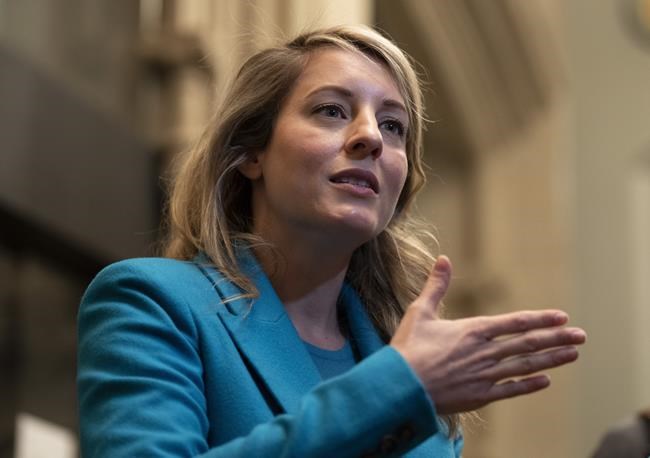
OTTAWA – Foreign Affairs Minister Mélanie Joly says Canada’s ambassador to Ukraine will return to the country as soon as it is safe to do so, but neither she nor the prime minister would say whether they are planning to visit.
Canada began scaling down its diplomatic presence in Ukraine in late January as intelligence warned of an impending Russian invasion.
Families of diplomatic staff were evacuated first on Jan. 25, followed by non-essential staff on Jan. 30.
On Feb. 12 the embassy was relocated to Lviv in western Ukraine, and then to Poland on Feb. 24, the day Russia invaded. Ambassador Larisa Galadza remains in Poland.
Representatives from most western countries fled Ukraine as the war erupted, but more than two dozen have already gone back, even as the conflict drags on.
Several of Canada’s G7 allies have already returned to Kyiv — France and Italy the third week of April, and the United Kingdom as of last week.
The United States is starting by sending diplomats on day trips into the western part of Ukraine before restoring the embassy presence in the capital of Kyiv. U.S. Secretary of State Antony Blinken visited last week. U.S. House Speaker Nancy Pelosi was in Kyiv May 1.
Joly said April 22 that Canada was looking at how to safely reopen the embassy and last week said Canada was looking at what its Five Eyes colleagues were doing. The Five Eyes is an intelligence alliance made up of Australia, New Zealand, the United Kingdom, United States and Canada.
An Australian foreign ministry spokesperson told local media Wednesday the situation was under review but for now, the Australian embassy staff will continue to work out of Poland.
New Zealand normally has only an honorary consul in Ukraine, with diplomatic staff at the embassy in Poland aiding New Zealand citizens in Ukraine.
Joly stressed security remains an issue, noting Russian airstrikes near Kyiv and in Lviv Wednesday.
“Well, definitely, our goal is to make sure that we return a diplomatic presence, indeed, in Ukraine,” she said Wednesday.
“I can already confirm you that Larisa Galadza, who was our ambassador to Ukraine and stationed in the south of Poland, will be going back. That’s clearly our objective. Now I’m looking in terms of days to make sure that we can make that announcement.”
It remains unclear when or whether Joly or Prime Minister Justin Trudeau will visit Ukraine.
Joly referred to the need for a security assessment. Trudeau ignored the question as he left the Liberal caucus meeting Wednesday. On his way into the House of Commons later for question period, he said only that Canada stands with Ukraine and is in constant contact with the government.
“We continue to look for every way we cannot just support them, but continue to demonstrate our support for them,” Trudeau said.
Multiple world leaders have travelled to Kyiv in recent weeks to show solidarity with Ukraine, British Prime Minister Boris Johnson, Austrian Chancellor Karl Nehammer, and European Commission President Ursula von der Leyen.
Trudeau travelled to Europe in March for meetings on the invasion in Ukraine, with stops in the U.K., Poland, Latvia and Germany.
This report by The Canadian Press was first published May 4, 2022.
Related Articles
'Seemed like goodbye': Mariupol defenders make their stand
Advertisement Advertise With Us
Advertisement Advertise With Us