Pulitzer Prizes award Washington Post for Jan. 6 coverage

Advertisement

Advertise with us

NEW YORK (AP) — The Washington Post won the Pulitzer Prize in public service journalism Monday for its coverage of the Jan. 6 insurrection at the U.S. Capitol, an attack on democracy that was a shocking start to a tumultuous year that also saw the end of the United States’ longest war, in Afghanistan.

Read this article for free:


or

Already have an account? Log in here »

To continue reading, please subscribe:

Subscribe and receive a limited-edition Free Press branded hat or tote.

Digital Subscription

One year of digital access for only $205*

  • Enjoy unlimited reading on winnipegfreepress.com
  • Read the E-Edition, our digital replica newspaper
  • Access News Break, our award-winning app
  • Play interactive puzzles

*First annual payment billed as $205.00 + GST for one year. This annual subscription will automatically renew at $233.00 + GST every 52 weeks (10% off the regular annual price of $259.35). Offer available to new and qualified returning subscribers only. Cancel any time.

To continue reading, please subscribe:

Add Free Press access to your Brandon Sun subscription for only an additional

$1 for the first 4 weeks*

  • Enjoy unlimited reading on winnipegfreepress.com
  • Read the E-Edition, our digital replica newspaper
  • Access News Break, our award-winning app
  • Play interactive puzzles
Start now

*Your next Brandon Sun subscription payment will increase by $1.00 and you will be charged $17.95 plus GST for four weeks. After four weeks, your payment will increase to $24.95 plus GST every four weeks.

Hey there, time traveller!
This article was published 09/05/2022 (1594 days ago), so information in it may no longer be current.

NEW YORK (AP) — The Washington Post won the Pulitzer Prize in public service journalism Monday for its coverage of the Jan. 6 insurrection at the U.S. Capitol, an attack on democracy that was a shocking start to a tumultuous year that also saw the end of the United States’ longest war, in Afghanistan.

The Post’s extensive reporting, published in a sophisticated interactive series, found numerous problems and failures in political systems and security before, during and after the Jan. 6, 2021, riot in the newspaper’s own backyard.

The “compellingly told and vividly presented account” gave the public “a thorough and unflinching understanding of one of the nation’s darkest days,” said Marjorie Miller, administrator of the prizes, in announcing the award.

This undated photo shows the front and back sides of the medal awarded for the Pulitzer Prizes in New York. The Pulitzer Prizes are set Monday, May 9, 2022 to honor the best journalism from a tumultuous year that saw an insurrection, the frantic end of the United States' longest war and fallout from the ongoing coronavirus pandemic and catastrophic climate change. (The Pulitzer Prizes via AP)

Five Getty Images photographers were awarded one of the two prizes in breaking news photography for their coverage of the riot.

The other prize awarded in breaking news photography went to Los Angeles Times correspondent and photographer Marcus Yam, for work related to the fall of Kabul.

The U.S. pullout and resurrection of the Taliban’s grip on Afghanistan permeated across categories, with The New York Times winning in the international reporting category for reporting challenging official accounts of civilian deaths from U.S. airstrikes in Syria, Iraq and Afghanistan.

The Pulitzer Prizes, administered by Columbia University and considered the most prestigious in American journalism, recognize work in 15 journalism categories and seven arts categories. This year’s awards, which were livestreamed, honored work produced in 2021. The winner of the public service award receives a gold medal, while winners of each of the other categories get $15,000.

The intersection of health, safety and infrastructure played a prominent role among the winning projects.

The Tampa Bay Times won the investigative reporting award for “Poisoned,” its in-depth look into a polluting lead factory. The Miami Herald took the breaking news award for its work covering the deadly Surfside condo tower collapse, while The Better Government Association and the Chicago Tribune won the local reporting award for “Deadly Fires, Broken Promises,” the watchdog and newspaper’s examination of a lack of enforcement of fire safety standards.

“As a newsroom, we poured our hearts into the breaking news and the ongoing daily coverage, and subsequent investigative coverage, of the Champlain Towers South condominium collapse story,” The Miami Herald’s executive editor, Monica Richardson, wrote in a statement. “It was our story to tell because the people and the families in Surfside who were impacted by this unthinkable tragedy are a part of our community.”
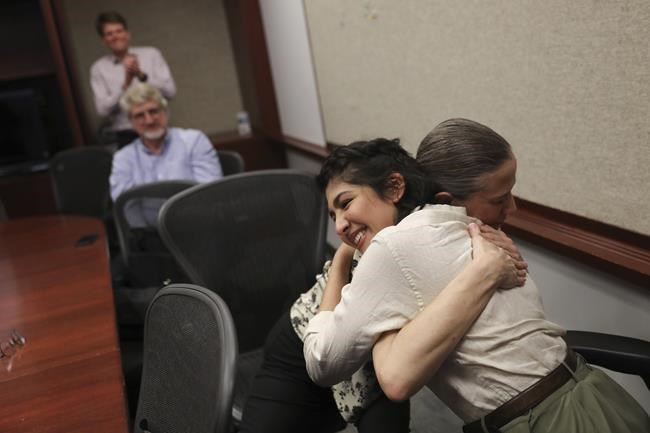
Cecilia Reyes, of the Chicago Tribune, is hugged by Kaarin Tisue, Chicago Tribune investigations editor, after winning the Pulitzer Prize in Local Reporting with Madison Hopkins of the Better Government Association, at the Chicago Tribune's Freedom Center in Chicago on Monday, May 9, 2022. (Jose M. Osorio/Chicago Tribune via AP)

Elsewhere in Florida, Tampa Bay Times’ editor and vice president Mark Katches mirrored that sentiment, calling his newspaper’s win “a testament to the importance of a vital local newsroom like the Times.”

The prize for explanatory reporting went to Quanta Magazine, with the board highlighting the work of Natalie Wolchover, for a long-form piece about the James Webb space telescope, a $10 billion engineering effort to gain a better understanding about the origins of the universe.

The New York Times also won in the national reporting category, for a project looking at police traffic stops that ended in fatalities, and Salamishah Tillet, a contributing critic-at-large at the Times, won the criticism award.

A story that used graphics in comic form to tell the story of Zumrat Dawut, a Uyghur woman who said she was persecuted and detained by the Chinese government as part of systemic abuses against her community, brought the illustrated reporting and commentary prize to Fahmida Azim, Anthony Del Col, Josh Adams and Walt Hickey of Insider.

Jennifer Senior of The Atlantic won the award for feature writing, for a piece marking the 20th anniversary of the 9/11 attacks through a family’s grief.

Melinda Henneberger of The Kansas City Star won for commentary, for columns about a retired police detective accused of sexual abuse and those who said they were assaulted calling for justice.

The editorial writing prize went to Lisa Falkenberg, Michael Lindenberger, Joe Holley and Luis Carrasco of the Houston Chronicle, for pieces that called for voting reforms and exposed voter suppression tactics.

Tampa Bay Times reporters Corey G. Johnson, center, Rebecca Woolington, second left, and Eli Murray, left, are announced as the winners of the Pulitzer Prize for investigative reporting on Monday, May 9, 2022. The winning series,
Tampa Bay Times reporters Corey G. Johnson, center, Rebecca Woolington, second left, and Eli Murray, left, are announced as the winners of the Pulitzer Prize for investigative reporting on Monday, May 9, 2022. The winning series, "Poisoned," exposed dangers at Florida's only lead smelter. This marked the 14th Pulitzer Prize awarded to the Times. (Ivy Ceballo/Tampa Bay Times via AP)

The staffs of Futuro Media and PRX took the audio reporting prize for the profile of a man who had been in prison for 30 years and was re-entering the outside world.

The prize for feature photography went to Adnan Abidi, Sanna Irshad Mattoo, Amit Dave and Danish Siddiqui of Reuters for photos of the COVID-19 toll in India. Siddiqui, 38, who won a 2018 Pulitzer in the same category, was killed in Afghanistan in July while documenting fighting between Afghan forces and the Taliban.

The Pulitzer Prizes also awarded a special citation to journalists of Ukraine, acknowledging their “courage, endurance and commitment” in covering the ongoing Russian invasion that began earlier this year. Last August, the Pulitzer board granted a special citation to Afghan journalists who risked their safety to help produce news stories and images from their own war-torn country.

Report Error Submit a Tip

More Stories

Family account spiced with magic realism, geopolitical intrigue and a ghost story

Reviewed by Zilla Jones 4 minute read Preview

Family account spiced with magic realism, geopolitical intrigue and a ghost story

Reviewed by Zilla Jones 4 minute read 2:01 AM CDT

Tom Lin’s second novel Babylon, South Dakota moves beyond a historical account of an immigrant family’s struggle, delightfully blending and bending genres.

Lin is a Chinese-born novelist whose family emigrated to the U.S. when he was four years old. His debut novel, The Thousand Crimes of Ming Tsu, won the 2022 Andrew Carnegie Medal for Excellence in Fiction, making him the youngest ever recipient of that award. He earned a PhD in English from the University of California Davis and is currently an assistant professor of English and creative writing at the University of Iowa.

Babylon, South Dakota takes place in an unspecified time period that can be understood to be during the Mao era — likely the 1950s or ’60s. A young Chinese couple, the Hsuis, immigrate to the rural community that gives the book its title. They take the names Saul and Mei and settle on a 160-acre homestead left to them by a distant relative.

Saul’s dream is to breed and sell chrysanthemums from seeds he brought from China, while Mei wants to raise livestock. They speak no English, know nothing of life in the United States, are unprepared for the harshness of winter and the isolation of the farm and bring nothing with them except some gold, which Mei hides around the house for emergencies. Their only link to the outside world is a discarded and marginally functioning TV set, which Saul rescues and rigs up.

Read
2:01 AM CDT

Siloam Mission, WFPS discussing on-site paramedic to reduce staggering number of emergency calls

Scott Billeck 4 minute read Preview

Siloam Mission, WFPS discussing on-site paramedic to reduce staggering number of emergency calls

Scott Billeck 4 minute read Yesterday at 2:00 AM CDT

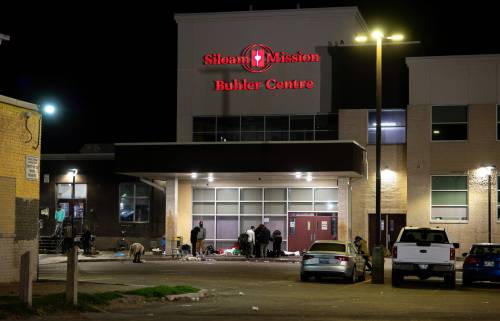
Winnipeg’s fire-paramedic service and its largest homeless-serving organization are discussing what it would look like to station at least one paramedic at Siloam Mission, as emergency calls to the downtown facility surge.

The ongoing discussions come as Winnipeg Fire Paramedic Service crews were dispatched 1,771 times during the first eight months of the year to the two adjacent Siloam properties at 303 Stanley St. and 300 Princess St.

WFPS said most of the calls were related to overdoses or other consequences of substance use, with the total nearly double the 854 calls recorded over the same period last year. By comparison, there were 831 calls during the same span in 2024, and 591 in 2023.

“The number of emergency calls isn’t sustainable for us as a service, but it’s certainly not sustainable for them as an agency trying to provide services,” WFPS chief Ryan Sneath told the Free Press. “And they recognize that they’re impacting emergency services, not them specifically, but the site in a significant way.”

Read
Yesterday at 2:00 AM CDT

Puzzles Palace

1 minute read Monday, Jul. 27, 2026

To solve our puzzles, please subscribe with this special offer: |

Not good bet to shoulder gambling issue alone

Maureen Scurfield 5 minute read 2:01 AM CDT

DEAR MISS LONELYHEARTS: We’re living a lie over at our house, but it’s holding the family together.

I know my husband is deeply into gambling. If it weren’t for my steady job I don’t know where the family would be! I insist on paying all of our bills. I also funnel some major cash off to my sister, in case my husband tries to tap into my accounts somehow when I’m out of the house.

He doesn’t know my passwords, since I keep changing them, but he sometimes shows up behind me when I’m online, like he’s dying to ask something.

I say, “What are you looking at? Stop looking over my shoulder!” Then he makes a lame joke and goes away.

Canada-U.S. trade relationship is broken, but the damage can — and will — be repaired

Tom Brodbeck 5 minute read Preview

Canada-U.S. trade relationship is broken, but the damage can — and will — be repaired

Tom Brodbeck 5 minute read Thursday, Sep. 17, 2026

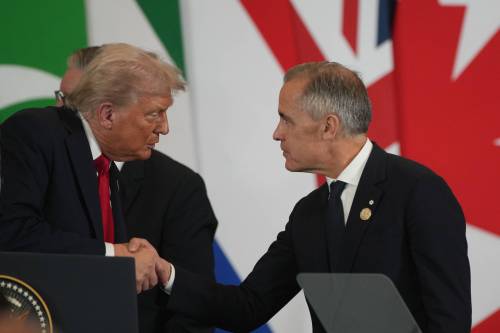
Canada needs to get serious about diversifying its trade beyond the United States. But at the same time, Canadians should expect relations with the U.S. to normalize after Donald Trump is no longer in the White House.

For generations, Canada-U.S. trade was considered almost a fact of geography. The two countries share the world’s longest undefended border, deeply integrated supply chains and a century of commercial relationships.

Canadian manufacturers depend on American customers. American manufacturers depend on Canadian suppliers. Energy, agriculture, automotive production and countless other industries operate across the border as though it barely exists.

That isn’t going to change dramatically, even in the midst of a bitter trade war unleashed by the U.S. president.

Read
Thursday, Sep. 17, 2026

Kinew delivered what most of us wanted; now we’ll have to deal with the consequences

Dan Lett 5 minute read Preview

Kinew delivered what most of us wanted; now we’ll have to deal with the consequences

Dan Lett 5 minute read Updated: Yesterday at 8:43 AM CDT

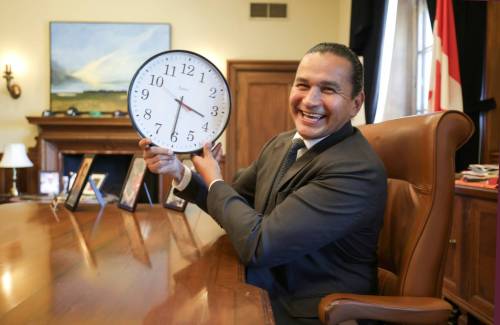
Premier Wab Kinew has decided to adopt permanent daylight savings time, which means a permanent end to the spring forward, fall back tradition of adjusting our clocks. And absolutely no one is surprised.

Read
Updated: Yesterday at 8:43 AM CDT