

Montreal investigating up to 13 possible cases of monkeypox: report
Advertisement
Read this article for free:
or
Already have an account? Log in here »
To continue reading, please subscribe:

Digital Subscription
One year of digital access for only $205*
- Enjoy unlimited reading on winnipegfreepress.com
- Read the E-Edition, our digital replica newspaper
- Access News Break, our award-winning app
- Play interactive puzzles
*First annual payment billed as $205.00 + GST for one year. This annual subscription will automatically renew at $233.00 + GST every 52 weeks (10% off the regular annual price of $259.35). Offer available to new and qualified returning subscribers only. Cancel any time.
To continue reading, please subscribe:
Add Free Press access to your Brandon Sun subscription for only an additional
$1 for the first 4 weeks*
- Enjoy unlimited reading on winnipegfreepress.com
- Read the E-Edition, our digital replica newspaper
- Access News Break, our award-winning app
- Play interactive puzzles
*Your next Brandon Sun subscription payment will increase by $1.00 and you will be charged $17.95 plus GST for four weeks. After four weeks, your payment will increase to $24.95 plus GST every four weeks.
Read unlimited articles for free today:
or
Already have an account? Log in here »
Hey there, time traveller!
This article was published 18/05/2022 (1590 days ago), so information in it may no longer be current.
Montreal health officials are investigating up to 13 possible cases of monkeypox, Radio-Canada reported Wednesday, as other countries around the world report cases of the rare virus.
The news comes as Massachusetts confirmed Wednesday the United States’ first case of the year, in a man who had recently travelled to Canada. The man is hospitalized but in good condition, officials said.
Monkeypox is relatively rare. A small number of confirmed or suspected cases have been reported this month in the United Kingdom, Portugal and Spain.
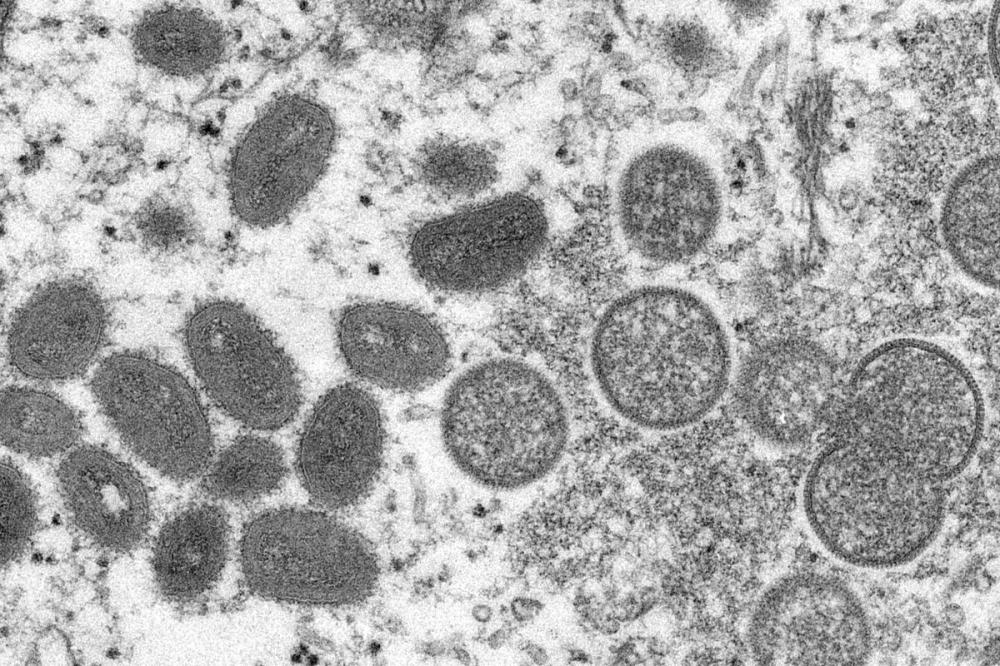
“Is this the new COVID? No,” said infectious diseases physician Dr. Isaac Bogoch, who said there will “certainly” be a rise in monkeypox cases.
“We know that it can be transmitted from person to person, but it doesn’t appear to be as easily transmitted from person to person like a very transmissible respiratory virus.”
In its statement Wednesday, the Massachusetts department of public health said the virus is rare but “potentially serious.” It typically starts with flu-like symptoms and swelling of lymph nodes, which then leads to a rash on the face and body.
The infection can last two to four weeks. Most people recover, but the disease is fatal for up to 1 in 10 people, according to the World Health Organization.
“In parts of central and West Africa where monkeypox occurs, people can be exposed through bites or scratches from rodents and small mammals, preparing wild game, or having contact with an infected animal or possibly animal products,” the Massachusetts department of public health statement said.
“The virus does not spread easily between people; transmission can occur through contact with body fluids, monkeypox sores, items that have been contaminated with fluids or sores (clothing, bedding, etc.) or through respiratory droplets following prolonged face-to-face contact.”
Radio-Canada reported that the possible cases in Montreal were flagged by several sexually-transmitted infection clinics, and that confirmatory test results are expected by the end of this week.
The possible cases in Montreal involve men who have sex with men, Radio-Canada reported. Investigators in Europe say most of the cases there have also been in gay or bisexual men, and officials are looking into the possibility that some infections were spread through close contact during sex.
Bogoch said it’s still too early to determine if the virus is actually being transmitted sexually, or was simply transmitted through close contact via respiratory droplets during sexual activity.
“Now it’s well known, but before we didn’t know that Ebola virus could be transmitted through semen, we didn’t know Zika virus could be, so certainly I would keep an open mind,” he said.
“But on the other hand, there are other plausible mechanisms of transmission between people who are in a sexual network with one another.”
There have been other outbreaks outside of Africa in the past, notably in the United States in 2003, involving 47 confirmed or probable cases in individuals across six states who had come into contact with pet prairie dogs, according to the Centers for Disease Control. The dogs had become infected after being housed near small mammals imported from Ghana.
With files from the Associated Press
Related Articles
EXPLAINER: What is monkeypox and where is it spreading?
Advertisement Advertise With Us
Advertisement Advertise With Us