
Maple syrup producers see climate change as a threat to industry’s future

Advertisement

Advertise with us

Paul Renaud is only too aware of what the power of wind can do to trees.

Read this article for free:


or

Already have an account? Log in here »

To continue reading, please subscribe:

Subscribe and receive a limited-edition Free Press branded hat or tote.

Digital Subscription

One year of digital access for only $205*

  • Enjoy unlimited reading on winnipegfreepress.com
  • Read the E-Edition, our digital replica newspaper
  • Access News Break, our award-winning app
  • Play interactive puzzles

*First annual payment billed as $205.00 + GST for one year. This annual subscription will automatically renew at $233.00 + GST every 52 weeks (10% off the regular annual price of $259.35). Offer available to new and qualified returning subscribers only. Cancel any time.

To continue reading, please subscribe:

Add Free Press access to your Brandon Sun subscription for only an additional

$1 for the first 4 weeks*

  • Enjoy unlimited reading on winnipegfreepress.com
  • Read the E-Edition, our digital replica newspaper
  • Access News Break, our award-winning app
  • Play interactive puzzles
Start now

*Your next Brandon Sun subscription payment will increase by $1.00 and you will be charged $17.95 plus GST for four weeks. After four weeks, your payment will increase to $24.95 plus GST every four weeks.

Hey there, time traveller!
This article was published 30/05/2022 (1565 days ago), so information in it may no longer be current.

Paul Renaud is only too aware of what the power of wind can do to trees.

After violent windstorms recently swept through southern Ontario and Quebec, uprooting trees and leaving a trail of damage across a vast territory, Renaud’s thoughts went right to his sugar maples in Lanark Highlands, Ont., where storms once considered rogue now seem more frequent.

“We’ve had two in six months,” he said in an interview. “Each one has taken out maple trees.”
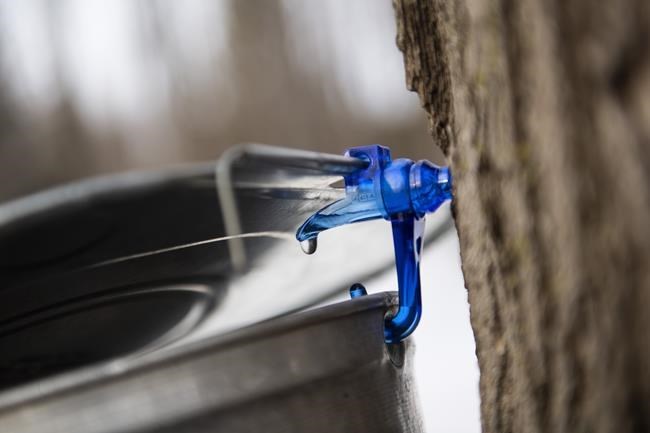
A drop of maple water drips out of a spile from a tree that was just tapped at the Vanier Museopark sugar bush in Ottawa on Saturday, March 13, 2021. THE CANADIAN PRESS/Justin Tang

Worsening storms aren’t the only changes Renaud sees. As chair of the climate change working group for the Ontario Maple Syrup Producers Association, he says dramatic weather is having a serious effect on his industry.

Syrup producers are recording declining yields due to increasing global temperatures, which are leading to more invasive pests, sap that is less sugary and shorter harvesting periods than the normal four-to-six-week season.

Longer and more severe droughts kill seedlings and stunt root growth. Unpredictable spring frosts, meanwhile, can shock and destroy new leaf buds, while milder winters with less snow cover leave bare roots exposed.

“Trees get stressed and then they are more susceptible to pests and pathogens,” said Joshua Rapp, an associate at Harvard University’s school of forestry.

The attacks keep coming. An infestation of tent caterpillars in 2018 left some Ontario producers with 30 per cent less syrup than the year before. The caterpillars eat the leaves, which help make the sugar, leading to less sugary saps.

With earlier and shorter tapping seasons, producers are scrambling to find workers. One third of North American producers said they missed their first sap flow of the season several years in a row, according to a 2019 survey of nearly 400 producers.

Each year between late February and early May, maple syrup producers rely on the delicate freeze-thaw cycles of spring. When nighttime temperatures drop below zero, the maple tree contracts and sap rushes up from the roots into its branches. When temperatures rise during the day, the tree’s wood expands, putting pressure on the branches and forcing the sap back down the trunk and into the taps.

The sap is boiled until most of the water evaporates, leaving behind the dense, sweet liquid we know as maple syrup. It takes about 40 litres of sap to make one litre of maple syrup.

By 2100, some U.S. states could see production shift one month earlier — and become nonexistent in some regions like Virginia. “As you go farther north, there’s still a sap season but it moves earlier in the year,” Rapp said in a recent interview.

The effects of changing temperatures are felt unequally. Warmer temperatures could benefit northern parts of Ontario and Quebec, which could see up to 40 litres more sap per tap each year.

“Moving it earlier in time actually makes the season better, because it lengthens the season out,” Rapp said. But he warned that higher temperatures produce less sugary sap, and as a consequence, more sap is needed to make the maple syrup consumers are used to.

Meanwhile, the growth in global demand for the sweet syrup shows no sign of abating. When the balmy 2021 winter and abrupt spring thaw brought low harvests, the industry had to dip deeply into its strategic reserves to meet global demand, which rose by 23 per cent. In response, Quebec Maple Syrup Producers drained nearly half its reserve — 23,000 tonnes worth $150 million.

The industry says keeping up with global syrup demand will require tapping 120 million more trees by 2080. That rise in consumption will add to the carbon levels in the atmosphere due to the wood or other fossil fuels burned to boil the sap.

“Eighty-five to 90 per cent of emissions that a maple syrup producer has relates to the boiling of sap,” Renaud said.

In their defence, producers contend that tapping more trees protects those trees from being harvested, ensuring that the industry sequesters more carbon than it releases.

Whatever the carbon math, the growing demand for maple syrup and diminished yields are requiring producers to look for ways to mitigate the effects of climate change. For example, thinning of maple stands encourages the growth of larger crowns on the remaining trees, “and that’s going to help them be healthier and produce more sap and sugar,” Rapp said.

But, he acknowledges that to save the industry, “the biggest thing is addressing climate change.”

This report by The Canadian Press was first published May 30, 2022.

— Meghan McGee is a nutrition scientist in Toronto and a fellow in the Certificate in Health Information program at the Dalla Lana School of Public Health, University of Toronto.

Report Error Submit a Tip

More Stories

Scrounging bestie overdue for reality check

Maureen Scurfield 5 minute read Yesterday at 2:00 AM CDT

DEAR MISS LONELYHEARTS: I’m almost 40, and one of my closest friends who was jobless for three years is once again earning decent money again — but she’s still acting like she’s broke!

I don’t care how people spend their money, but she still expects me to pay for her. For instance, if we go out for lunch, she’ll ask if we can do a 75-25 split, with her paying the lower amount. She also comes to potlucks with nothing to share, and then has the nerve to ask to take food home. She will also ask me to cover something and promise to pay me back, but then I have to hound her for weeks to get the money!

But it really took the cake recently when we went to a concert and she asked me to cover her ticket. Then she bought two T-shirts at the merch table! It feels underhanded to me — and insulting to my intelligence. It also feels weird to have to bring it up to her. We’ve been besties since high school —many, many years ago. Please help.

— Taking Advantage, Riverbend

Today’s horoscope

Georgia Nicols 4 minute read Preview

Today’s horoscope

Georgia Nicols 4 minute read Yesterday at 2:00 AM CDT

MOON ALERT: There are no restrictions to shopping or important decisions today. The new moon is in Virgo.

ARIES (March 21-April 19)

Discussions with partners and close friends will intensify in the next few weeks and financial discussions will favour you. In fact, money might come your way. The new moon is perfect for making resolutions to improve your health.

TAURUS (April 20-May 20)

Read
Yesterday at 2:00 AM CDT

Manitoba’s economic growth this year dogged by ‘uncertainty’: report

Gabrielle Piché 3 minute read Preview

Manitoba’s economic growth this year dogged by ‘uncertainty’: report

Gabrielle Piché 3 minute read Yesterday at 8:17 PM CDT

Manitoba’s economy is poised to grow 1.2 per cent this year, a report by Signal49 Research forecasts.

The firm formerly known as the Conference Board of Canada expects Manitoba will be bolstered by private-sector spending, largely in the mining sector and by public-sector projects over the next five years.

“Manitoba, it’s not unscathed from the trade war,” Richard Forbes, a Signal49 Research principal economist, said Thursday. “More … the uncertainty is affecting Manitoba than the direct trade impact.”

Forbes pointed to Alamos Gold’s Lynn Lake gold mine project and a consortium buying Vale Base Minerals’ Thompson nickel mine for up to $280 million. Global demand for minerals should benefit the Prairie province, Forbes said.

Read
Yesterday at 8:17 PM CDT

Paranoid and high, man kills dad, takes photos of body, calls 911

Dean Pritchard 3 minute read Preview

Paranoid and high, man kills dad, takes photos of body, calls 911

Dean Pritchard 3 minute read Yesterday at 6:00 PM CDT

Paranoid and sleep-deprived after a night of smoking crack, Donato Pellettieri stabbed his 64-year-old father 27 times, called 911 and waited outside their Maryland Avenue residence until police arrived minutes later and arrested him for murder, court was told Thursday.

“Paranoia led him to believe this was a kill-or-be-killed situation,” Crown attorney Joel Refvik told Court of King’s Bench Justice Ken Champagne. “This is an individual who, but for his drug use and paranoia, likely would not have killed his father.”

The 39-year-old pleaded guilty to second-degree murder for the July 2021 killing of Salvatore Pellettieri and was sentenced to life in prison with no chance of parole for at least 10 years.

The resolution of his case was delayed by long periods in which he was mentally unfit to stand trial, and changed lawyers and awaited reports to determine whether he should be found not criminally responsible for his actions.

Read
Yesterday at 6:00 PM CDT

Premier tells grieving parents site of fatal collision under review

Chris Kitching 4 minute read Preview

Premier tells grieving parents site of fatal collision under review

Chris Kitching 4 minute read Wednesday, Sep. 9, 2026

Premier Wab Kinew promised to pursue safety improvements at an Interlake intersection when he spoke to parents of some of the four teens who died in a crash at the site on the Labour Day weekend.

The collision at Highway 8 and Provincial Road 229, just west of Winnipeg Beach, prompted a review by Manitoba Transportation and Infrastructure, which is standard after a fatal crash, while some of the victims’ families and community leaders publicly called for changes.

“When you see the loss of these beautiful young lives, any parent, any Manitoban feels a sense of loss. On behalf of the whole province, I send my condolences to these families,” Kinew said in Winnipeg Wednesday.

“I did so directly earlier today, and I heard some of the parents’ suggestions for how we could make this safer for everybody. I committed to them that we’re going to take those actions — both stuff we can do relatively quickly and some longer-term fixes, as well.”

Read
Wednesday, Sep. 9, 2026

U of M students call for ban on far-right group

Maggie Macintosh 4 minute read Preview

U of M students call for ban on far-right group

Maggie Macintosh 4 minute read Yesterday at 6:00 AM CDT

Some University of Manitoba students are calling on their school to ban a far-right group from campus after posters promoting mass deportations were found during the summer break.

More than 50 people rallied on Wednesday, the first day of classes, to make known their concerns about a group called the Dominion Society of Canada.

The protest was organized after a supporter of the self-described nationalist group posted a video over the Labour Day weekend that shows him putting up flyers in Fort Garry.

“Canada is a really beautiful country and I have been welcomed here by a lot of beautiful people and it’s been amazing, but when I see harmful rhetoric online and now, on campus, it gives me a lot of anxiety,” said Ela Ancheta, an arts major at U of M.

Read
Yesterday at 6:00 AM CDT