Canada’s historic sites get Indigenous voices, stronger protection in new bill

Advertisement

Advertise with us

OTTAWA - Environment Minister Steven Guilbeault says a new bill he introduced Tuesday gives legal protection to Canada's historic sites for the first time and ensures Indigenous Peoples have a stronger voice in identifying and protecting places of historic significance in Canada.

Read this article for free:


or

Already have an account? Log in here »

To continue reading, please subscribe:

Subscribe and receive a limited-edition Free Press branded hat or tote.

Digital Subscription

One year of digital access for only $205*

  • Enjoy unlimited reading on winnipegfreepress.com
  • Read the E-Edition, our digital replica newspaper
  • Access News Break, our award-winning app
  • Play interactive puzzles

*First annual payment billed as $205.00 + GST for one year. This annual subscription will automatically renew at $233.00 + GST every 52 weeks (10% off the regular annual price of $259.35). Offer available to new and qualified returning subscribers only. Cancel any time.

To continue reading, please subscribe:

Add Free Press access to your Brandon Sun subscription for only an additional

$1 for the first 4 weeks*

  • Enjoy unlimited reading on winnipegfreepress.com
  • Read the E-Edition, our digital replica newspaper
  • Access News Break, our award-winning app
  • Play interactive puzzles
Start now

*Your next Brandon Sun subscription payment will increase by $1.00 and you will be charged $17.95 plus GST for four weeks. After four weeks, your payment will increase to $24.95 plus GST every four weeks.

Hey there, time traveller!
This article was published 07/06/2022 (1565 days ago), so information in it may no longer be current.

OTTAWA – Environment Minister Steven Guilbeault says a new bill he introduced Tuesday gives legal protection to Canada’s historic sites for the first time and ensures Indigenous Peoples have a stronger voice in identifying and protecting places of historic significance in Canada.

There are more than 300 federal historic places in Canada but it is the only G7 country without legislation to protect them.

The Historic Places of Canada Act intends to change that, while also fulfilling a Truth and Reconciliation Commission call to action to include Indigenous Peoples in the decision-making around which sites are designated as historic and how they are protected.

Steven Guilbeault rises during Question Period in the House of Commons on Parliament Hill in Ottawa on Thursday, May 12, 2022. The environment minister says a new bill he introduced gives legal protection to Canada's historic sites for the first time and ensures Indigenous Peoples have a stronger voice in identifying and protecting places of historic significance in Canada.THE CANADIAN PRESS/ Patrick Doyle

A decision to designate a person, place or event as historic rests with the environment minister but those decisions are based on advice from an advisory board.

The new bill designates three seats on that board specifically for First Nations, Métis and Inuit representatives.

The act also includes Indigenous knowledge as one of the sources of information the board must rely on when making its recommendations, along with community, scientific and academic knowledge.

Canada’s historic places include everything from famous lighthouses like the one in Peggy’s Cove, Nova Scotia, to military forts, canals, museums, and the homes of former prime ministers. Most of the buildings on Parliament Hill, and 24 Sussex Drive, the official home of the sitting prime minister that is currently not considered safe to inhabit, are also on the list.

Guilbeault said the bill ensures for the first time that all Canadian historic sites are “protected by legislation and any changes to the sites would require that Parks Canada be consulted in order to preserve their heritage value.”

He said the bill is also “an important step in advancing the government’s commitment to recognize Indigenous history and to implement the calls to action from the Truth and Reconciliation Commission of Canada.”

Call to action No. 79 from the TRC requested that the Historic Sites and Monuments Board of Canada include First Nations, Inuit, and Métis representation and that Indigenous history, heritage values and knowledge be incorporated into decisions about commemoration.

The existing Historic Sites and Monuments Act outlines in more vague terms than the new bill how the minister can both designate and mark the existence of historic sites, and sets up the advisory board.

The new bill repeals that existing legislation and expands upon it immensely, including more specific requirements to protect and conserve the heritage value of historic places, undertake scientific studies to understand and defend against threats to the sites.

In addition to the three Indigenous representatives, the advisory board will continue to have one member for each province and territory and a member from Parks Canada. But instead of appointing Canada’s chief librarian and archivist, and someone from the Canadian Museum of History, the board can appoint two members from any federal institutions with relevant expertise.

This report by The Canadian Press was first published June 7, 2022.

Report Error Submit a Tip

More Stories

Desperate Poilievre wants Canadians to believe the sky is falling when it’s just cloudy outside

Tom Brodbeck 5 minute read Preview

Desperate Poilievre wants Canadians to believe the sky is falling when it’s just cloudy outside

Tom Brodbeck 5 minute read Yesterday at 12:47 PM CDT

Pierre Poilievre has a problem.

Canadians just don’t seem to be paying much attention to him anymore.

So, naturally, the Conservative Opposition leader has decided to turn up the volume.

At a recent party caucus retreat in Penticton, B.C., Poilievre delivered the familiar message: Canada is in trouble, Canadians are hurting and the Liberal government is making everything worse.

Read
Yesterday at 12:47 PM CDT

Gillingham in lead with decided voters

Nicole Buffie 6 minute read Preview

Gillingham in lead with decided voters

Nicole Buffie 6 minute read Yesterday at 6:55 PM CDT

A cloud of uncertainty is hanging over Winnipeg as October’s municipal election nears.

Three months after a poll showed more than 40 per cent of Winnipeggers wanted to see someone other than current mayor Scott Gillingham elected, a new Abacus Data poll indicates more than half of Winnipeg voters are undecided heading into next month’s civic election.

Of decided voters, 55 per cent favour Gillingham compared to 23 per cent for former councillor and provincial cabinet minister Kevin Klein and 11 per cent for funeral director Mike Vogiatzakis.

Of all respondents, just over 50 per cent said they were unsure while 13 per cent said they will not vote.

Read
Yesterday at 6:55 PM CDT

Family account spiced with magic realism, geopolitical intrigue and a ghost story

Reviewed by Zilla Jones 4 minute read Preview

Family account spiced with magic realism, geopolitical intrigue and a ghost story

Reviewed by Zilla Jones 4 minute read 2:01 AM CDT

Tom Lin’s second novel Babylon, South Dakota moves beyond a historical account of an immigrant family’s struggle, delightfully blending and bending genres.

Lin is a Chinese-born novelist whose family emigrated to the U.S. when he was four years old. His debut novel, The Thousand Crimes of Ming Tsu, won the 2022 Andrew Carnegie Medal for Excellence in Fiction, making him the youngest ever recipient of that award. He earned a PhD in English from the University of California Davis and is currently an assistant professor of English and creative writing at the University of Iowa.

Babylon, South Dakota takes place in an unspecified time period that can be understood to be during the Mao era — likely the 1950s or ’60s. A young Chinese couple, the Hsuis, immigrate to the rural community that gives the book its title. They take the names Saul and Mei and settle on a 160-acre homestead left to them by a distant relative.

Saul’s dream is to breed and sell chrysanthemums from seeds he brought from China, while Mei wants to raise livestock. They speak no English, know nothing of life in the United States, are unprepared for the harshness of winter and the isolation of the farm and bring nothing with them except some gold, which Mei hides around the house for emergencies. Their only link to the outside world is a discarded and marginally functioning TV set, which Saul rescues and rigs up.

Read
2:01 AM CDT

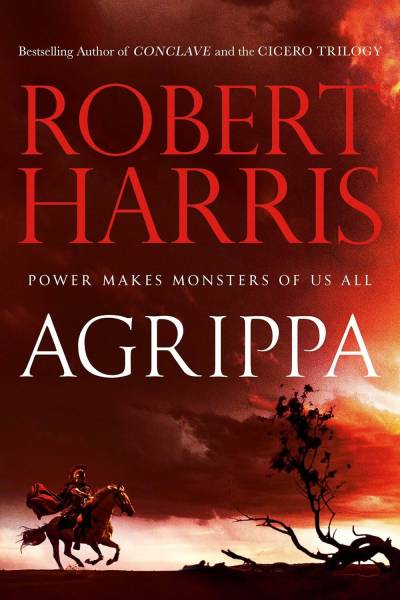
Give-and-take relationship of Roman leaders takes centre stage in Harris’s historical fiction

Reviewed by Kathryne Cardwell 4 minute read Preview

Give-and-take relationship of Roman leaders takes centre stage in Harris’s historical fiction

Reviewed by Kathryne Cardwell 4 minute read 2:01 AM CDT

British novelist Robert Harris’s latest work is a reflection on tyranny, corruption and betrayal among all-powerful political leaders.

You might be forgiven for thinking it’s a contemporary thriller — it’s actually historical fiction set in ancient Rome.

A former BBC journalist, Harris debuted as a novelist in 1992 with Fatherland, an alternative history where Nazi Germany won the Second World War.

Since then, the prolific author has become best-known for his works of historical fiction, especially his ancient Rome trilogy released from 2006-2015 and the novel Conclave, which was published in 2016 and was made into the film of the same name in 2024.

Read
2:01 AM CDT

Today’s horoscope

Georgia Nicols 4 minute read Preview

Today’s horoscope

Georgia Nicols 4 minute read 2:01 AM CDT

MOON ALERT: After 12:15 a.m., there are no restrictions to shopping or important decisions today. The moon is in Capricorn.

ARIES (March 21-April 19)

This is a tricky day. Don’t be too ambitious. It’s totally OK to kick back and relax. But be aware that communications with parents and authority figures might be confused, vague or subject to misunderstandings. Nevertheless, romance is sweet and cosy!

TAURUS (April 20-May 20)

Read
2:01 AM CDT

‘She was looking to destroy me’: convicted harasser faces new charges

Dean Pritchard 6 minute read Preview

‘She was looking to destroy me’: convicted harasser faces new charges

Dean Pritchard 6 minute read Thursday, Sep. 17, 2026

When Agnieszka Ciochon-Newton moved into the 55-plus apartment building on Stradbrook Avenue last year, she came across as “timid, soft-spoken and sensitive,” said building manager Tanya Owen.

Little did Owen know the meek-looking 58-year-old woman would soon turn her life and the lives of many of her tenants upside down and threaten her career and family.

“She was looking to destroy me for a simple tenant disagreement,” Owen said Thursday.

Court records show Ciochon-Newton was arrested earlier this month and charged with seven counts of criminal harassment, two counts of uttering threats and one count each of fraud, breaking and entering, attempting to obstruct justice, intimidation of a justice official, mischief and defamatory libel.

Read
Thursday, Sep. 17, 2026