Russian sanctions hurting small Italian fashion producers

Advertisement

Advertise with us

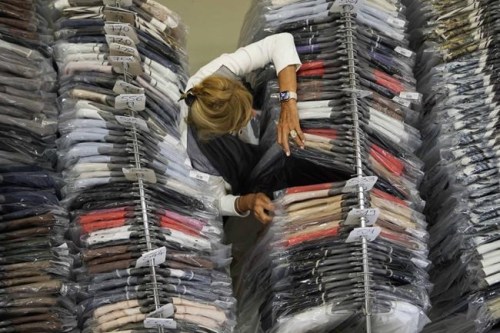
BRESCIA, Italy (AP) — Fine Italian knitwear packed in boxes addressed to retailers in Moscow, St. Petersburg and Kursk sit stacked in a Lombardy warehouse awaiting dispatch. Although not subject to sanctions to punish Russia for invading Ukraine, the garments are not likely to ship any time soon.

Read this article for free:


or

Already have an account? Log in here »

To continue reading, please subscribe:

Subscribe and receive a limited-edition Free Press branded hat or tote.

Digital Subscription

One year of digital access for only $205*

  • Enjoy unlimited reading on winnipegfreepress.com
  • Read the E-Edition, our digital replica newspaper
  • Access News Break, our award-winning app
  • Play interactive puzzles

*First annual payment billed as $205.00 + GST for one year. This annual subscription will automatically renew at $233.00 + GST every 52 weeks (10% off the regular annual price of $259.35). Offer available to new and qualified returning subscribers only. Cancel any time.

To continue reading, please subscribe:

Add Free Press access to your Brandon Sun subscription for only an additional

$1 for the first 4 weeks*

  • Enjoy unlimited reading on winnipegfreepress.com
  • Read the E-Edition, our digital replica newspaper
  • Access News Break, our award-winning app
  • Play interactive puzzles
Start now

*Your next Brandon Sun subscription payment will increase by $1.00 and you will be charged $17.95 plus GST for four weeks. After four weeks, your payment will increase to $24.95 plus GST every four weeks.

Hey there, time traveller!
This article was published 16/06/2022 (1581 days ago), so information in it may no longer be current.

BRESCIA, Italy (AP) — Fine Italian knitwear packed in boxes addressed to retailers in Moscow, St. Petersburg and Kursk sit stacked in a Lombardy warehouse awaiting dispatch. Although not subject to sanctions to punish Russia for invading Ukraine, the garments are not likely to ship any time soon.

Missing payments from the Russian retailers who ordered the garments are piling up due to restrictions tied to the banking sector, putting pressure on small fashion producers like D. Exterior, a high-end knitwear company with 50 workers in the northern city of Brescia.

“This is very painful. I have 2 million euros worth of merchandise in the warehouse, and if they cannot pay for it, I will be on my knees,” said D. Exterior owner Nadia Zanola, surveying the warehouse for the brand she founded in 1997 from the knitwear company created by her parents in 1952.
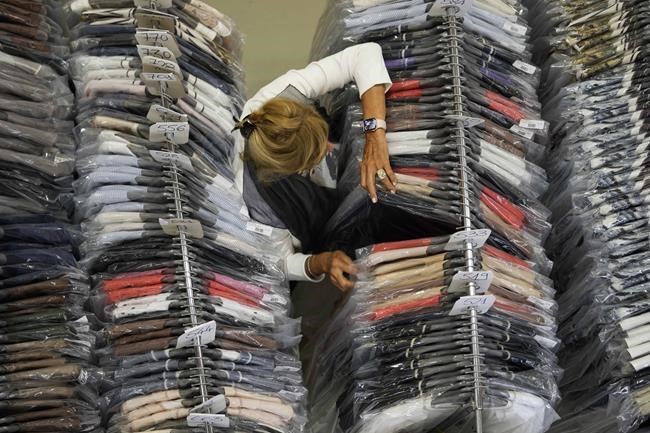
Nadia Zanola, chairman of the 'Cose di Maglia' factory, goes through racks of clothing at a warehouse section of unsold clothes, in Brescia, Italy, Tuesday, June 14, 2022. Small Italian fashion producers are still allowed to export to Russia, despite sanctions, as long as the wholesale price is under 300 euros. But they are having a hard time getting paid, due to restrictions tied to the financial sector. (AP Photo/Luca Bruno)

Italy is the largest producer of global luxury goods in the world, making 40% of high-end apparel, footwear and accessories. While Russia generates just about 3% of Italian luxury’s 97 billion euros ($101 billion) in annual revenue, it is a significant slice of business for some of the 80,000 small and medium companies that make up the backbone of Italian fashion, according to industry officials.

“We are talking about eliminating 80% to 100% of revenues for these companies,’’ said Fabio Pietrella, president of the Confartigianato fashion craftsman federation.

Districts producing footwear in the Marche and Veneto regions, and knitwear makers in Umbria and Emilia-Romagna have grown particularly reliant on Russia.

“These are districts that connect the supply chain, and if it is interrupted, not only is the company that closes harmed, but an entire system that help make this country an economic powerhouse,’’ Pietrella said.

The Italian fashion world is best known for luxury houses like Gucci, Versace and Armani, which unveil their menswear collections in Milan this week. And some of the biggest names appear on a list compiled by Yale University professor Jeffrey Sonnenfeld of major companies doing business in Russia since the war in Ukraine began.

“There are companies that kept selling to Nazi Germany after the outbreak of World War II — we don’t celebrate them for that,” Sonnenfeld said, labeling as “greedy” any enterprise that continues to do business in Russia today.

He also underlined that fashion companies don’t have the grounds to make humanitarian appeals to bypass sanctions, voluntary or otherwise, as has been the case with agricultural firms and pharmaceutical companies.

Among those receiving a failing grade from Sonnenfeld is Italy’s Benetton, which in a statement condemned the war but said it would continue its commercial activities in Russia, including longstanding commercial and logistic partnerships and a network of stores that sustain 600 families.

French conglomerate LVMH, meanwhile, has temporarily closed 124 stores in Russia, while continuing to pay its 3,500 employees in Russia. The Spanish group Inditex, which owns the fast-fashion chain Zara, also temporarily closed 502 stores in Russia as well as its online sales, accounting for 8.5% of group pre-tax earnings.

Pietrella fears a sort of Russia-phobia is taking hold that is demonizing business owners for trying to keep up ties with a longer-term vision.
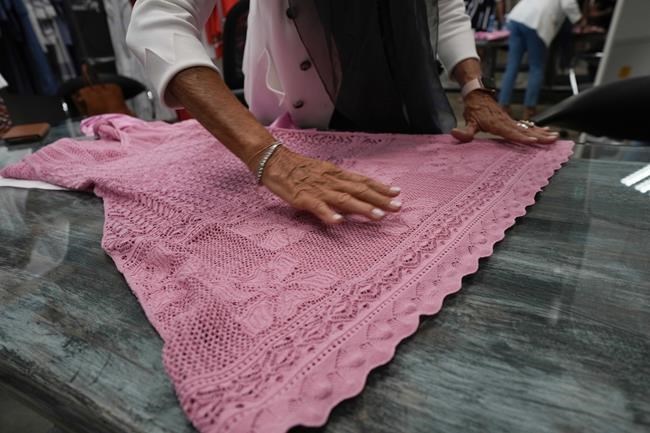
Nadia Zanola, chairman of the 'Cose di Maglia' factory, shows the quality of a dress in Brescia, Italy, Tuesday, June 14, 2022. Small Italian fashion producers are still allowed to export to Russia, despite sanctions, as long as the wholesale price is under 300 euros. But they are having a hard time getting paid, due to restrictions tied to the financial sector. (AP Photo/Luca Bruno)

He characterized as a “witch-hunt” criticism of some 40 shoe producers from the Marche region on Italy’s Adriatic coast for traveling to Russia for a trade fair during the war.

European Union sanctions against Russia sharpened after the Ukraine invasion, setting a 300-euro wholesale maximum for each item shipped, taking super-luxury items out of circulation but still targeting the upper-middle class or wealthy Russians.

“Without a doubt, we as the fashion federation have expressed our extreme concern over the aggression in Ukraine,’’ Pietrella said. “From an ethical point of view, it is out of discussion. But we have to think of our companies. Ethics are one thing. The market is another. Workers in a company are paid by the market, not by ethics.”

He said the 300-euro limit on sales was a gambit by European politicians that on paper allows trade with Russia despite accompanying bureaucratic and financial hurdles, while also shielding governments from having to provide bailout funds to the industry. He also dismissed as overly facile government suggestions to find alternative markets to Russia.

“If there was another market, we would be there already,’’ Pietrella said.

At D. Exterior, exposure to Russia grew gradually over the years to now represent 35% to 40% of revenue that hit 22 million euros before the pandemic, a stream that is also under new pressure from higher energy and raw material costs.

The company was already delivering its summer collection and taking orders for winter when Russia invaded on Feb. 24. By March, Russian retailers were having trouble making payments.

Not only is Zanola stuck with some 4,000 spring and summer garments that she has little hope of shipping to Russian clients, she said she was contractually required to keep producing the winter orders, risking 100,000 euros in labor and materials costs if those are unable to ship.

Over the years, her Russian clients have proven to be ideal customers, Zanola said. Not only do they pay on time, but they are appreciative of the workmanship in D. Exterior’s knitwear creations.
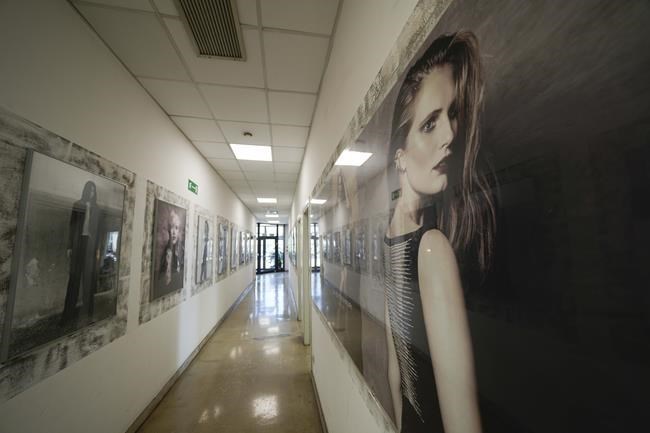
A view of the corridor at the 'Cose di Maglia' factory, in Brescia, Italy, Tuesday, June 14, 2022. Small Italian fashion producers are still allowed to export to Russia, despite sanctions, as long as the wholesale price is under 300 euros. But they are having a hard time getting paid, due to restrictions tied to the financial sector. (AP Photo/Luca Bruno)

After working so hard to build up her Russian customer base, she is loathe to give it up and doesn’t see a quick long-term replacement.

“If Russia were Putin, I wouldn’t go there. But since Russia is not only Putin, one hopes that the poor Russians manage to raise themselves up,” she said.

____

AP reporter Ciaran Giles contributed from Madrid.

____

This story was first published on June 16, 2022. It was updated on June 17, 2022 to correct the name of a Yale professor. It is Jeffrey Sonnenfeld, not Jeffrey Sonnenberg.

Report Error Submit a Tip

More Stories

Russian sanctions hurting small Italian fashion producers

Colleen Barry, The Associated Press 6 minute read Preview

Russian sanctions hurting small Italian fashion producers

Colleen Barry, The Associated Press 6 minute read Friday, Jun. 17, 2022

BRESCIA, Italy (AP) — Fine Italian knitwear packed in boxes addressed to retailers in Moscow, St. Petersburg and Kursk sit stacked in a Lombardy warehouse awaiting dispatch. Although not subject to sanctions to punish Russia for invading Ukraine, the garments are not likely to ship any time soon.

Missing payments from the Russian retailers who ordered the garments are piling up due to restrictions tied to the banking sector, putting pressure on small fashion producers like D. Exterior, a high-end knitwear company with 50 workers in the northern city of Brescia.

“This is very painful. I have 2 million euros worth of merchandise in the warehouse, and if they cannot pay for it, I will be on my knees,” said D. Exterior owner Nadia Zanola, surveying the warehouse for the brand she founded in 1997 from the knitwear company created by her parents in 1952.

Italy is the largest producer of global luxury goods in the world, making 40% of high-end apparel, footwear and accessories. While Russia generates just about 3% of Italian luxury’s 97 billion euros ($101 billion) in annual revenue, it is a significant slice of business for some of the 80,000 small and medium companies that make up the backbone of Italian fashion, according to industry officials.

Read
Friday, Jun. 17, 2022

Manitoba e-scooter legislation changes set to impose speed limit, age restrictions, sidewalk ban

Matthew Frank 5 minute read Preview

Manitoba e-scooter legislation changes set to impose speed limit, age restrictions, sidewalk ban

Matthew Frank 5 minute read Updated: Yesterday at 11:26 AM CDT

People riding e-scooters and other personal electric vehicles in Manitoba will have to strap on a helmet, stay off sidewalks and follow new age limits once new provincial rules for the devices take effect next year.

The vehicles, which also include electric skateboards, hoverboards and unicycles, will fall under The Highway Traffic Act starting in 2027, according to the province’s website. E-bikes are excluded from the new rules, according to the province’s frequently-asked-questions page.

All riders must be at least 16 years old and wear properly fitting helmets — that goes for passengers, too, the province said.

The proposed new legislation sets a speed limit of 25 km/h and would prohibit personal electric vehicles from sidewalks unless signs specifically allow sidewalk use. Riders would be using shared paths or roads with speed limits of 50 km/hr or less. They won’t be allowed to operate the vehicles under the influence of alcohol or drugs and they must use hand signals and obey traffic signs.

Read
Updated: Yesterday at 11:26 AM CDT

Storm costs not factored in to MPI request for 2.38% rate increase

Nicole Buffie 5 minute read Preview

Storm costs not factored in to MPI request for 2.38% rate increase

Nicole Buffie 5 minute read Yesterday at 6:43 PM CDT

Manitoba Public Insurance told the Public Utilities Board Tuesday it didn’t factor in reinsurance costs related to devastating summer storms in its application for an increase to vehicle insurance rates.

Cara Low, the Crown corporation’s chief actuary, told the board that given MPI anticipates an increase to reinsurance premiums, the 2.38 per cent increase listed in its application won’t be adequate to cover its costs.

“There’s going to be a significant increase. We still have to decide how much we want to retain, what we want the coverage to look like, and what the upper end needs to be,” she said on the opening day of a three-week hearing.

Nearly 41,000 claims have been submitted in relation to summer storms that swept across southern Manitoba from June to August. Floods, tornadoes and hail pummelled several communities and forced MPI to open satellite claims centres to deal with the record number of calls.

Read
Yesterday at 6:43 PM CDT

White-supremacist highway sign casts pall on Steinbach city council campaign

Matthew Frank 4 minute read Preview

White-supremacist highway sign casts pall on Steinbach city council campaign

Matthew Frank 4 minute read Yesterday at 7:41 PM CDT

The RCMP is investigating a white-nationalist sign near Steinbach with racist messaging and alleged links to a known Canadian far-right group.

Read
Yesterday at 7:41 PM CDT

MPI leadership not fooling anyone by forcing PUB’s hand

Dan Lett 5 minute read Preview

MPI leadership not fooling anyone by forcing PUB’s hand

Dan Lett 5 minute read 1:33 PM CDT

It is not a question you will hear raised at Public Utilities Board hearings into Autopac rates, but you can bet it’s the one on most people’s minds.

When will the NDP government step in and repair leadership at Manitoba Public Insurance? For the third year in a row, MPI has limped into PUB hearings like a badly damaged vehicle that should have been written off years ago.

This week, the Crown corporation’s chief actuary admitted the 2.38-per-cent increase requested for the 2027-28 fiscal year was too low, in part because of the impact of last summer’s multiple hailstorms and the premiums MPI pays for re-insurance that protects the public insurer from surges in claims costs.

Chief actuary Cara Low said the rate application was not updated because of “uncertainty.” That is sort of like a firefighter complaining about not being able to do the job because there was too much smoke and flame.

Read
1:33 PM CDT

Mayoral candidates share faves, test knowledge in Free Press culture quiz

Conrad Sweatman 5 minute read Preview

Mayoral candidates share faves, test knowledge in Free Press culture quiz

Conrad Sweatman 5 minute read 5:17 PM CDT

It’s been said that politics is downwind of culture. However true that is, where politicians stand on hot-button cultural debates such as artificial intelligence, whether they prefer sports over arts and what local restaurants they patronize can offer a window into their sensibilities and outlooks.

The Free Press invited the four leading mayoral candidates among decided voters — according to a recent Abacus poll — to take part in a cultural quiz. (Kevin Klein, who was polling second, did not respond.) While most of the questions are lighthearted, they speak to some of the personalities behind the heated rivalries over budgets, buses, business taxation and beyond.

What was the last book you finished?

● Scott Gillingham: I’m almost done Winnipeg author Paul Vincent Jacuzzi’s book Blind Eyes. It’s a Dalton Drake novel.

Read
5:17 PM CDT