Shrugging off stereotypes
No matter their age, women throw body and mind into love for lifting

Advertisement
Read this article for free:
or
Already have an account? Log in here »
To continue reading, please subscribe:

Digital Subscription
One year of digital access for only $205*
- Enjoy unlimited reading on winnipegfreepress.com
- Read the E-Edition, our digital replica newspaper
- Access News Break, our award-winning app
- Play interactive puzzles
*First annual payment billed as $205.00 + GST for one year. This annual subscription will automatically renew at $233.00 + GST every 52 weeks (10% off the regular annual price of $259.35). Offer available to new and qualified returning subscribers only. Cancel any time.
To continue reading, please subscribe:
Add Free Press access to your Brandon Sun subscription for only an additional
$1 for the first 4 weeks*
- Enjoy unlimited reading on winnipegfreepress.com
- Read the E-Edition, our digital replica newspaper
- Access News Break, our award-winning app
- Play interactive puzzles
*Your next Brandon Sun subscription payment will increase by $1.00 and you will be charged $17.95 plus GST for four weeks. After four weeks, your payment will increase to $24.95 plus GST every four weeks.
Read unlimited articles for free today:
or
Already have an account? Log in here »
Hey there, time traveller!
This article was published 20/06/2022 (1535 days ago), so information in it may no longer be current.
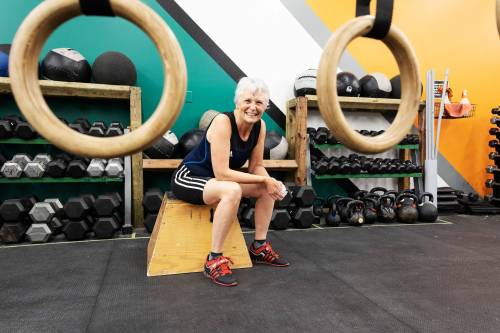
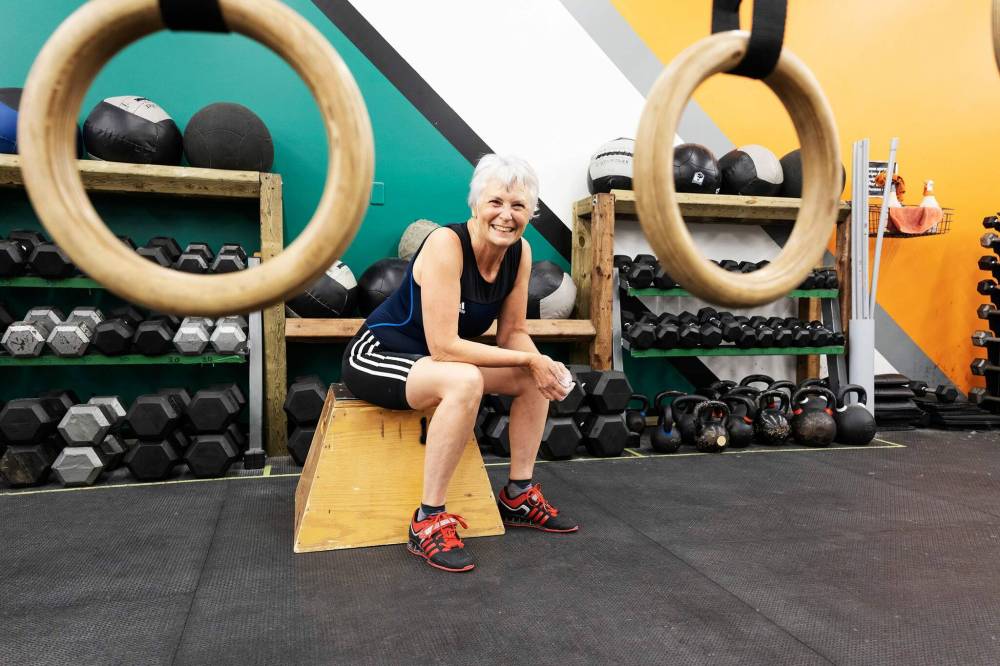
Standing at 5-foot-7 and weighing just 60 kilograms Kathryn Smandych smashes stereotypes with ease.
The 64-year-old vegan grandmother is far removed from the conventional image most have of weightlifters — and yet that’s just what she is.
The retired accountant is a regular on the Olympic weightlifting competition circuit after having started the sport six years ago.
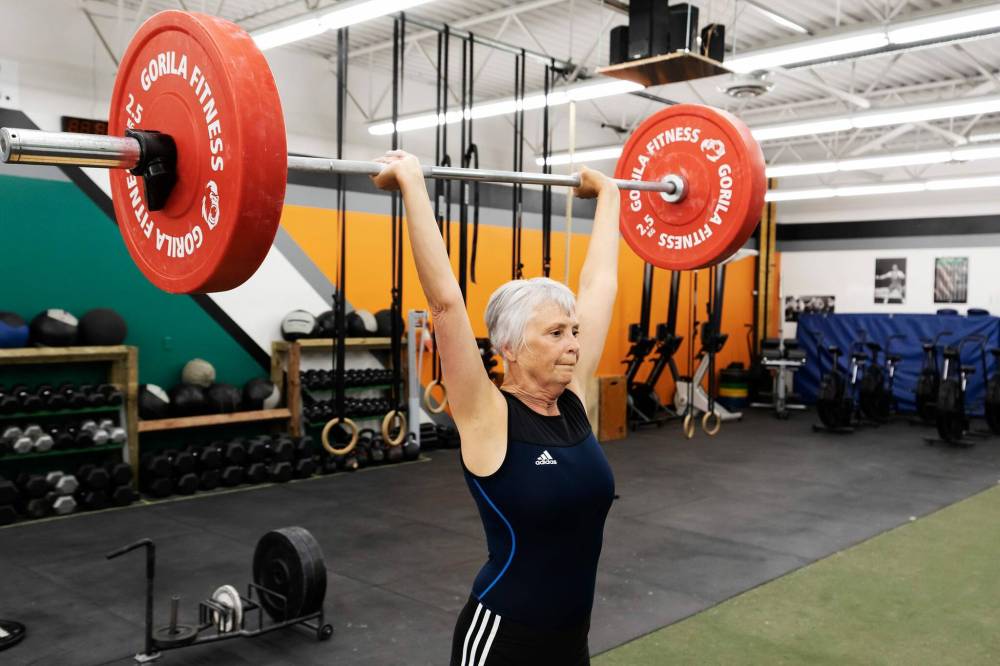
She is currently preparing for the Canadian Masters Weightlifting Championship in July where she hopes to total 62 kg: 27 kg in the snatch and 35 kg in the clean and jerk.
Smandych is part of a small but growing number of women who have taken up weightlifting. According to the Manitoba Weightlifting Association (MWA), in 2021-22 there are 25 competitive athletes who identify as female in the province.
“This number excludes people who train but haven’t competed in a while as well as women who lift weights in other sports such as CrossFit and power-lifting,” a spokesperson from the MWA says.
“The stats aren’t necessarily representative of the community, especially in the context of COVID,” they add. “The pandemic has had an important impact on many athlete’s ability to train and compete and we’ve seen a significant drop in membership numbers as a result.”
Traditionally considered a male pursuit, weightlifting was previously shunned by women for its perceived machismo and swagger. The sport was often associated with grunting men, muscles bulging as they strained to heave weights of the floor.
But its typical gym-bro image is fast changing.
No longer the enclave of male muscle-hounds, the success of female weightlifters in the international arena have gone a long way to shattering the myth that lifting is exclusively for men.
Athletes such as Jess Buettner (@djessicabuettner), Natasha Aughey (@natashaughey_) and Rachel Leblanc-Bazinet (@rachelleblancbazinet) demonstrate their awesome power online, sharing techniques and posting encouraging videos and reels to inspire others.
The antithesis of so-called ‘wellness’ accounts, which subtly push the ‘small is beautiful’ narrative, these athletes shy away from the fragile female trope, extolling instead the virtues of strength.
“I feel that social media has helped break some of the common misconceptions, and highlight the fact that women of all ages, shapes and sizes can do this sport and that is a beautiful thing,” says Irene Thiessen, 42, who has been lifting for seven years at River City Strength & Conditioning.
“This sport does not body-shame anyone,” Smandych agrees. “Anyway, I have too much fun to worry about that. My body composition has changed such that I have more muscle mass. When you start developing a passion for the sport you do become more conscious of what you eat, but primarily it encourages you to eat healthy balanced meals. In my case the increased muscle means that I have actually gained a small amount of weight as muscle weighs more than fat.”
The advent of the fitness regime CrossFit, which includes elements of weightlifting as part of its workouts, has also helped raise the sport’s profile.
It was through CrossFit Thiessen discovered she had a knack for lifting weights.
“My brother-in-law introduced me to CrossFit and I fell in love with the Olympic lifting aspect of it,” she says.
She says she loves feeling strong but it’s not just about the pursuit of physical strength.
“What people don’t realize is that weightlifting isn’t just about training your body to get stronger; you are also training your mind.
A missed lift really does a number on your mindset. You need a strong mind to get past that missed lift to attempt it again,” she says.
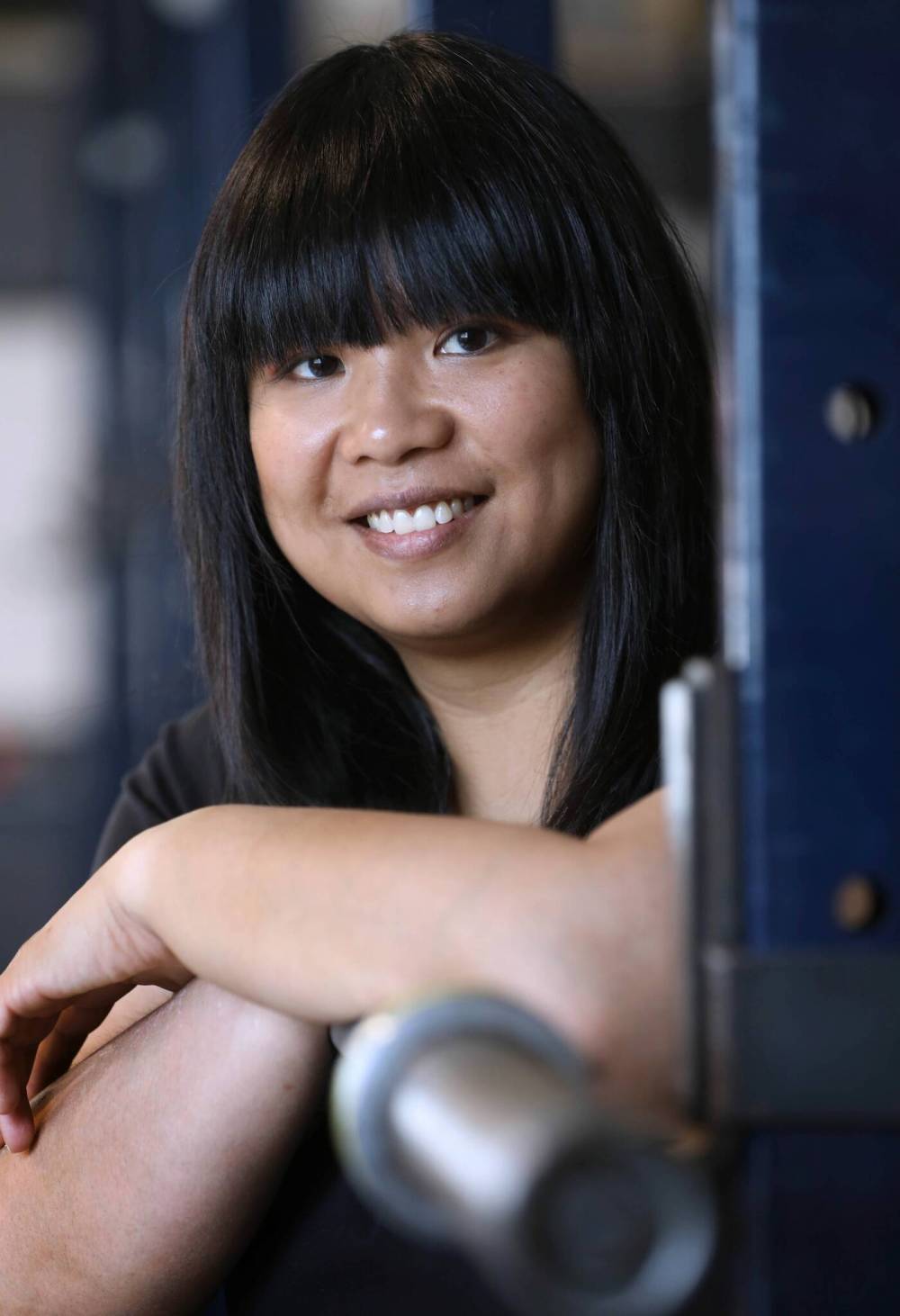
The strong body/strong mind adage holds true for Smandych who started lifting for her mental health, saying it keeps her focused. She currently works out at Dakota Weightlifting.
“When you retire it’s easy to feel lost when you lose that part of your life. Weightlifting gives me a focus and something to reach for. When I look back to when I started, I realize I truly have come a long way and it makes me feel really good about myself,” she explains.
Lifting allows Smandych to be physically healthy, letting her pursue other activities she is passionate about.
Power ranking
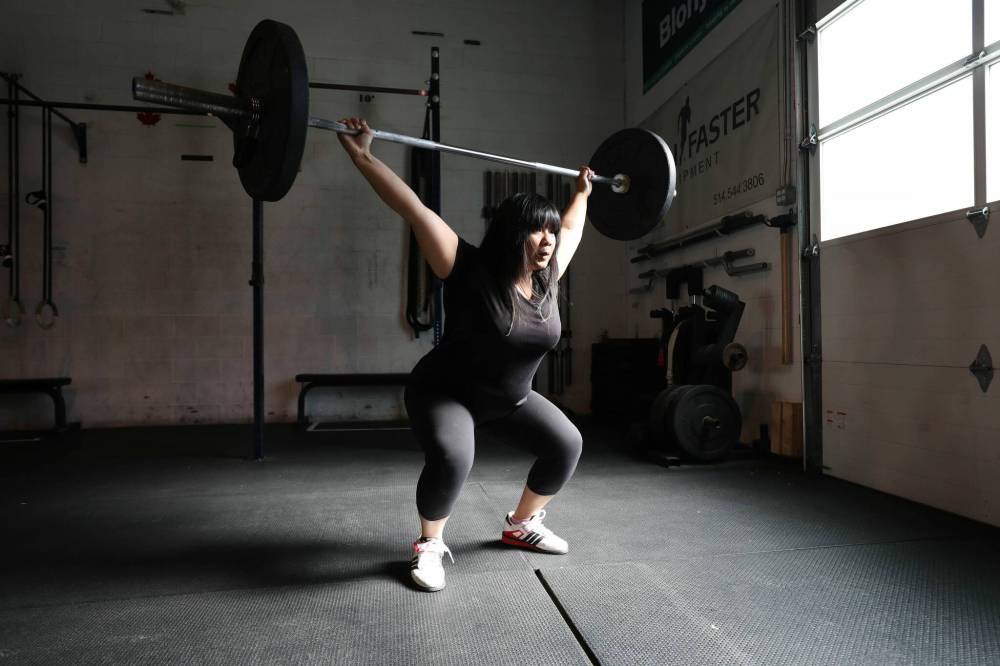
Olympic weightlifting is a specific sport. It involves two lifts; a snatch which takes a weighted bar in one move from the floor to the body in one go. The second lift is the two-move clean and jerk: lifting the bar from the floor to the shoulders and then jerking it up from there.
Power-lifting is a strength sport which consists of three tries at maximal weight on three lifts: squat, bench press, and deadlift.
“Doing this makes tackling life’s challenges easier,” she says.
“I can play with the grandkids on indoor and outdoor play structures. I can carry a fully loaded backpack with relative ease. I can walk long distances without my hips hurting.”
“I can carry heavy things without thinking about it. Multiple bags of groceries and a two-year-old and a thee-year-old grandchild at the same time. I can toss carry-on into the overhead compartment without struggling or asking for help.”
It has also — more importantly — allowed her to retain a sense of independence.
“I am an independent person. As you age it’s easy to lose that independence. And that’s not something I want.”
Being independent is very important to power-lifter Samantha Ang, 26. She says lifting has made her feel more empowered and confident of herself and her body.
“Lifting has helped me figure out what my body is truly capable of. I never really depend on my boyfriend when it comes to bringing our groceries in because I can do it by myself. When I used to live at home, my dad depended on me when he refilled our gallon water jugs. He never bothered to call my brother to do it because he knows I am strong enough to finish the task,” she says.
Ang admits when she first started lifting her motivations were to become as “small and petite as possible” but her views have since changed.
“Females lifting weights is unusual in Filipino culture,” says Ang, who goes to the gym with her boyfriend.
“My goal is to be the strongest version of myself. I move quicker which makes me more efficient with my time. I feel accomplished being able to fulfil these tasks. It feels amazing to have confidence in your own body.”
“My goal is to be the strongest version of myself. I move quicker which makes me more efficient with my time. I feel accomplished being able to fulfil these tasks. It feels amazing to have confidence in your own body.”– Samantha Ang
It’s a sentiment echoed by athletic therapist Kira Putnam, 27, who trains five times a week. Putnam started learning basic resistance training and general weightlifting when she was 18 and started Olympic weightlifting at 21.
“Being strong is very important to me. I want to be able to do as many things for myself as I can without having to ask for help. I also want to maintain as much strength as I can while I age so I can continue to be independent later in life. My job also requires me to be hands-on and help lift people so it’s very important I can do that smoothly and safely for the patients,” she explains.
Her family is supportive of her weightlifting, “my dad more so than my mom, but I think it maybe makes my mom a bit nervous that I’ll get hurt,” Putnam says.
Thiessen’s husband and two children think her weightlifting is “pretty cool.” Her husband shares gym videos of her with others and her children sometimes watch her when she trains at the gym or at home.
And while she enjoys the strength she now has (“being strong makes everything easier”), she admits it can sometimes have its drawbacks.
“You know all those jobs around the house that require two people to lift? Well, instead of my husband calling a friend, or his brother (both of whom live really close by), he just asks me to give him a hand. It’s great that he can rely on me and I’m proud of that, but there are some jobs that I just don’t want to touch!”
Smandych’s family may not fully understand what she does, but her youngest daughter is keen to take up the sport this year.
“My daughter sees the transformation in me and really wants to experience that herself,” Smandych says,
“Over the last 10 years there has been a tremendous increase in women in the sport. I think when the younger crowd sees me lift, it helps them to realize it can be a lifetime sport.”
Her friends are aware of her lifting prowess but their typical response is “you’re crazy, how do you do that?” she says.
“When older people hear that I lift, I think it shocks them because they don’t really understand what I do. And I also think that more mature people have been conditioned to believe that they can’t be strong.
“I really would like to shatter that myth. Women of all ages can be strong.”
av.kitching@freepress.mb.ca
AV Kitching is an arts and life writer at the Free Press. She has been a journalist for more than two decades and has worked across three continents writing about people, travel, food, and fashion. Read more about AV.
Every piece of reporting AV produces is reviewed by an editing team before it is posted online or published in print — part of the Free Press‘s tradition, since 1872, of producing reliable independent journalism. Read more about Free Press’s history and mandate, and learn how our newsroom operates.
Our newsroom depends on a growing audience of readers to power our journalism. If you are not a paid reader, please consider becoming a subscriber.
Our newsroom depends on its audience of readers to power our journalism. Thank you for your support.
AV Kitching is an arts and life writer at the Free Press. She has been a journalist for more than two decades and has worked across three continents writing about people, travel, food, and fashion. Read more about AV.
Every piece of reporting AV produces is reviewed by an editing team before it is posted online or published in print — part of the Free Press‘s tradition, since 1872, of producing reliable independent journalism. Read more about Free Press’s history and mandate, and learn how our newsroom operates.
Our newsroom depends on a growing audience of readers to power our journalism. If you are not a paid reader, please consider becoming a subscriber.
Our newsroom depends on its audience of readers to power our journalism. Thank you for your support.
Advertisement Advertise With Us
Advertisement Advertise With Us