Canada’s COVID-19 pandemic response compares well with other countries, study finds

Advertisement

Advertise with us

MONTREAL - Canada handled the first two years of the COVID-19 pandemic and weathered the ensuing upheaval better than several other nations with comparable health-care and economic infrastructure, a new study suggests.

Read this article for free:

or

Already have an account? Log in here »

To continue reading, please subscribe:

Subscribe and receive a limited-edition Free Press branded hat or tote.

Digital Subscription

One year of digital access for only $205*

  • Enjoy unlimited reading on winnipegfreepress.com
  • Read the E-Edition, our digital replica newspaper
  • Access News Break, our award-winning app
  • Play interactive puzzles

*First annual payment billed as $205.00 + GST for one year. This annual subscription will automatically renew at $233.00 + GST every 52 weeks (10% off the regular annual price of $259.35). Offer available to new and qualified returning subscribers only. Cancel any time.

To continue reading, please subscribe:

Add Free Press access to your Brandon Sun subscription for only an additional

$1 for the first 4 weeks*

  • Enjoy unlimited reading on winnipegfreepress.com
  • Read the E-Edition, our digital replica newspaper
  • Access News Break, our award-winning app
  • Play interactive puzzles
Start now

*Your next Brandon Sun subscription payment will increase by $1.00 and you will be charged $17.95 plus GST for four weeks. After four weeks, your payment will increase to $24.95 plus GST every four weeks.

Hey there, time traveller!
This article was published 27/06/2022 (1499 days ago), so information in it may no longer be current.

MONTREAL – Canada handled the first two years of the COVID-19 pandemic and weathered the ensuing upheaval better than several other nations with comparable health-care and economic infrastructure, a new study suggests.

The research, published in the Canadian Medical Association Journal on Monday, credits Canada’s strong performance to restrictive and persistent public health measures as well as a successful vaccination campaign.

A team of Ontario researchers analyzed data from February 2020 to February 2022 in the group of industrialized countries known as the G10, which actually has 11 members. They compared Canada, Belgium, France, Germany, Italy, Japan, the Netherlands, Sweden, Switzerland, the United Kingdom and the United States — all countries with similar political, economic, and health-care systems.
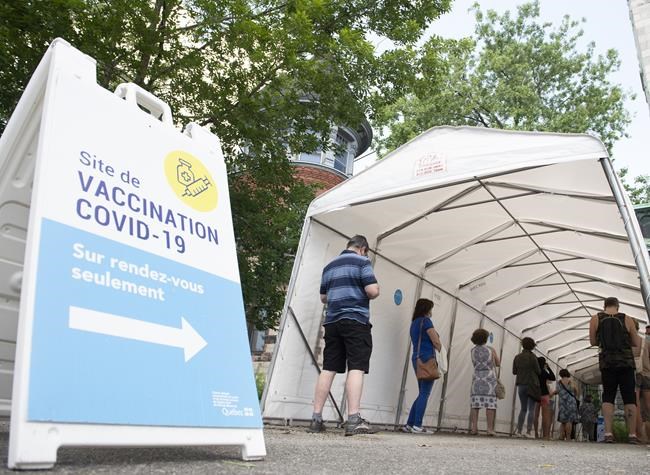
Canada handled the first two years of the COVID-19 pandemic and weathered the ensuing upheaval better than several other nations with comparable health-care and economic infrastructure, a new study suggests. People wait in line to receive a COVID-19 vaccine in Montreal, Saturday, June 19, 2021. THE CANADIAN PRESS/Graham Hughes

“If you look at Canada compared to the G10, the differences are enormous,” study co-author Dr. Fahad Razak said in a recent interview. “If you look at our vaccination rate, we had the highest in the entire G10.”

After Japan, Canada had the second lowest rate of people infected and the second lowest rate of people dying, he added. The study says Japan is considered an outlier within the G10, for reasons that aren’t clear.

The research suggests Canada’s cumulative per-capita rate of COVID-19 cases was 82,700 per million, while all other countries — with the exception of Japan — were above 100,000 per million.

Canada’s rate of COVID-19-related deaths was 919 per million, once again second lowest behind Japan. All other countries were over 1,000 per million.

Razak said at least 70,000 more Canadians would have died during the first two years of the pandemic if Canada had the same death rates as the United States, the country with the highest cumulative number of COVID-19-related deaths.

“That means most of us would probably personally know a grandparent, or a friend or family member … who’s living today in Canada who would have died if we had the same trajectory as the United States,” Razak said.

He said Canada’s comparatively positive outcomes came about despite gaining access to vaccination later than most countries, noting there were also other health-care system structural disadvantages to overcome across the country at the outset of the pandemic.

“Some hospitals were so overwhelmed that we had to ambulance or airlift patients to other hospitals,” he said.

But Canada, he said, differed from other developed countries when it opted to implement public health measures that were both strict and persistent. Though such measures drew vehement opposition in some circles, Razak said they helped mitigate the pandemic’s overall impact.

“Compared to many other countries … they would have periods with tight restrictions but quickly pull back,” he said. “For Canada, it was really this high and persistent level almost entirely for the first two years.”

But Razak said the success of Canada’s immunization drive emerged as the strongest takeaway from the research, praising officials for engaging with the population and ensuring vaccines were readily available across the country.

More than 80 per cent of eligible Canadians have been fully vaccinated with two doses as of June. The percentage of the vaccinated populations in other G10 countries is between 64 and 77 per cent, according to the study.

“There was a magic in Canada around these vaccine roll-outs during dose one and dose two,” Razak said.

“When we speak to our colleagues across the world, Canada was the envy of the world in terms of our population rallying around this. It is a lesson to the world, that very high engagement can occur with the right strategy.”

The study also showed the countries’ response to the pandemic left an economic burden, with government debt rising for all countries and Canada registering one of the highest relative increases.

“We had these very significant economic impacts, we had very tight restrictions on our individual freedom which led to things like isolation … but we also had really among the best results in terms of controlling the impact of the virus,” Razak said.

“Was it worth it? That’s not a scientific question, that’s a values and morals and policies question.”

This report by The Canadian Press was first published June 27, 2022.

This story was produced with the financial assistance of the Meta and Canadian Press News Fellowship


Report Error Submit a Tip

More Stories

55th Folklorama kicks off

Photos by John Woods 1 minute read Preview

55th Folklorama kicks off

Photos by John Woods 1 minute read Sunday, Aug. 2, 2026

Photo gallery: 55th Folklorama kicks off

Read
Sunday, Aug. 2, 2026

240 WestJet flight attendants picket in Winnipeg

Malak Abas 6 minute read Preview

240 WestJet flight attendants picket in Winnipeg

Malak Abas 6 minute read Sunday, Aug. 2, 2026

Winnipeg’s WestJet flight attendants took to the picket line outside of Richardson International Airport on the first day of nationwide strikes Sunday, while inside, frustrated flyers scrambled to re-route cancelled long-weekend flights.

The Canadian Union of Public Employees’ Ontario arm and the airline announced the strike would commence after the strike deadline was passed without a deal early Sunday morning. WestJet attendants have been without a contract since Dec. 31, 2025.

Hours later, the 240 WestJet flight attendants based in Winnipeg had walked off the job and were marching outside of the airport terminal, some carrying signs with slogans including “Tired with WestJet? So are We!” and “Unpaid Work Won’t Fly.”

Key issues causing the stalemate are wages and pay for work on the ground: the union says flight attendants are not being paid for some of that work, while the company says they pay for the work through a “credit hour” system rather than an hourly rate.

Read
Sunday, Aug. 2, 2026

Hydro CEO needs to reckon with winds of change

Dan Lett 5 minute read Preview

Hydro CEO needs to reckon with winds of change

Dan Lett 5 minute read Yesterday at 3:28 PM CDT

Methinks Hydro CEO Allan Danroth protests too much.

At a recent hearing in front of the Public Utilities Board, Danroth suggested Hydro’s plan to build a $3-billion natural-gas-powered generating plant near Brandon was being subjected to unfair criticism. The gas turbines are meant to bolster Hydro’s grid in the event that drought lowers output from hydro-generating stations.

After hearing submissions from interveners concerned about the gas-turbine plan, Danroth lashed out at the “constant, uninformed criticism” that has not only shaken trust in Hydro but also triggered threatening responses from the public.

Danroth said Hydro is monitoring “eight credible threats” against employees, five of which targeted the CEO himself. Although Danroth cited some specific incidents — employees being threatened with guns, and one where a homeowner set his dogs on a meter reader — he refused to elaborate on the circumstances.

Read
Yesterday at 3:28 PM CDT

What’s open, what’s closed, what’s up in Winnipeg on Terry Fox Day

Free Press staff 4 minute read Preview

What’s open, what’s closed, what’s up in Winnipeg on Terry Fox Day

Free Press staff 4 minute read Friday, Jul. 31, 2026

The first Monday in August marks Terry Fox Day in Manitoba, honouring the legendary Canadian who was born in Winnipeg in 1958. 

Read
Friday, Jul. 31, 2026

WestJet, CUPE reach tentative deal as passengers scramble amid flight disruptions

The Canadian Press 6 minute read Preview

WestJet, CUPE reach tentative deal as passengers scramble amid flight disruptions

The Canadian Press 6 minute read Updated: Yesterday at 3:44 PM CDT

CALGARY - WestJet and the union representing some 4,400 flight attendants reached a tentative deal Monday to resume work after a brief work stoppage, but neither side is sharing specifics yet.

The airline had said Sunday it had proposed a 13 per cent pay increase starting in October, and then a 2.5 per cent increase in each of the next three years until 2029.

The airline also said it offered a new duty pay premium, equivalent to another 12 per cent salary increase, which WestJet said is designed to solve the cabin crew's claim of unpaid work.

In a news conference in Calgary on Monday, CUPE local 8125 president Alia Hussain said the flight attendants have 30 days to ratify the agreement, and the union will spend the coming days preparing a slide show to present to the members.

Read
Updated: Yesterday at 3:44 PM CDT

Canada's COVID response among world's best: study

Virginie Ann, The Canadian Press 4 minute read Preview

Canada's COVID response among world's best: study

Virginie Ann, The Canadian Press 4 minute read Monday, Jun. 27, 2022

MONTREAL - Canada handled the first two years of the COVID-19 pandemic and weathered the ensuing upheaval better than several other nations with comparable health-care and economic infrastructure, a new study suggests.

The research, published in the Canadian Medical Association Journal on Monday, credits Canada's strong performance to restrictive and persistent public health measures as well as a successful vaccination campaign.

A team of Ontario researchers analyzed data from February 2020 to February 2022 in the group of industrialized countries known as the G10, which actually has 11 members. They compared Canada, Belgium, France, Germany, Italy, Japan, the Netherlands, Sweden, Switzerland, the United Kingdom and the United States — all countries with similar political, economic, and health-care systems.

"If you look at Canada compared to the G10, the differences are enormous," study co-author Dr. Fahad Razak said in a recent interview. "If you look at our vaccination rate, we had the highest in the entire G10."

Read
Monday, Jun. 27, 2022