Prominent Radio-Canada personalities urge broadcaster to fight CRTC N-word decision

Advertisement

Advertise with us

MONTREAL - A Black Montrealer who filed a complaint against Radio-Canada over the on-air use of the N-word says he's disappointed but not surprised by the pushback against a recent CRTC decision ordering the public broadcaster to apologize.

Read this article for free:


By clicking the button above, an account will be created and you will begin to receive some of our recommended newsletters. You may opt out of any newsletter by visiting your Email and Communication Preferences page or by clicking "unsubscribe" at the bottom of any email.

or

Already have an account? Log in here »

To continue reading, please subscribe:

Digital Subscription

One year of digital access for only $1.44 a week*

  • Enjoy unlimited reading on winnipegfreepress.com
  • Read the E-Edition, our digital replica newspaper
  • Access News Break, our award-winning app
  • Play interactive puzzles

*Billed as $5.77 plus GST every four weeks. After 52 weeks, price increases to the regular rate of $19.95 plus GST every four weeks. Offer available to new and qualified returning subscribers only. Cancel any time.

To continue reading, please subscribe:

Add Free Press access to your Brandon Sun subscription for only an additional

$1 for the first 4 weeks*

  • Enjoy unlimited reading on winnipegfreepress.com
  • Read the E-Edition, our digital replica newspaper
  • Access News Break, our award-winning app
  • Play interactive puzzles
Start now

*Your next Brandon Sun subscription payment will increase by $1.00 and you will be charged $17.95 plus GST for four weeks. After four weeks, your payment will increase to $24.95 plus GST every four weeks.

Hey there, time traveller!
This article was published 04/07/2022 (1568 days ago), so information in it may no longer be current.

MONTREAL – A Black Montrealer who filed a complaint against Radio-Canada over the on-air use of the N-word says he’s disappointed but not surprised by the pushback against a recent CRTC decision ordering the public broadcaster to apologize.

Ricardo Lamour, a social worker and artist, filed the complaint with the broadcasting and telecommunications regulator after hearing a journalist and a commentator repeat the offensive word several times on air in 2020.

Some 50 Radio-Canada personalities said in an open letter published Monday in La Presse that last week’s CRTC decision in Lamour’s favour threatens journalistic freedom and independence and “opens the door to the dangers of censorship and self-censorship.”

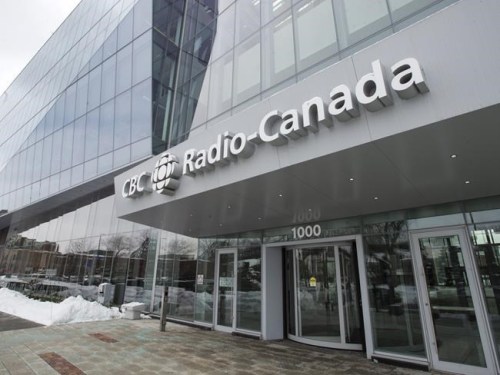
The CBC-Radio Canada building is seen Thursday, Jan. 28, 2021, in Montreal. Dozens of prominent Radio-Canada personalities are urging their employer to fight back against a recent CRTC decision ordering the broadcaster to apologize over the use of the N-word on air. THE CANADIAN PRESS/Ryan Remiorz

“Also, if we are alarmed, it’s not only for us, at Radio-Canada, but for all communications companies regulated by the CRTC,” wrote the signatories, which included prominent news anchors, such as Céline Galipeau and Patrice Roy, and Guy A. Lepage, host of the talk show “Tout le monde en parle.”

Radio-Canada’s former ombudsman, a Quebec cabinet minister and groups representing journalists have also denounced the decision as a blow to freedom of expression or freedom of the press.

When asked if he was surprised by the backlash, Lamour quoted American author and activist James Baldwin, who wrote, “The power of the white world is threatened whenever a Black man refuses to accept the white world’s definitions.” Lamour noted that most francophone Quebec media figures are white and he questioned how many of the letter’s signatories are Black.

He said he was motivated to file a complaint two years ago after hearing two on-air radio personalities repeatedly use the full name of a book that has the N-word in the title, “without adequate warning and contextual discussion.”

Lamour had been waiting to go on air to discuss his work mentoring Black youth, and heard the comments in the Radio-Canada studio through a pair of headphones. He said he was troubled by the “careless and callous” use of the word.

“I found it offensive and upsetting,” he said.

He filed a complaint with the CRTC after first being told by Radio-Canada’s ombudsman that the use of the word in that specific context — quoting a book title — did not contravene the public broadcaster’s journalistic standards and practices.

The Canadian Radio-television and Telecommunications Commission sided with Lamour. While it recognized that the word was not used in a discriminatory manner, it found the public broadcaster nevertheless violated Canadian broadcasting policy objectives and values.

Radio-Canada did not do enough to mitigate the effect the word could have on its audience, “particularly in the current social context and given its national public broadcaster status,” the CRTC decision read.

In addition to a written apology to the complainant, the broadcaster must also put in place internal measures and programming to ensure that it better addresses similar issues in the future, the CRTC said.

Signatories of the open letter in La Presse acknowledged that the N-word is “loaded,” but they said it is used rarely on air and only in a factual context “that is neither offensive, insulting or dehumanizing, which respects the journalistic standards and practices of Radio-Canada but also the intelligence of our institution and its employees.”

The province’s professional journalists association, the Fédération professionnelle des journalistes du Québec, denounced the decision as a “dangerous precedent that imposes upon media a censorship that is as exaggerated as it is unjustified.” Quebec’s culture minister also expressed concern over the decision, tweeting that it was a serious violation of freedom of expression.

Lamour says he sees the backlash against the N-word decision partly as a fight “to assert some rights to not be accountable” by broadcasters who are resistant to making the necessary changes to better reflect an evolving society.

“We’re not seeing some form of introspection here; we’re seeing offensive things,” he said.

Instead of fighting, he said, broadcasters should read the reasoning behind the decision and try to do better.

In an email, a spokesperson for Radio-Canada said the broadcaster was aware of the “wide range of opinions” on the CRTC decision.

“Radio-Canada acknowledges that use of the ‘’N-word’ is offensive; that’s why we have limited its use on our airwaves,” the statement read.

The broadcaster said it was still studying the decision and considering how it would respond.

This report by The Canadian Press was first published July 4, 2022.

Report Error Submit a Tip

More Stories

Half Pints Brewing out of bankruptcy, back on shelves

Aaron Epp 5 minute read Preview

Half Pints Brewing out of bankruptcy, back on shelves

Aaron Epp 5 minute read Friday, Oct. 16, 2026

A pioneer of Winnipeg’s craft brewing scene has reopened under new ownership.

Read
Friday, Oct. 16, 2026

Consumer apprehension grows as US retailers adopt AI-assisted pricing tools

Dee-ann Durbin And Anne D'innocenzio, The Associated Press 7 minute read Preview

Consumer apprehension grows as US retailers adopt AI-assisted pricing tools

Dee-ann Durbin And Anne D'innocenzio, The Associated Press 7 minute read Yesterday at 2:10 AM CDT

U.S. consumers aren't just frustrated with high prices. They're angry and confused about the increasingly high-tech ways that restaurant chains and major retailers are setting those prices.

Digital price tags are rapidly replacing paper ones in grocery aisles. Artificial intelligence tools help businesses decide what to charge by predicting how customers might respond. Terms like “dynamic pricing” and “surveillance pricing” are stirring anxiety on social media, where users wonder if different people are getting different prices for the same product.

Americans have grown accustomed to changing prices when booking flights, hotel rooms and rides, but the prospect of everyday spending shaped by algorithms they don’t understand and personal data they may not realize they’re sharing has touched a nerve.

“There are major tensions happening right now between who’s really going to have the power with some of these algorithms and usage of bots and AI: the companies or the shopper,” said Katie Thomas, who leads an internal consumer behavior think tank at the management consulting firm Kearney.

Read
Yesterday at 2:10 AM CDT

Radio-Canada urged to fight CRTC N-word decision

Morgan Lowrie, The Canadian Press 4 minute read Preview

Radio-Canada urged to fight CRTC N-word decision

Morgan Lowrie, The Canadian Press 4 minute read Monday, Jul. 4, 2022

MONTREAL - A Black Montrealer who filed a complaint against Radio-Canada over the on-air use of the N-word says he's disappointed but not surprised by the pushback against a recent CRTC decision ordering the public broadcaster to apologize.

Ricardo Lamour, a social worker and artist, filed the complaint with the broadcasting and telecommunications regulator after hearing a journalist and a commentator repeat the offensive word several times on air in 2020.

Some 50 Radio-Canada personalities said in an open letter published Monday in La Presse that last week's CRTC decision in Lamour's favour threatens journalistic freedom and independence and "opens the door to the dangers of censorship and self-censorship."

"Also, if we are alarmed, it's not only for us, at Radio-Canada, but for all communications companies regulated by the CRTC," wrote the signatories, which included prominent news anchors, such as Céline Galipeau and Patrice Roy, and Guy A. Lepage, host of the talk show "Tout le monde en parle."

Read
Monday, Jul. 4, 2022

Oseredok's centrepiece mosaic is a testament to Ukrainian heritage

Conrad Sweatman 6 minute read Preview

Oseredok's centrepiece mosaic is a testament to Ukrainian heritage

Conrad Sweatman 6 minute read 2:01 AM CDT

With impressionism, things can look messy when you’re eyeing the brush strikes up close. Stand back, voila, the piece comes into focus.

But with photomosaics, an image made up of hundreds of smaller photos, it’s the opposite. The closer you stand, the more images you see.

In the era of AI art, it’s all too easy to fire off a kitschy digital photomosaic. The internet is littered with mindless renderings showing, say, an image of the Statue of Liberty made up of a thousand Big Macs.

It’s another and rare thing to build a photomosaic by hand, with a genuine artist’s grasp of the form’s strange double life. This is what, for the past eight years or so, a collaborative team — in particular Edmonton-based creator and curator Larisa Sembaliuk Cheladyn, sculptor Royden Mills, Theodora Harasymiw and a group of volunteers — did for Ukrainian Voice: A Legacy Mosaic, one of four new exhibitions at the Oseredok: Ukrainian Cultural and Education Centre.

Read
2:01 AM CDT

De Havilland calls for national water bomber fleet as it scrambles to meet demand

Christopher Reynolds, The Canadian Press 7 minute read Preview

De Havilland calls for national water bomber fleet as it scrambles to meet demand

Christopher Reynolds, The Canadian Press 7 minute read Updated: Yesterday at 1:49 PM CDT

MONTREAL - On July 13, a pair of Canadair water bombers touched down on the Seine River, skimming along its surface to refill their water tanks as they battled a wildfire south of Paris.

The "super scoopers," with their signature ketchup-red wing tips on a mustard-yellow body, sucked up 6,000-plus litres from France’s most famous waterway in one go as part of a fight against the flames then rampaging across Europe.

The event in north-central France underscored how wildfires are ranging even farther from their traditional grounds and fuelling an urgent need for water bombers to fend off climate disasters.

The iconic Canadair turboprops serve as the only amphibious firefighting aircraft currently in production built from the outset for that purpose, rather than being retrofitted to douse flames.

Read
Updated: Yesterday at 1:49 PM CDT

Salvation Army calls on Winnipeggers to donate merchandise as sales soar

Kelly-Anne Riess 4 minute read Preview

Salvation Army calls on Winnipeggers to donate merchandise as sales soar

Kelly-Anne Riess 4 minute read 2:01 AM CDT

The Salvation Army is taking donated merchandise from other regions to stock its Winnipeg thrift stores as increasing sales outpace local donations.

Retail activity at the charity’s eight Winnipeg locations grew more than 10 per cent year over year during several months, from January through April, and again in June.

Although local donations remain strong, they haven’t kept pace with demand, prompting the organization to supplement inventory with merchandise from elsewhere.

Ted Troughton, managing director of the Salvation Army’s thrift store operations, said rising living costs are bringing in new customers.

Read
2:01 AM CDT