Buried treasure
Yukon post-Gold Rush dig turned up silent films thought to have been lost
Advertisement
Read this article for free:
or
Already have an account? Log in here »
To continue reading, please subscribe:

Digital Subscription
One year of digital access for only $205*
- Enjoy unlimited reading on winnipegfreepress.com
- Read the E-Edition, our digital replica newspaper
- Access News Break, our award-winning app
- Play interactive puzzles
*First annual payment billed as $205.00 + GST for one year. This annual subscription will automatically renew at $233.00 + GST every 52 weeks (10% off the regular annual price of $259.35). Offer available to new and qualified returning subscribers only. Cancel any time.
To continue reading, please subscribe:
Add Free Press access to your Brandon Sun subscription for only an additional
$1 for the first 4 weeks*
- Enjoy unlimited reading on winnipegfreepress.com
- Read the E-Edition, our digital replica newspaper
- Access News Break, our award-winning app
- Play interactive puzzles
*Your next Brandon Sun subscription payment will increase by $1.00 and you will be charged $17.95 plus GST for four weeks. After four weeks, your payment will increase to $24.95 plus GST every four weeks.
Read unlimited articles for free today:
or
Already have an account? Log in here »
Hey there, time traveller!
This article was published 27/08/2022 (1454 days ago), so information in it may no longer be current.
Can one write about the Dawson City Great Film Find without first detailing the history of the Klondike Gold Rush of 1896-1899, an intense, unique period in Canadian history?
Not according to Michael Gates, the author of Hollywood in the Klondike, who begins his book in 1978, when a bulldozer demolishing a hockey rink turned up hundreds of discarded silent movies buried and preserved in the permafrost.
Gates should know. He’s spent nearly 50 years studying the past in the Yukon. He writes about it extensively.
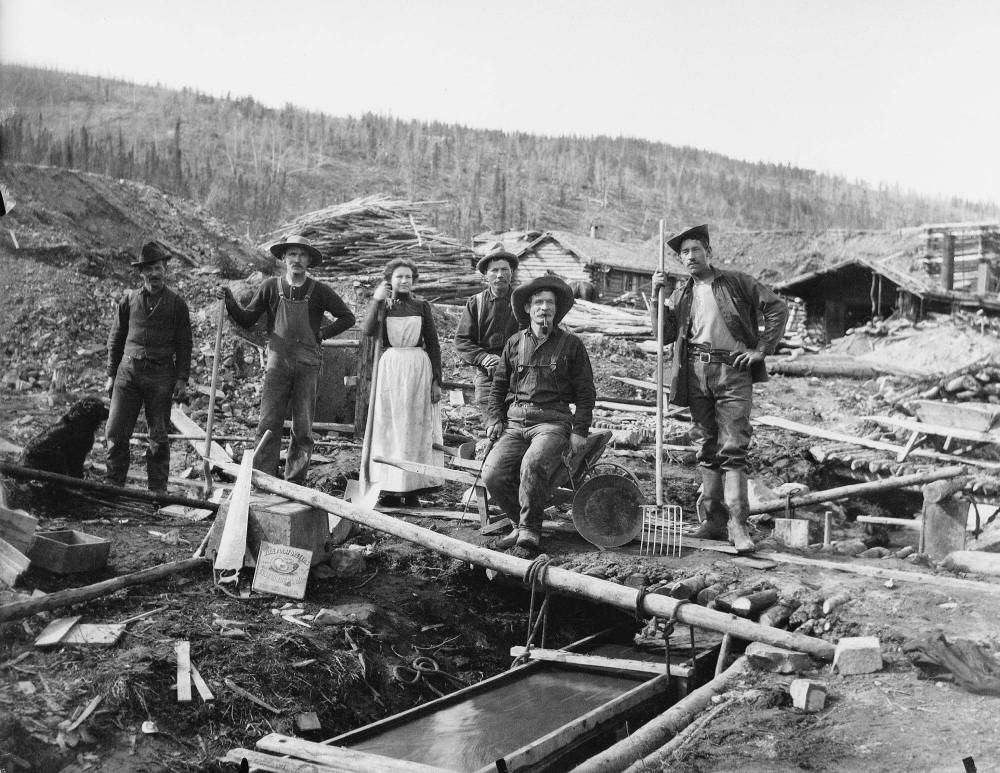
National Archives of Canada / The Canadian Press files
A group of unidentified people sluice for gold in the Yukon Territory during the Klondike Gold Rush circa 1900.
The title of the book is a misnomer, though, because it’s mostly about how the Yukon changed when prospectors, still thirsty for riches after the California Gold Rush, moved north in the 1870s to sift through the rivers and dig into the clay, enduring starvation, scurvy, tuberculosis and frostbite for their efforts.
The small settlement grew from a jumble of buildings, huts and shanties, “with the words ‘Hotel,’ ‘Saloon,’ and ‘Opera House’” painted on, where, “though bread is often lacking, whiskey is never scarce,” writes Gates. After months of working in brutal sub-Arctic darkness, miners sought human connection and entertainment.
The population exploded when prospectors George Carmack and Skookum Jim uncovered bedrock “studded with gold nuggets” in Bonanza and Eldorado creeks at the end of 1896. Word went south, and within the next year, about 100,000 people headed north to Skagway, Alaska, then hauled 900-plus kilograms of supplies over the brutal Chilkoot Trail. The punishing mountains caused many to return, but in 1898, 40,000 people circulated through Dawson City. Gold dust became the currency of exchange, but after most of the profitable claims were staked (“some lived on champagne, while others ate beans”), many started businesses to service the population, including Alexander Pantages and Sid Grauman, who later found fortune in the south.
Gates notes that “modern” civilization caused the complete displacement of the Tr’ondëk Hwëch’in people, who had fished and hunted in the area for untold centuries. Their way of life was destroyed rapidly — fish habitat by placer mining and later dredging, and by the poisoning of waterways through the byproducts of gold refining. Forest habitat was razed; the pounding of hammers a constant din as structures were thrown up at a dizzying pace, replaced frequently when they were gutted by fire.
Dawson was dubbed “The Paris of the North,” although when a new vein of gold was discovered in Nome, Alaska, in 1899, most people abandoned it. The number of residents dwindled to less than 1,000 by 1921. Those hardy few established institutions fit for a cosmopolitan city. Gates includes biographies and anecdotes about the colourful vaudeville stars who sang, danced and acted in dance halls and theatres there, and writes about a declining town struggling to maintain its dignity.
That’s why the silent films ended up there, the final stop on a two- to three-year circuit, with Dawson citizens paying to watch them. The copies were too worn for the Hollywood companies to spend money on their return. And so, they became landfill.
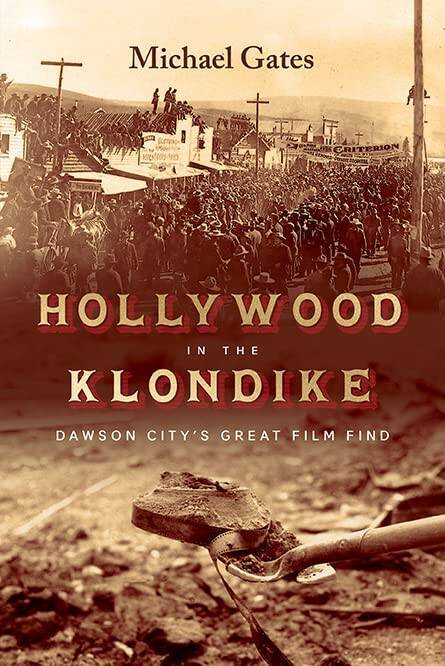
Hollywood in the Klondike
But inside the cache was a different treasure. Silents were made using highly flammable cellulose nitrate film; about 75 per cent of Hollywood’s inventory had already been lost to fire or decay. The bulldozer dredged up film history thought to have vanished; film historians have been copying and studying them ever since. Unsurprisingly, Gates is featured in a 2016 documentary of the same name by American filmmaker Bill Morrison.
While the title may be a misnomer, Gates has written a lively, fulsome history of the Yukon, and can that be a bad thing? Hardly.
Harriet Zaidman is a children’s and freelance writer in Winnipeg. Her latest novel, Second Chances, is set in the polio epidemics of the 1950s.
History
Updated on Saturday, August 27, 2022 12:54 PM CDT: Removes incorrect reviewer tag
Updated on Thursday, September 15, 2022 8:59 AM CDT: Corrects byline
Updated on Friday, September 16, 2022 8:52 AM CDT: Adds bio