South Korea fines Google, Meta over privacy violations

Advertisement

Advertise with us

SEOUL, South Korea (AP) — South Korea’s privacy watchdog has fined Google and Meta a combined 100 billion won ($72 million) for tracking consumers’ online behavior without their consent and using their data for targeted advertisements.

Read this article for free:


or

Already have an account? Log in here »

To continue reading, please subscribe:

Subscribe and receive a limited-edition Free Press branded hat or tote.

Digital Subscription

One year of digital access for only $205*

  • Enjoy unlimited reading on winnipegfreepress.com
  • Read the E-Edition, our digital replica newspaper
  • Access News Break, our award-winning app
  • Play interactive puzzles

*First annual payment billed as $205.00 + GST for one year. This annual subscription will automatically renew at $233.00 + GST every 52 weeks (10% off the regular annual price of $259.35). Offer available to new and qualified returning subscribers only. Cancel any time.

To continue reading, please subscribe:

Add Free Press access to your Brandon Sun subscription for only an additional

$1 for the first 4 weeks*

  • Enjoy unlimited reading on winnipegfreepress.com
  • Read the E-Edition, our digital replica newspaper
  • Access News Break, our award-winning app
  • Play interactive puzzles
Start now

*Your next Brandon Sun subscription payment will increase by $1.00 and you will be charged $17.95 plus GST for four weeks. After four weeks, your payment will increase to $24.95 plus GST every four weeks.

Hey there, time traveller!
This article was published 14/09/2022 (1432 days ago), so information in it may no longer be current.

SEOUL, South Korea (AP) — South Korea’s privacy watchdog has fined Google and Meta a combined 100 billion won ($72 million) for tracking consumers’ online behavior without their consent and using their data for targeted advertisements.

South Korea’s Personal Information and Protection Commission said it fined Google 69.2 billion won ($50 million) and Meta 30.8 billion won ($22 million) after a meeting where officials agreed that the companies’ business practices might cause “serious” privacy infringements.

The fines were the biggest ever penalties imposed by South Korea for privacy law violations, the commission said in a press release.

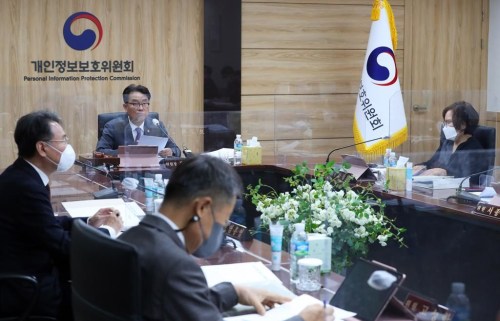
Yoon Jong In, the chairperson of the Personal Information and Protection Commission speaks during the plenary session at the Government Complex in Seoul, South Korea, Wednesday, Sept. 14, 2022. South Korea’s privacy watchdog has fined Google and Meta a combined 100 billion won ($72 million) for tracking consumers’ online behavior without their consent and using their data for targeted advertisements. (Bae Hun-shik/Newsis via AP)

Both companies refuted the commission’s findings and Meta indicated it could challenge its fine in court. The fines can be appealed through administrative lawsuits, which must be filed within 90 days after the companies are formally notified of the commission’s decision.

According to the commission, Google and Meta, which operates Facebook and Instagram, didn’t clearly inform users or obtain their consent as they collected information about their online activities when they used other websites or services outside their own platforms. Such data was used to analyze their interests and create individually customized advertisements, the commission said.

The commission ordered the companies to provide an “easy and clear” process of consent giving people more control over whether to share information about what they do online.

“Google did not clearly inform consumers that it would collect and use their behavioral information about their use of other companies’ (services) when they signed up,” the commission said.

“Meta did not present the content of consent in way that could be easily seen by consumers when they signed up, and just included the content in their full data policy statement. It did not specifically inform consumers of the legally required notifications and did not obtain their consent.”

The commission said the companies’ practices seriously threatened privacy rights as more than 82% of South Koreans using Google and more than 98% using Meta have let the companies track their online activities.

Google, a search and email giant that also operates the YouTube video platform, disagreed with the commission’s findings. It said in a statement that it has always demonstrated a commitment to “making ongoing updates that give users control and transparency.” The company said it will review the commission’s findings once it receives the fully written decision.

Meta said it will consider “all options,” including seeking a court ruling.

“We are confident that we work with our clients in a legally compliant way that meets the processes required by local regulations,” Meta said in an emailed statement.

Report Error Submit a Tip

More Stories

Poilievre’s lips moving, but Canadians aren’t interested in what he’s saying

Tom Brodbeck 5 minute read Preview

Poilievre’s lips moving, but Canadians aren’t interested in what he’s saying

Tom Brodbeck 5 minute read Thursday, Aug. 6, 2026

Pierre Poilievre’s biggest political challenge right now isn’t Prime Minister Mark Carney’s popularity.

It’s the fact that he still seems to be campaigning against a political landscape that no longer exists.

More than a year after the 2025 federal election, the Conservative leader is still relying on the same message, the same themes and the same attacks that defined his party’s campaign before voters went to the polls.

And Canadians appear to be tuning it out.

Read
Thursday, Aug. 6, 2026

South Korea fines Google, Meta over privacy violations

Kim Tong-hyung, The Associated Press 3 minute read Preview

South Korea fines Google, Meta over privacy violations

Kim Tong-hyung, The Associated Press 3 minute read Wednesday, Sep. 14, 2022

SEOUL, South Korea (AP) — South Korea’s privacy watchdog has fined Google and Meta a combined 100 billion won ($72 million) for tracking consumers’ online behavior without their consent and using their data for targeted advertisements.

South Korea’s Personal Information and Protection Commission said it fined Google 69.2 billion won ($50 million) and Meta 30.8 billion won ($22 million) after a meeting where officials agreed that the companies’ business practices might cause “serious” privacy infringements.

The fines were the biggest ever penalties imposed by South Korea for privacy law violations, the commission said in a press release.

Both companies refuted the commission’s findings and Meta indicated it could challenge its fine in court. The fines can be appealed through administrative lawsuits, which must be filed within 90 days after the companies are formally notified of the commission’s decision.

Read
Wednesday, Sep. 14, 2022

Trailblazing Western Scrap Metals heavy-equipment operator relishes role at massive crane’s control

David Sanderson 7 minute read Preview

Trailblazing Western Scrap Metals heavy-equipment operator relishes role at massive crane’s control

David Sanderson 7 minute read Friday, Aug. 14, 2026

Less than five per cent of heavy-equipment operators in the country are women but that number is trending upward, according to a study conducted by trade magazine Crane & Hoist Canada.

It was reported that in Ontario roughly eight per cent of jobs in the transport and heavy-equipment field are currently held by women. Furthermore, in 2024 almost 20 per cent of graduates at an Edmonton-based heavy-equipment operator training school were female, the article stated.

That brings us to Harmony Guspodarchuk, the first female crane operator in the 70-year history of Western Scrap Metals, a family-owned business at 18 Sutherland Ave.

Three years ago, Guspodarchuk literally stepped into the driver’s seat of a 27,500-kilogram, Liebherr C 924 Heavy Lift Litronic crane. The 29-year-old hasn’t looked back much since.

Read
Friday, Aug. 14, 2026

Foster mom pleads guilty to assault that left six-year-old-girl paralyzed

Dean Pritchard 4 minute read Preview

Foster mom pleads guilty to assault that left six-year-old-girl paralyzed

Dean Pritchard 4 minute read Friday, Aug. 14, 2026

A Winnipeg foster mother has admitted to violently assaulting her ill foster daughter and leaving her paralyzed after the girl resisted the woman’s efforts to provide her with medication, a court has heard.

Marilyn Keno, 26, pleaded guilty Friday to one count of aggravated assault.

Keno remains in custody and will be sentenced at a later date following the completion of a court-ordered pre-sentence report.

The maximum sentence for aggravated assault is 14 years in prison. Crown attorney Alanna Littman and defence lawyer Jeremy Kostiuk did not disclose what sentences they will be recommending.

Read
Friday, Aug. 14, 2026

Bombers manage to hand Redblacks another loss

Taylor Allen 6 minute read Preview

Bombers manage to hand Redblacks another loss

Taylor Allen 6 minute read Updated: Yesterday at 8:35 AM CDT

It looked bad. Real bad.

Winnipeg Blue Bombers quarterback Zach Collaros made his return to the lineup on Friday night against the Ottawa Redblacks, and he was once again the victim of a blindside hit.

The one he suffered in Hamilton on July 5 appeared relatively modest in comparison and yet, it sidelined him for a month with a neck injury.

So when Redblacks linebacker Lucas Cormier came around the edge unblocked and hammered Collaros from behind in the second quarter, you could hear a pin drop inside Princess Auto Stadium.

Read
Updated: Yesterday at 8:35 AM CDT

Could renewed interest in strategically critical rare earth elements finally make sub-sector profitable?

Joel Schlesinger 6 minute read Preview

Could renewed interest in strategically critical rare earth elements finally make sub-sector profitable?

Joel Schlesinger 6 minute read Yesterday at 3:00 AM CDT

Rare earth elements are among the most critical of mined resources for modern economies.

They’re essential in manufacturing specialized magnets used in a host of technologies from wind turbines and electric vehicles to hard drives, smartphones, television screens, and fibre optics. Most notably, however, rare earth minerals are increasingly vital to the defence industry.

These 17 elements — closely related chemically and usually found all together in mineral deposits — have indeed been growing in geopolitical importance as the United States, Canada and other Western nations recognize their dependence on production from China.

It is the world’s largest producer and processor of rare earths, including the most in-demand elements neodymium and praseodymium used to manufacture very light and powerful magnets for an array of technologies, including the most advanced weapons of modern warfare.

Read
Yesterday at 3:00 AM CDT