Surface tension
The menace lurking in psychological thriller’s too beautiful suburbs is undermined by structural flaws

Advertisement
Read this article for free:
or
Already have an account? Log in here »
To continue reading, please subscribe:

Digital Subscription
One year of digital access for only $205*
- Enjoy unlimited reading on winnipegfreepress.com
- Read the E-Edition, our digital replica newspaper
- Access News Break, our award-winning app
- Play interactive puzzles
*First annual payment billed as $205.00 + GST for one year. This annual subscription will automatically renew at $233.00 + GST every 52 weeks (10% off the regular annual price of $259.35). Offer available to new and qualified returning subscribers only. Cancel any time.
To continue reading, please subscribe:
Add Free Press access to your Brandon Sun subscription for only an additional
$1 for the first 4 weeks*
- Enjoy unlimited reading on winnipegfreepress.com
- Read the E-Edition, our digital replica newspaper
- Access News Break, our award-winning app
- Play interactive puzzles
*Your next Brandon Sun subscription payment will increase by $1.00 and you will be charged $17.95 plus GST for four weeks. After four weeks, your payment will increase to $24.95 plus GST every four weeks.
Read unlimited articles for free today:
or
Already have an account? Log in here »
Hey there, time traveller!
This article was published 24/09/2022 (1434 days ago), so information in it may no longer be current.
An entertaining but disappointing dystopian feminist fable about men, women and power, this second film by actor-director Olivia Wilde looks swell.
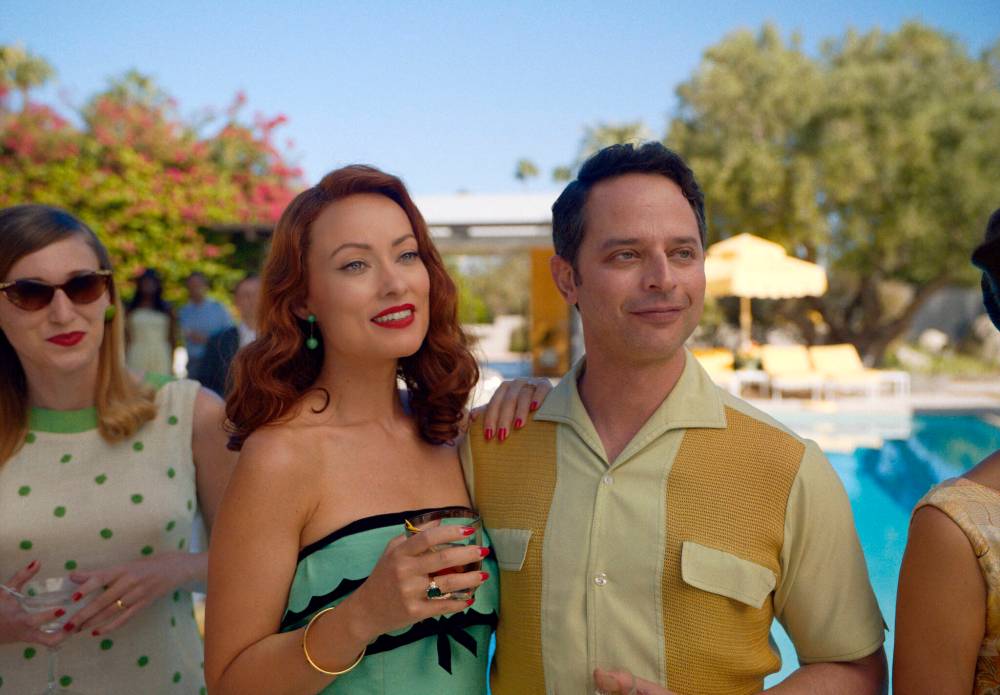
The minty mid-century decor, the candy-coloured cars, the fabulous frocks, the swanky supper clubs, the sweeps of desert landscape — they all make a big, beautifully choreographed visual splash.
Underneath all this gorgeousness, of course, lurks something sinister, which is made apparent within the first three minutes of the film. This too-early tip-off hints at structural issues in the script, from Katie Silberman, who collaborated with Wilde on Booksmart, along with Carey Van Dyke and Shane Van Dyke.
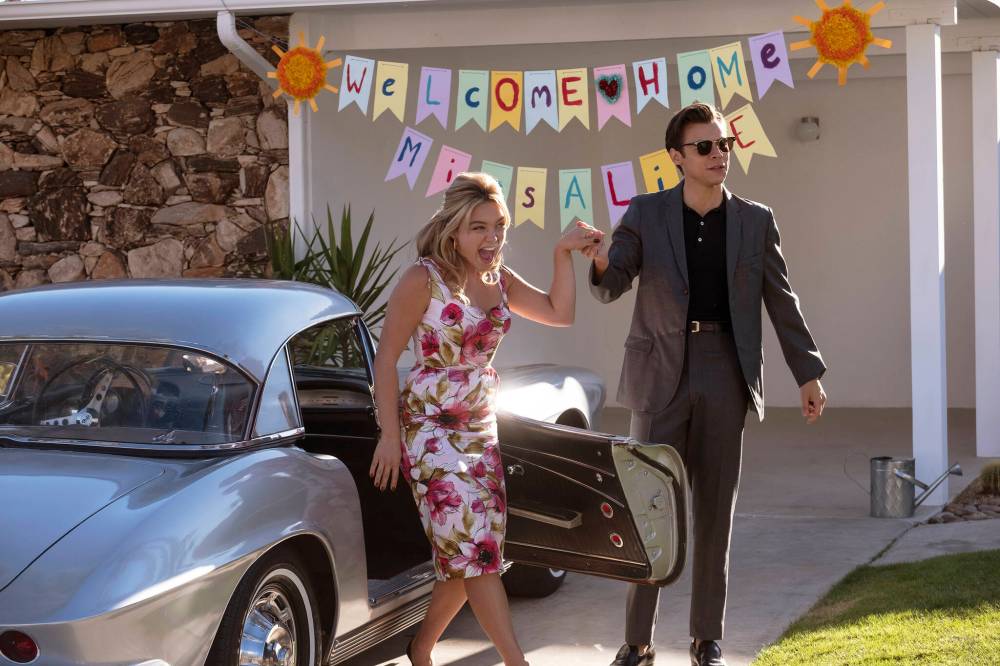
Warner Bros. Entertainment
Pugh, left, and Harry Styles play a married couple in the plagued-by-controversy Don’t Worry Darling.
Their ambitious unpacking of this seductive, deceptive suburban paradise never really clicks, but Don’t Worry Darling still gets a lot of momentum from Wilde’s dynamic direction, some committed performances and some intriguing — though ultimately underdeveloped — ideas.
Alice (Florence Pugh) and Jack (Harry Styles) live in a cul-de-sac in a 1950s planned community. In the morning, the men drive off to work as the wives wave, both genders acting in unsettling unison.
The men all work for the Victory Project, which is run by Frank (Chris Pine). Less of a boss and more of a charismatic cult leader, Frank likes to talk about the need for order and the danger of chaos, giving off a creepy Jordan Peterson vibe.
Ostensibly the Victory Project is concerned with “the development of progressive materials,” but its larger mission seems to be “building a new society.” (“Whose world? Our world!” the men chant at one particularly disturbing office gathering.)
Whatever the men are up to, their project causes tremors to ripple through the town with such regularity that the inhabitants barely notice. They just pick up their highballs to keep them from spilling.
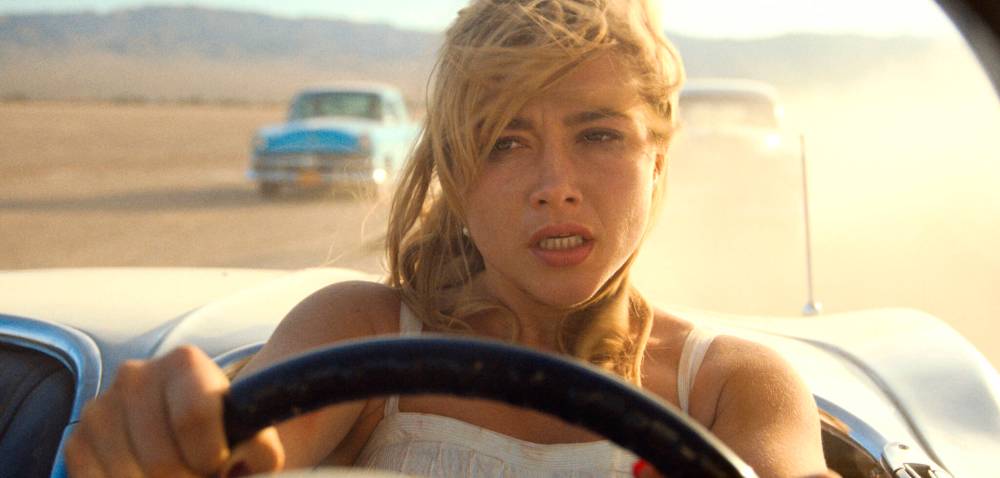
Warner Bros. Entertainment
Alice (Florence Pugh) doesn’t want to live here anymore.
The women, including Alice’s best friend, Bunny (played by Wilde), spend their time cleaning their shiny material goods and making sure they look fresh when they greet their husbands with martinis at the end of the day.
In the morning, they don their housedresses and scrub. Later, they attend stern ballet classes taught by Frank’s wife, Shelley (Gemma Chan), who tells them: “There is beauty in control. There is grace in symmetry.” They do a lot of shopping.
To maintain this seemingly enviable lifestyle, there is only one rule. The women must never venture into the desert that rings their little community, which is designated as the realm of men and their mysterious labour.
There are echoes of The Stepford Wives and Severance and The Truman Show as we segue from suburban parody to horror thriller. Alice is troubled by hallucinations and shards of memories from some other life. She is haunted by the fate of next-door neighbour Margaret (KiKi Layne), whose questioning of Victory Project platitudes and erratic behaviour have led to rumours of a breakdown, or worse.

Sensing that something terrible is happening, Alice is first soothed and condescended to, then gaslit and bullied. The word “hysteria” comes up a lot.
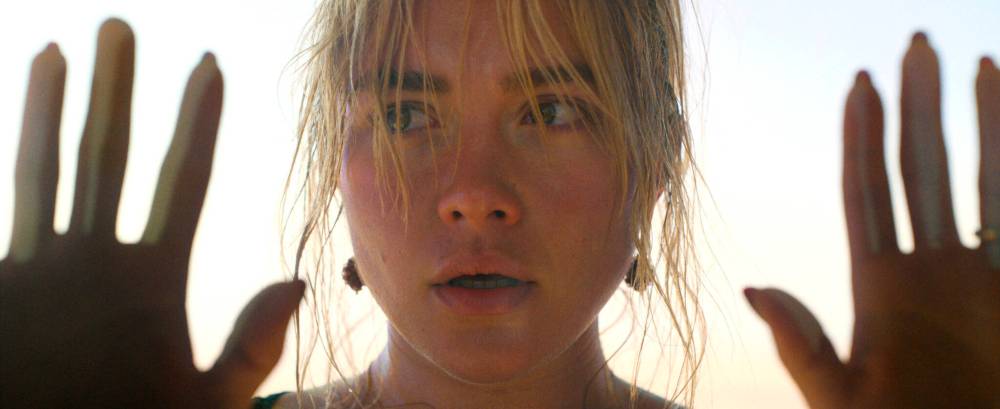
Warner Bros. Entertainment
Don’t Worry Darling doesn’t quite deliver the goods, but as Alice, Florence Pugh makes us worry.
Pugh, who has proven in films such as Midsommar and Little Women that she has enormous expressive presence, grounds the film’s super-stylized look in real emotional stakes. Pop star Styles is all floppy-haired charm but remains harder to read, though as we move toward the story’s conclusion, we realize there might be a good reason for that.
As we plummet into the Big Reveal — Black Mirror fans might see it coming — things fall apart, logistically and conceptually, though in an undeniably spectacular way.
One final note: Anyone with a Twitter account knows the film’s much anticipated rollout ended up devolving into a PR disaster. All that social media gossip about on-set intrigue feels irrelevant to this finished product, though, except perhaps that the many misogynistic messages aimed at Wilde — one of the few female directors working in big-budget studio pictures — just happen to parallel some of the patriarchal tropes the film takes on.
alison.gillmor@winnipegfreepress.com
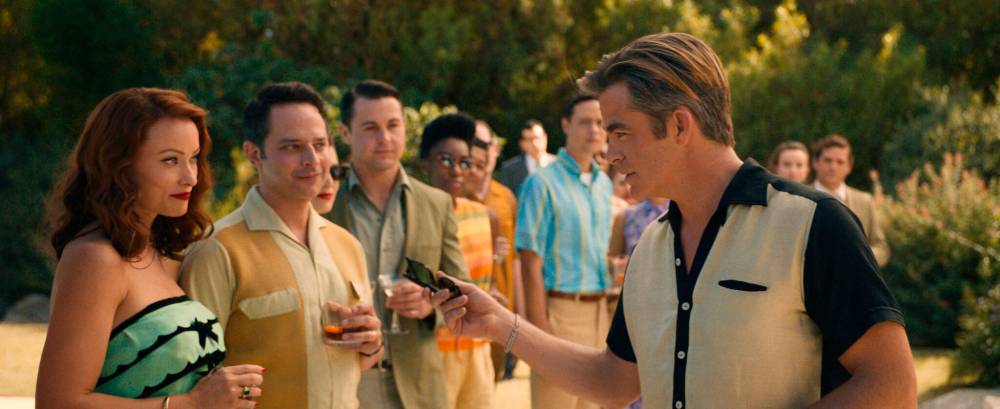
Warner Bros. Entertainment
Olivia Wilde, left, Nick Kroll and Chris Pine, right in a scene from Don’t Worry Darling.
Warner Bros. Entertainment
Olivia Wilde and Nick Kroll put on a happy face in Don’t Worry Darling.
Studying at the University of Winnipeg and later Toronto’s York University, Alison Gillmor planned to become an art historian. She ended up catching the journalism bug when she started as visual arts reviewer at the Winnipeg Free Press in 1992.
Our newsroom depends on a growing audience of readers to power our journalism. If you are not a paid reader, please consider becoming a subscriber.
Our newsroom depends on its audience of readers to power our journalism. Thank you for your support.
Movie review
Don’t Worry Darling
Starring Florence Pugh, Harry Styles
and Chris Pine
● Grant Park, Kildonan, McGillivray, Polo,
St. Vital
● 123 minutes, 14A
★★★ out of five
Ignore the group-think. Wilde (who dazzles in a supporting role) is a misunderstood genius and her sly erotic thriller is one of the best films of the year.
— Charlotte O’Sullivan, London Evening Standard
It isn’t terrible. It is just stunningly average.
— Donald Clarke, Irish Times
The issue with Don’t Worry Darling is that it creates a beautiful lock and a perfectly passable key, but when you put the key in the lock, it doesn’t quite turn. You don’t get that satisfying click.
— Linda Holmes, NPR
Its depiction of oppression in an out-of-whack, past-tense America calls to mind the country’s current-day political pathologies. Don’t Worry Darling serves that purpose with a cleverness to match its focussed sense of outrage.
— Richard Brody, New Yorker
Smoke and mirrors and not much else.
— Kimberley Jones, Austin Chronicle
Let’s just say you’ll have questions afterward, and those post-movie conversations will probably be more thoughtful and stimulating than the movie itself.
— Christy Lemire, RogerEbert.com
(Wilde) isn’t a strong enough filmmaker at this point to navigate around the story’s weaknesses, much less transcend them.
— Manohla Dargis, New York Times
A movie that’s not a disaster, but not particularly distinguished; a movie that, in the end, will wind up being as forgettable as its own bizarre publicity.
— Ann Hornaday, Washington Post
Wilde brandishes a sword of Betty Friedan-inspired feminist critique, but loses her tenuous grasp on this unwieldy tool, and rather than delivering an incisive blow to nostalgic misogyny, she slices the whole project to ribbons in front of our eyes.
— Katie Walsh, Tribune News Service
Wilde’s failure here is primarily one of imagination. Her movie is competently acted, handsomely crafted and not half as disturbing as it wants to be. It’s nothing to worry about.
— Justin Chang, Los Angeles Times
The film is smooth, competent, (mostly) well-acted and merely tedious.
— Bilge Ebiri, New York magazine/Vulture
Studying at the University of Winnipeg and later Toronto’s York University, Alison Gillmor planned to become an art historian. She ended up catching the journalism bug when she started as visual arts reviewer at the Winnipeg Free Press in 1992.
Our newsroom depends on a growing audience of readers to power our journalism. If you are not a paid reader, please consider becoming a subscriber.
Our newsroom depends on its audience of readers to power our journalism. Thank you for your support.
Advertisement Advertise With Us
Advertisement Advertise With Us