

End of retail ‘gravy train’ should get more police boots on the ground

Advertisement
Read this article for free:
or
Already have an account? Log in here »
To continue reading, please subscribe:

Digital Subscription
One year of digital access for only $205*
- Enjoy unlimited reading on winnipegfreepress.com
- Read the E-Edition, our digital replica newspaper
- Access News Break, our award-winning app
- Play interactive puzzles
*First annual payment billed as $205.00 + GST for one year. This annual subscription will automatically renew at $233.00 + GST every 52 weeks (10% off the regular annual price of $259.35). Offer available to new and qualified returning subscribers only. Cancel any time.
To continue reading, please subscribe:
Add Free Press access to your Brandon Sun subscription for only an additional
$1 for the first 4 weeks*
- Enjoy unlimited reading on winnipegfreepress.com
- Read the E-Edition, our digital replica newspaper
- Access News Break, our award-winning app
- Play interactive puzzles
*Your next Brandon Sun subscription payment will increase by $1.00 and you will be charged $17.95 plus GST for four weeks. After four weeks, your payment will increase to $24.95 plus GST every four weeks.
Read unlimited articles for free today:
or
Already have an account? Log in here »
If Winnipeg Police Service Chief Gene Bowers has his way, the “Superstore gravy train” is going to be derailed.
This week, Bowers sent a memo to his officers indicating he was reducing the number of hours they could moonlight as security for retail businesses. The reduction will start this fall and by May, the WPS will be out of the business of providing security in retail operations.
Bowers told the Free Press that increased “special duty” gigs by off-duty officers meant the WPS was having trouble finding off-duty officers to work overtime to fill holes in regular shifts.
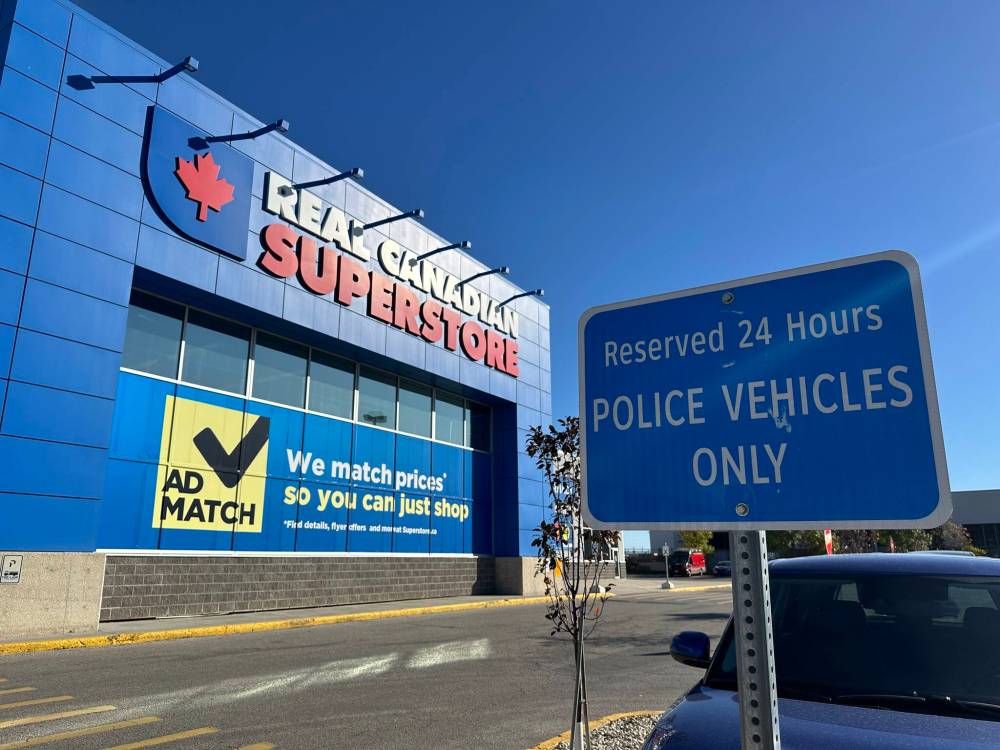
KATRINA CLARKE / FREE PRESS FILES
The Winnipeg police chief’s decision to massively scale back special duty work will, ultimately, provide the police force with one thing it doesn’t have now but desperately needs: transparency.
The WPS calls this process a “call out,” when off-duty officers are contacted directly to work overtime to plug shift gaps. Sometimes, officers are asked to work additional hours after their regular shifts are over.
Bowers said the increased popularity of retail special duty shifts meant “we’ve been recently unable to fill some of those required shifts to make sure we’re meeting our minimum strength on the street.”
Although the chief’s argument for ending retail special duty makes perfect sense, it is unclear how rank-and-file officers will react.
Some cops expressed some concern about the end of a program that had been quite lucrative for some.
One officer, speaking anonymously because they were not authorized to speak publicly, said Bowers was effectively ending the “Superstore gravy train” that put a lot of money into the pockets of off-duty officers working in big retail locations.
And when cops call it the gravy train, they aren’t exaggerating.
A Free Press investigation in 2024 revealed WPS members had worked more than 50,000 hours patrolling the inside of retail stores in 13 months. Given the escalation of shoplifting, it’s unlikely that number is smaller now.
Why is “special duty” so popular?
Special duty shifts are coveted because the work tends to be lower risk and lower intensity. Just like regular overtime, special duty pay is calculated at time-and-a-half and can be used to increase an officer’s pensionable earnings.
But perhaps most importantly, it is predictable. Call-out overtime is driven by short-notice vacancies in shifts, sickness or injuries. Special duty overtime is booked and scheduled in advance.
The sheer amount of special duty overtime being worked by Winnipeg police is having an enormous impact on the ongoing political debate about how many officers are needed in Winnipeg to handle core law enforcement duties.
In 2024, then-acting chief Art Stannard told the Winnipeg Police Board he needed 78 additional full-time officers to handle a rapidly increasing number of calls for service. At that time, overtime to cover shift gaps had reached $12 million, a 50-per-cent increase over the previous calendar year.
Stannard also noted that between 2013 and 2023, the total complement of police officers in Winnipeg was reduced to 1,366 from 1,463 10 years earlier. During that same time, Winnipeg’s population increased by more than 115,000 people.
Those are compelling arguments, but when Stannard made them to the police board, he was effectively ignoring the thousands of hours of special duty work being done by officers.
Does Winnipeg need more cops? It’s a hard question to answer because many of the demands on police resources are hard to anticipate.
For example, in recent years police have been strained by a rapidly escalating number of street protests tied to issues like the war between Israel and Hamas in Gaza. Each protest triggers a police response to ensure they are orderly and conflict free.
Then there are traffic-related demands, including campaigns by Manitoba Public Insurance to surveil for drunk drivers, and special events like Blue Bombers and Jets games that require off-duty police to help with traffic congestion.
The withdrawal of WPS members leaves retailers in somewhat of a difficult position.
As WPS reduces the number of hours off-duty officers can spend in retail settings, stores are almost undoubtedly going to hire more private security, which brings its own risks.
Although private security guards can detain a suspected shoplifter, they obviously don’t have the same amount of training as police officers. This can, and often does, result in more dangerous confrontations.

In March, a guard was charged with assault after a video appeared to show him using brass knuckles — a prohibited weapon — to beat a suspected shoplifter at a downtown Dollarama.
From a retail store’s perspective, the hiring of an off-duty officer provides a much greater level of security without a lot of the collateral damage that can come when private guards exceed their authority.
Bowers’ decision to massively scale back special duty work will, ultimately, provide the WPS with one thing that it doesn’t have now but desperately needs: transparency.
The city will never know exactly how many officers it needs patrolling Winnipeg streets until they spend most of their time patrolling Winnipeg streets.
dan.lett@freepress.mb.ca
Dan Lett is a columnist for the Free Press, providing opinion and commentary on politics in Winnipeg and beyond. Born and raised in Toronto, Dan joined the Free Press in 1986. Read more about Dan.
Dan’s columns are built on facts and reactions, but offer his personal views through arguments and analysis. The Free Press’ editing team reviews Dan’s columns before they are posted online or published in print — part of the our tradition, since 1872, of producing reliable independent journalism. Read more about Free Press’s history and mandate, and learn how our newsroom operates.
Our newsroom depends on a growing audience of readers to power our journalism. If you are not a paid reader, please consider becoming a subscriber.
Our newsroom depends on its audience of readers to power our journalism. Thank you for your support.
Dan Lett is a columnist for the Free Press, providing opinion and commentary on politics in Winnipeg and beyond. Born and raised in Toronto, Dan joined the Free Press in 1986. Read more about Dan.
Dan’s columns are built on facts and reactions, but offer his personal views through arguments and analysis. The Free Press’ editing team reviews Dan’s columns before they are posted online or published in print — part of the our tradition, since 1872, of producing reliable independent journalism. Read more about Free Press’s history and mandate, and learn how our newsroom operates.
Our newsroom depends on a growing audience of readers to power our journalism. If you are not a paid reader, please consider becoming a subscriber.
Our newsroom depends on its audience of readers to power our journalism. Thank you for your support.
Related Articles
Police chief pulls plug on security shifts at supermarkets, stores


Advertisement Advertise With Us
Advertisement Advertise With Us