Sukkot in a global context

Advertisement

Advertise with us

A dozen years have passed since Sukkah City held its first sukkah building exhibition in New York City’s Union Square. That inaugural event attracted hundreds of architectural entries from around the world, all of them reimagined versions of the traditional sukkah — the temporary ritual shelter, or hut, that observant Jews construct, welcome guests to, dine in and live in (weather permitting) in celebration of the seven-day festival of Sukkot.

Read this article for free:


By clicking the button above, an account will be created and you will begin to receive some of our recommended newsletters. You may opt out of any newsletter by visiting your Email and Communication Preferences page or by clicking "unsubscribe" at the bottom of any email.

or

Already have an account? Log in here »

To continue reading, please subscribe:

Digital Subscription

One year of digital access for only $1.44 a week*

  • Enjoy unlimited reading on winnipegfreepress.com
  • Read the E-Edition, our digital replica newspaper
  • Access News Break, our award-winning app
  • Play interactive puzzles

*Billed as $5.77 plus GST every four weeks. After 52 weeks, price increases to the regular rate of $19.95 plus GST every four weeks. Offer available to new and qualified returning subscribers only. Cancel any time.

To continue reading, please subscribe:

Add Free Press access to your Brandon Sun subscription for only an additional

$1 for the first 4 weeks*

  • Enjoy unlimited reading on winnipegfreepress.com
  • Read the E-Edition, our digital replica newspaper
  • Access News Break, our award-winning app
  • Play interactive puzzles
Start now

*Your next Brandon Sun subscription payment will increase by $1.00 and you will be charged $17.95 plus GST for four weeks. After four weeks, your payment will increase to $24.95 plus GST every four weeks.

Hey there, time traveller!
This article was published 01/10/2022 (1482 days ago), so information in it may no longer be current.

A dozen years have passed since Sukkah City held its first sukkah building exhibition in New York City’s Union Square. That inaugural event attracted hundreds of architectural entries from around the world, all of them reimagined versions of the traditional sukkah — the temporary ritual shelter, or hut, that observant Jews construct, welcome guests to, dine in and live in (weather permitting) in celebration of the seven-day festival of Sukkot.

Sukkot begins this fall on the evening of Oct, 9, following the High Holidays of Rosh Hashanah, the Jewish New Year, and Yom Kippur, the Day of Atonement. Sukkot is also one of Judaism’s three pilgrimage festivals, hearkening back to a time when ancient Israelites made annual pilgrimages to the Temple in Jerusalem.

A kosher sukkah is required to have three walls — but not sturdy walls — and a roof — usually made from foliage — that allows those who dwell inside to be able to see the stars at night. According to Talmudic teachings, sukkot (the plural of sukkah) were first built to provide shelter to the Israelite people as they wandered the desert for 40 years after fleeing slavery in Egypt. The huts were later constructed to provide provisional shelter during the harvest season.

The success of and interest in the inaugural Sukkah City inspired many other communities around the world to host their own sukkot exhibitions in the years since. By re-conceiving what a sukkah can look like, and in so doing, merging art and faith, these exhibits have prompted designers and onlookers alike to consider the relevance of Sukkot in contemporary times, as well as what a sukkah might represent in a larger global context.

As the literature accompanying the 2019 Sukkah City exhibition in Sydney, Australia, explains, “The ritual of Sukkot directly wrestles with the challenges of the global citizen, raising questions about topics ranging from homelessness and displacement to environmentalism, impermanence, the definition of perfection, and social isolation.”

Although there has not yet been a Sukkah City event held here in Winnipeg, the holiday itself should serve as impetus enough for both members and non-members of the Jewish community to consider what it means to have, or not have, shelter or a place to call home. War, persecution and extreme environmental disruption, according to the UNHCR, have resulted in the largest number of refugees the world has ever seen —globally there are currently more than 27 million people who have been displaced from their homelands, five million asylum seekers, and another 53 million who are internally displaced.

In Canada, due to a lack of affordable housing, poverty, marginalization, illness and a variety of other critical factors, close to a quarter million people experience temporary or chronic homelessness on any given day. In Winnipeg, that number is estimated to be about 1,100 people.

In the same way that the Warming Huts Art and Architecture competition held every winter here on the Red River serves as a reminder of the human right to shelter, so too should the holiday of Sukkot.

The sukkah, according to Sukkah City founder, Joshua Foer, “… is an architecture of both memory and empathy — memory of the huts the Israelites dwelled in during their exodus from Egypt long ago, and empathy for those who live today without solid shelter over their heads.”

When the snow falls in Winnipeg a few weeks from now, those who built sukkot as a means of expressing their faith will be safely back in their warm homes. But the world’s refugees and our country’s homeless will still be searching for somewhere to live.

swchisvin@gmail.com

The Free Press is committed to covering faith in Manitoba through our Religion in the News project. This reporting continues because readers like you step forward to fund it.

Donate now to support our reporting on religion.

Your donation is eligible for a charitable tax receipt. BECOME A FAITH JOURNALISM SUPPORTER

Report Error Submit a Tip

The Free Press acknowledges the financial support it receives from members of the city’s faith community, which makes our coverage of religion possible.
More Stories

You’re facing double trouble with infatuation

Maureen Scurfield 4 minute read Yesterday at 2:00 AM CDT

DEAR MISS LONELYHEARTS: I started enjoying the company of women in my running group so much that I ran more and more, and dropped 35 pounds over the summer and early fall. And in the summer I became attracted to a bisexual woman in the group.

At first, we claimed we were “doing OK” with the men we married. But now, feelings of all kinds are accelerating between us.

I must say I’ve suspected my husband has had another woman in recent years, but now it doesn’t bother me the same way. I finally understand wanting two people at one time. I tell myself I’m not “cheating” on anybody — because I’m not cheating on my husband with another man. But that’s not even fooling me, anymore. I’m feeling a lot more emotion for my female love interest.

So now what? I don’t want to disrupt my whole family, so should I keep it a secret for everyone’s sake? I must say the female object of my affection isn’t thinking of leaving her husband and family. I could be wrong, but I suspect she’s just having a fun time experimenting.

Mayoral candidates snipe over safety during radio debate

Joyanne Pursaga 5 minute read Preview

Mayoral candidates snipe over safety during radio debate

Joyanne Pursaga 5 minute read Updated: Yesterday at 5:31 PM CDT

Public safety took centre stage during a sometimes fiery mayoral debate Wednesday in which Kevin Klein revealed he would have to raise property taxes to fund his plan to make Winnipeg safer.

The CJOB debate also included candidates Scott Gillingham and Mike Vogiatzakis, who were selected as the top contenders in the race based on polling data.

Klein noted he has promised to strike a task force on public safety and to hire more police, if he’s elected Oct. 28.

“We are 100 police officers short of the very bare minimum of the per capita (number) right now. We have to replace those officers,” said Klein, a former city councillor and Tory cabinet minister.

Read
Updated: Yesterday at 5:31 PM CDT

Researchers: lights at Henderson crossing ‘long overdue’

Maggie Macintosh 5 minute read Preview

Researchers: lights at Henderson crossing ‘long overdue’

Maggie Macintosh 5 minute read 2:00 AM CDT

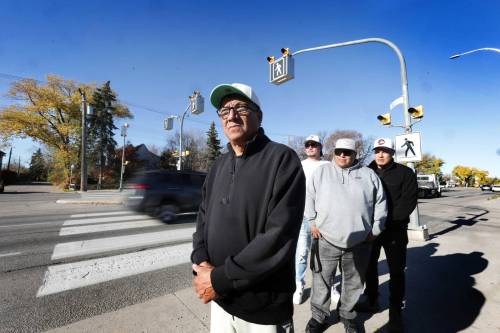
Six months after a fatal collision at a crosswalk on Henderson Highway, two traffic safety researchers question why the intersection remains an outlier that is missing key flashing lights.

The City of Winnipeg is being urged to install “backflashers” to better protect road users moving in all directions at the intersection where a 32-year-old father died in the spring.

“It’s these little, mundane, non-sexy engineering problems that can cause everything right up to fatality,” said Curt Pankratz, an associate professor at the University of Winnipeg who studies traffic engineering and policymaking.

On April 19, shortly before sunrise, Gabe Beardy was struck when he was crossing the six-lane thoroughfare at Neil Avenue.

Read
2:00 AM CDT

Outbreak should never have happened

Editorial 4 minute read Preview

Outbreak should never have happened

Editorial 4 minute read 2:00 AM CDT

The headline offered a vague sense that something had been accomplished, but it most certainly did not describe anything worth celebrating:

“Manitoba declares measles outbreak over.”

The news item in the Oct. 17 Free Press noted provincial public health officials had confirmed Manitoba’s last laboratory-confirmed case of measles was identified in August, and that the absence of any new cases since had allowed for the aforementioned declaration.

The end of the outbreak — which began in February 2025 and included a significant stretch this year during which Manitoba experienced more measles cases than any other province — is certainly worth noting. But it bears reminding that the real story here is that this province, and others across Canada, experienced a resurgence of this highly communicable but successfully eradicated disease in the first place.

Read
2:00 AM CDT

Manitoba First Nation taking federal government, department to court over damage to sturgeon population

Morgan Modjeski 4 minute read Preview

Manitoba First Nation taking federal government, department to court over damage to sturgeon population

Morgan Modjeski 4 minute read Yesterday at 11:27 AM CDT

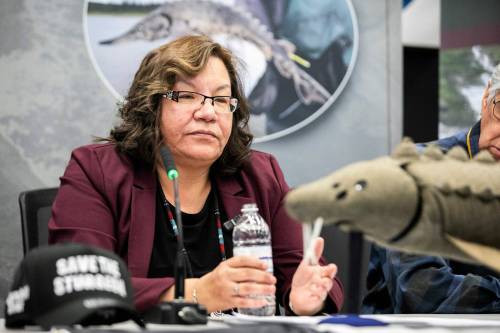
A remote Manitoba First Nation is taking the federal government to court over claims a Manitoba Hydro project is hurting the sturgeon population in the lower Churchill River.

In an Oct. 15 statement of claim filed in Manitoba’s Court of King’s Bench, Tataskweyak Cree Nation said the Churchill River diversion operated by Manitoba Hydro has had widespread ecological effects and damaged sturgeon populations in the area.

The lawsuit alleges Ottawa has breached its treaty obligations to protect the community’s right to harvest the fish.

The lawsuit names both His Majesty the King in Right of Canada, the minister of fisheries and Oceans Canada as defendants.

Read
Yesterday at 11:27 AM CDT

Three vying to unseat Allard in St. Boniface

Matthew Frank 6 minute read Preview

Three vying to unseat Allard in St. Boniface

Matthew Frank 6 minute read Updated: Yesterday at 6:35 PM CDT

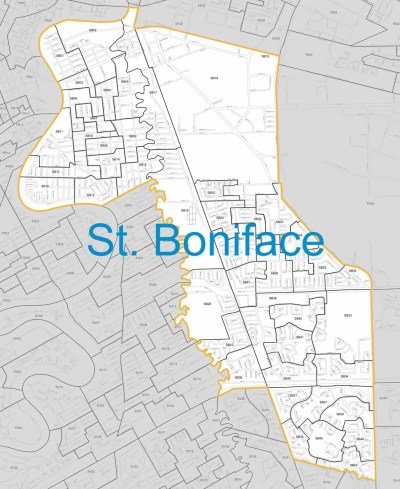
Four councillor candidates are running to represent the St. Boniface ward in Winnipeg's municipal election.

Read
Updated: Yesterday at 6:35 PM CDT