Google weighs in on Bill C-18 as tech giant gifts $2.7M for tech training

Advertisement

Advertise with us

TORONTO - Google's president of global affairs says Canada must be careful in how it crafts legislation forcing tech giants to pay for the use of news because it could have unintended consequences.

Read this article for free:


or

Already have an account? Log in here »

To continue reading, please subscribe:

Subscribe and receive a limited-edition Free Press branded hat or tote.

Digital Subscription

One year of digital access for only $205*

  • Enjoy unlimited reading on winnipegfreepress.com
  • Read the E-Edition, our digital replica newspaper
  • Access News Break, our award-winning app
  • Play interactive puzzles

*First annual payment billed as $205.00 + GST for one year. This annual subscription will automatically renew at $233.00 + GST every 52 weeks (10% off the regular annual price of $259.35). Offer available to new and qualified returning subscribers only. Cancel any time.

To continue reading, please subscribe:

Add Free Press access to your Brandon Sun subscription for only an additional

$1 for the first 4 weeks*

  • Enjoy unlimited reading on winnipegfreepress.com
  • Read the E-Edition, our digital replica newspaper
  • Access News Break, our award-winning app
  • Play interactive puzzles
Start now

*Your next Brandon Sun subscription payment will increase by $1.00 and you will be charged $17.95 plus GST for four weeks. After four weeks, your payment will increase to $24.95 plus GST every four weeks.

Hey there, time traveller!
This article was published 03/10/2022 (1413 days ago), so information in it may no longer be current.

TORONTO – Google’s president of global affairs says Canada must be careful in how it crafts legislation forcing tech giants to pay for the use of news because it could have unintended consequences.

“The question is what’s the best framing to avoid unintended side effects of new regulation, things that might expand the definition of publisher far beyond what people in Canada would think it would cover or making sure that in trying to avoid what’s called undue preference, we can no longer moderate content and help promote the most valuable, authoritative content that’s available,” said Kent Walker, in a visit to Toronto.

His emphasis on what should be considered for federal Bill C-18 — the Online News Act — comes as the legislation is winding its way through Parliament. The bill completed its second reading in May and has since been referred to the Standing Committee on Canadian Heritage for consideration.
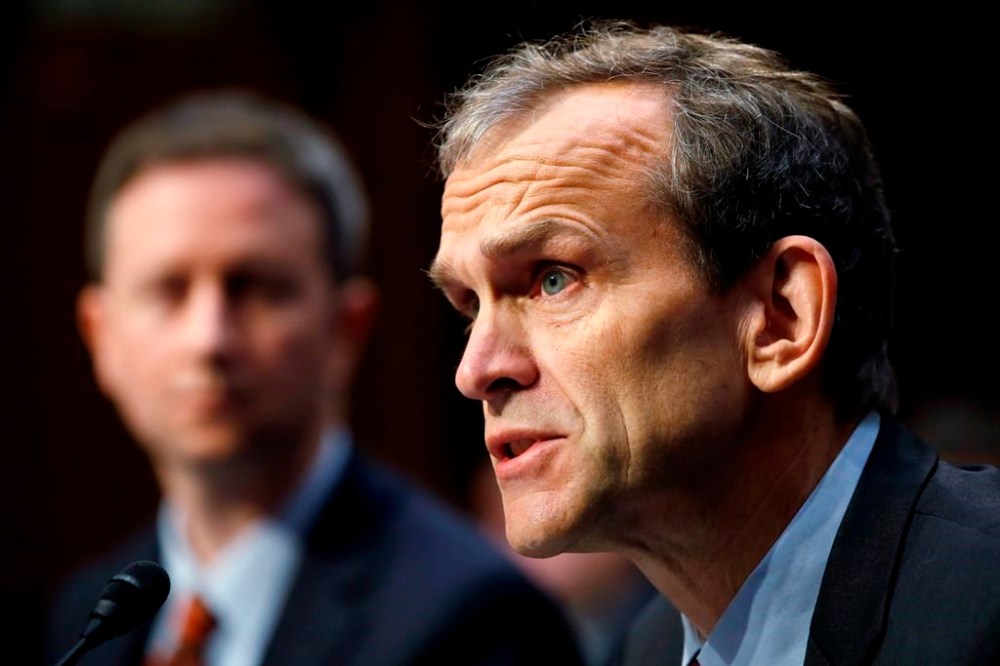
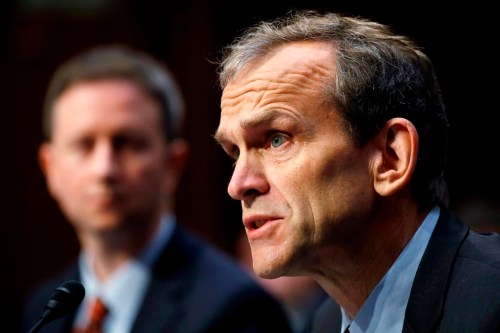
Google's Kent Walker speaks during a Senate Intelligence Committee hearing on Russian election activity and technology, Wednesday, Nov. 1, 2017, on Capitol Hill in Washington. Google Canada says it will allocate $2.7 million toward grants helping Indigenous Peoples prepare for tech jobs and teaching media literacy to underrepresented communities. THE CANADIAN PRESS/AP/Jacquelyn Martin

The bill would make tech giants such as Google and Meta pay for reusing journalism produced by Canadian news organizations. The goal is to level the playing field between news agencies and social media companies, which have eaten up ad revenues while publishers have struggled to remain profitable.

However, smaller publishers have worried they’ll be left out because the bill only forces tech giants to strike deals with news companies that have two more or more journalists in Canada and create content beyond a single topic like sports or arts.

Walker said there are a lot of issues to resolve to find the right balance between large and small publishers, said Walker, who stressed “we’re confident that we can work collaboratively to iron out some of these issues and get to something good for everybody.”

Asked what that balance might be, he said, “we’ve talked over time about the notion of a digital fund that would support publishers that might be an open and transparent way of doing this and we’re happy to continue to contribute financially.”

As of June, the company had signed agreements with more than 150 Canadian publications, including Torstar, the Globe and Mail, Black Press Media, Postmedia and Le Devoir, as part of its Google News Showcase.

The platform provides customizable space for newsrooms to produce, distribute and explain essential information to readers, giving Canadians access to a wide range of news content and potentially driving subscriptions for the media outlets.

Google has not revealed the terms or value of the agreements.

On Monday, it announced additional spending in Canada, saying the company will allocate $2.7 million toward grants helping Indigenous Peoples prepare for technology jobs and teaching media literacy to under-represented communities.

More than $1.3 million will be given to Winnipeg professional development and training charity ComIT to close the skills and education gap between Indigenous and non-Indigenous populations.

The money will be spent on ComIT’s Recoding Futures program, which teaches Indigenous Peoples programming languages and software that employers are looking for.

Google will also give $670,000 to Ottawa-based science, technology, engineering, and mathematics organization Actua to expand a program teaching youth from vulnerable groups how to be safe online and detect misinformation.

Another $670,000 will be handed to Ottawa-based digital literacy organization MediaSmarts to develop an education program helping under-represented communities learn how to use critical thinking skills when engaging with online content.

“Part of our commitment — and this is not unique to Canada, but important for Canada as well — is making sure that the information revolution is working for everybody,” said Walker.

“Digital skills are going to be increasingly important in the 21st century, so … how do we make sure that we have something that brings the entire community in on the prosperity?”

This report by The Canadian Press was first published Oct. 3, 2022.

Note to readers: This is a corrected story. An earlier version included an erroneous title for Kent Walker.

Report Error Submit a Tip

More Stories

West Kildonan Industrial residents call for speed bumps after child hit by truck

Morgan Modjeski 3 minute read Preview

West Kildonan Industrial residents call for speed bumps after child hit by truck

Morgan Modjeski 3 minute read Updated: Yesterday at 3:09 PM CDT

Residents in the West Kildonan Industrial neighbourhood are calling on the city to install speed bumps in their area after a child was hit and dragged by a vehicle Thursday.

Katelyn Bemister lives near the area where the child — who was hospitalized as a result of the incident and has been upgraded to stable condition — was struck. She says people frequently speed in the area.

“They’re going really fast, and they’re not really paying attention at all to the pedestrians in the area,” says Bemister.

In video supplied to the Free Press by a resident, the child can be seen riding a bike down a sidewalk along the 500 block of North Point Boulevard.

Read
Updated: Yesterday at 3:09 PM CDT

HSC weapons scanners effective, needed at other hospitals: nurses union

Carol Sanders 5 minute read Preview

HSC weapons scanners effective, needed at other hospitals: nurses union

Carol Sanders 5 minute read Yesterday at 9:57 AM CDT

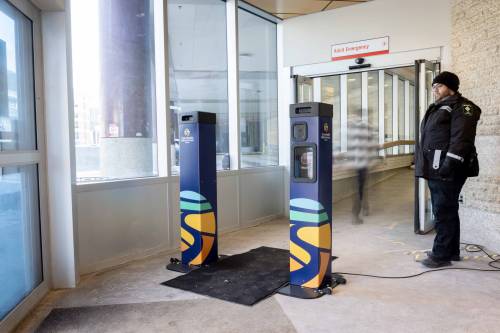
The AI weapons scanners at Health Sciences Centre have detected close to 2,000 items since they were installed at Manitoba’s largest hospital.

From March 6, 2025 to the beginning of this month, a total of 1,973 items had been flagged by the scanners and identified for further review, Shared Health said this week.

Knives, Swiss army knives and other multi-tools, drugs, alcohol, box cutters, syringes and other injection devices were detected, it said. The technology set up at entrances to the adult and children’s emergency rooms and the crisis response centre is designed to identify a wide range of objects that may require review under site safety protocols.

But Manitoba Nurses Union president Darlene Jackson said the technology isn’t available everywhere at HSC, and a sawed-off rifle was discovered in the adult ER earlier this month.

Read
Yesterday at 9:57 AM CDT

Impaired driving victim honoured

Morgan Modjeski 5 minute read Preview

Impaired driving victim honoured

Morgan Modjeski 5 minute read Yesterday at 6:16 PM CDT

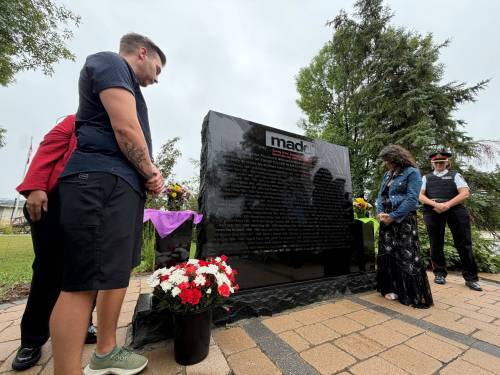
Ten years after he was killed in a collision involving an impaired driver in 2016, Robbie Anderson’s name has been added to MADD Canada’s Manitoba Memorial honouring those killed in drunk and drug-impaired-related crashes.

His older brother Chris Anderson, was one of two dozen people who gathered at the Glen Eden Funeral Home and Cemetery in West St. Paul Saturday to remember their loved ones, 86 victims whose names are etched into the granite monument near the heart of the graveyard.

“It’s heavy,” said Anderson when asked what it was like to be part of the ceremony and see his brother’s name added. “It’s been something I’ve been thinking about for a while.”

Grateful for MADD’s work and its efforts to honour Robbie, who was 27 when he died, Anderson said his brother, represented the “absolute best of us.”

Read
Yesterday at 6:16 PM CDT

Firefighter’s death fuels cancer fight

Zoe Pierce 5 minute read Preview

Firefighter’s death fuels cancer fight

Zoe Pierce 5 minute read Yesterday at 2:01 AM CDT

The United Fire Fighters of Winnipeg is mourning the loss of Winnipeg firefighter Darrel Maynard while continuing its work to raise awareness of occupational cancer and improve health protections for firefighters.

Maynard, a senior firefighter II and acting lieutenant with the Winnipeg Fire Paramedic Service, died Aug. 5 at age 41 after a three-year battle with occupational cancer.

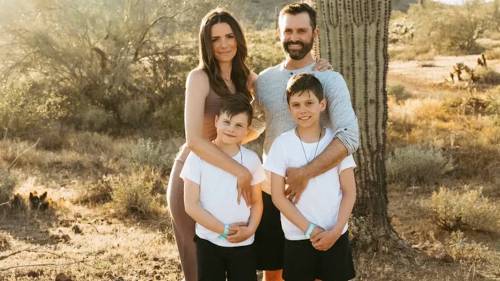
He served Winnipeg for nearly two decades and leaves behind his wife Francine and sons Colin and Christian.

“Darrel was an incredible, incredible person, an incredible firefighter, and really, really special to all of us,” said Nick Kasper, president of UFFW.

Read
Yesterday at 2:01 AM CDT

Google weighs in on Bill C-18 as tech giant gifts $2.7M for tech training

Tara Deschamps, The Canadian Press 4 minute read Preview

Google weighs in on Bill C-18 as tech giant gifts $2.7M for tech training

Tara Deschamps, The Canadian Press 4 minute read Monday, Oct. 3, 2022

TORONTO - Google's president of global affairs says Canada must be careful in how it crafts legislation forcing tech giants to pay for the use of news because it could have unintended consequences.

"The question is what's the best framing to avoid unintended side effects of new regulation, things that might expand the definition of publisher far beyond what people in Canada would think it would cover or making sure that in trying to avoid what's called undue preference, we can no longer moderate content and help promote the most valuable, authoritative content that's available," said Kent Walker, in a visit to Toronto.

His emphasis on what should be considered for federal Bill C-18 — the Online News Act — comes as the legislation is winding its way through Parliament. The bill completed its second reading in May and has since been referred to the Standing Committee on Canadian Heritage for consideration.

The bill would make tech giants such as Google and Meta pay for reusing journalism produced by Canadian news organizations. The goal is to level the playing field between news agencies and social media companies, which have eaten up ad revenues while publishers have struggled to remain profitable.

Read
Monday, Oct. 3, 2022

Poilievre’s lips moving, but Canadians aren’t interested in what he’s saying

Tom Brodbeck 5 minute read Preview

Poilievre’s lips moving, but Canadians aren’t interested in what he’s saying

Tom Brodbeck 5 minute read Thursday, Aug. 6, 2026

Pierre Poilievre’s biggest political challenge right now isn’t Prime Minister Mark Carney’s popularity.

It’s the fact that he still seems to be campaigning against a political landscape that no longer exists.

More than a year after the 2025 federal election, the Conservative leader is still relying on the same message, the same themes and the same attacks that defined his party’s campaign before voters went to the polls.

And Canadians appear to be tuning it out.

Read
Thursday, Aug. 6, 2026