

Dismal poll numbers force hard choices
Advertisement
Read this article for free:
or
Already have an account? Log in here »
To continue reading, please subscribe:

Digital Subscription
One year of digital access for only $205*
- Enjoy unlimited reading on winnipegfreepress.com
- Read the E-Edition, our digital replica newspaper
- Access News Break, our award-winning app
- Play interactive puzzles
*First annual payment billed as $205.00 + GST for one year. This annual subscription will automatically renew at $233.00 + GST every 52 weeks (10% off the regular annual price of $259.35). Offer available to new and qualified returning subscribers only. Cancel any time.
To continue reading, please subscribe:
Add Free Press access to your Brandon Sun subscription for only an additional
$1 for the first 4 weeks*
- Enjoy unlimited reading on winnipegfreepress.com
- Read the E-Edition, our digital replica newspaper
- Access News Break, our award-winning app
- Play interactive puzzles
*Your next Brandon Sun subscription payment will increase by $1.00 and you will be charged $17.95 plus GST for four weeks. After four weeks, your payment will increase to $24.95 plus GST every four weeks.
Read unlimited articles for free today:
or
Already have an account? Log in here »
Hey there, time traveller!
This article was published 04/10/2022 (1418 days ago), so information in it may no longer be current.
We have seen this situation before, and we’ve seen the harm that can occur as a result.
For the second time in seven years, Manitoba has a provincial government that is deeply unpopular, has no realistic hope of being re-elected, and has a year in power remaining before the next general election.
In 2015, Greg Selinger’s NDP government was mired in a mutiny and far behind the Progressive Conservatives in the polls. After barely surviving the challenge to his leadership, Selinger embarked on a massive spending spree in hopes of being re-elected.
MIKAELA MACKENZIE / WINNIPEG FREE PRESS
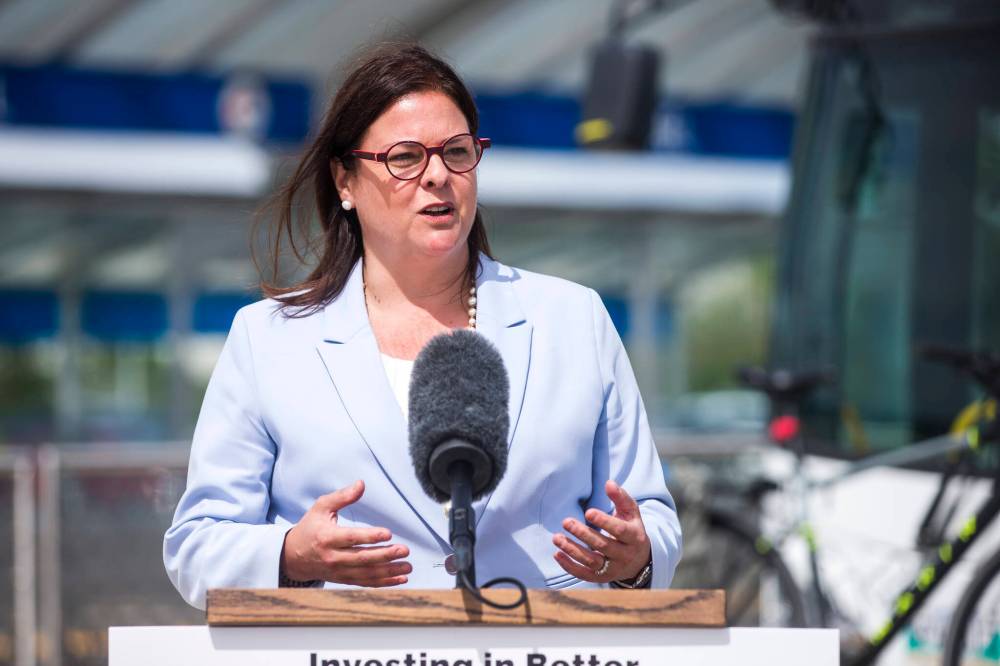
With its prospects for re-election in 2023 currently looking rather bleak, the government of Premier Heather Stefanson has some hard choices to make over the next 12 months.
It didn’t work. The NDP was crushed in a landslide win by Brian Pallister’s Tories in April of 2016. What the Selinger government left behind, however, was a huge deficit and unfunded spending commitments the Pallister government was forced to grapple with throughout its first mandate.
I was there. I saw the impact of millions of dollars in promises the NDP had made in 2015, knowing they would never have to fulfill them from the opposition benches.
There was no money set aside for new schools, medical facilities and other projects that had been promised. In many cases, there was no documentation that indicated the NDP intended to honour those commitments – no memos, no correspondence, no plans, no tenders.
They made cynical promises – toying with the hopes and expectations of many Manitobans – knowing the next government would eventually be forced to tell Manitobans the projects could not go ahead.
The Pallister government was repeatedly blamed, and loudly condemned, for canceling or delaying projects for which there had been no planning, no documentation and no funding set aside by the NDP.
That’s what happened in 2015, when an NDP government with no chance of re-election was allowed to hold the levers of power for another year. Seven years later, an identical situation is unfolding, but this time with Heather Stefanson’s Progressive Conservative government so unpopular that it has no plausible path to re-election 52 weeks from yesterday (the fixed date is Oct. 3, 2023).
How is Team Stefanson responding to its plight? It appears to be the same way as Team Selinger did in 2015.
Over the past four months alone, there have been hundreds of millions of dollars in spending commitments, including millions of dollars in unbudgeted promises. The Tories are suddenly behaving in a very “un-Tory” manner, having apparently forgotten the fiscal mess left to them by the Selinger government.
Or, maybe they do remember those painful problems and are determined to leave a similar burden to weigh down a future Wab Kinew government. If that’s the case – and it easily could be – it would mean the NDP would be forced to pay for Tory commitments for which the opposition Tories would take full credit.
In addition, all that spending would reduce the amount of money available for the NDP’s priorities.
Is it in the Tories’ strategic political interest to do that to a future NDP government? Absolutely. Is it in the public interest? Absolutely not.
When Manitobans hand a four-year mandate to a government, it is an act of trust, in which that government assumes the duty – the fiduciary duty – to act in the interests of Manitobans for the entire term, even when doing so is contrary to the political interests of that government.
The NDP ignored that duty in 2015, and the current Tory government has a year-long opportunity to do the same. Just because it can, however, doesn’t mean it should.
As Manitoba continues to grapple with the many economic, medical, educational and social impacts of the COVID-19 pandemic, and the growing impact of climate change and global instability, now is not the time for political tricks and traps. Rather, it is the time to focus on delivering good, competent government.

Indeed, when the Pallister government assumed power in 2016, it made a clear commitment to Manitobans: to leave our province in a better condition than they found it.
As the Stefanson government approaches its almost-certain electoral demise, it has a choice: it can honour that promise, or it can follow the example set by the Selinger government. It must choose between its political interests and the public interest.
The next few months will tell us which choice it has made.
deverynrossletters@gmail.com
Twitter: @deverynross