Prayers? Bombs? Hawaii history shows stopping lava not easy

Advertisement

Advertise with us

HONOLULU (AP) — Prayer. Bombs. Walls. Over the decades, people have tried all of them to stanch the flow of lava from Hawaii's volcanoes as it lumbered toward roads, homes and infrastructure.

Read this article for free:


or

Already have an account? Log in here »

To continue reading, please subscribe:

Subscribe and receive a limited-edition Free Press branded hat or tote.

Digital Subscription

One year of digital access for only $205*

  • Enjoy unlimited reading on winnipegfreepress.com
  • Read the E-Edition, our digital replica newspaper
  • Access News Break, our award-winning app
  • Play interactive puzzles

*First annual payment billed as $205.00 + GST for one year. This annual subscription will automatically renew at $233.00 + GST every 52 weeks (10% off the regular annual price of $259.35). Offer available to new and qualified returning subscribers only. Cancel any time.

To continue reading, please subscribe:

Add Free Press access to your Brandon Sun subscription for only an additional

$1 for the first 4 weeks*

  • Enjoy unlimited reading on winnipegfreepress.com
  • Read the E-Edition, our digital replica newspaper
  • Access News Break, our award-winning app
  • Play interactive puzzles
Start now

*Your next Brandon Sun subscription payment will increase by $1.00 and you will be charged $17.95 plus GST for four weeks. After four weeks, your payment will increase to $24.95 plus GST every four weeks.

Hey there, time traveller!
This article was published 01/12/2022 (1386 days ago), so information in it may no longer be current.

HONOLULU (AP) — Prayer. Bombs. Walls. Over the decades, people have tried all of them to stanch the flow of lava from Hawaii’s volcanoes as it lumbered toward roads, homes and infrastructure.

Now Mauna Loa — the world’s largest active volcano — is erupting again, and lava is slowly approaching a major thoroughfare connecting the Big Island’s east and west sides. And once more, people are asking if anything can be done to stop or divert the flow.

“It comes up every time there’s an eruption and there’s lava heading towards habited areas or highways. Some people say, ‘Build a wall’ or ‘Board up,’ and other people say, ‘No don’t!’” said Scott Rowland, a geologist at the University of Hawaii.
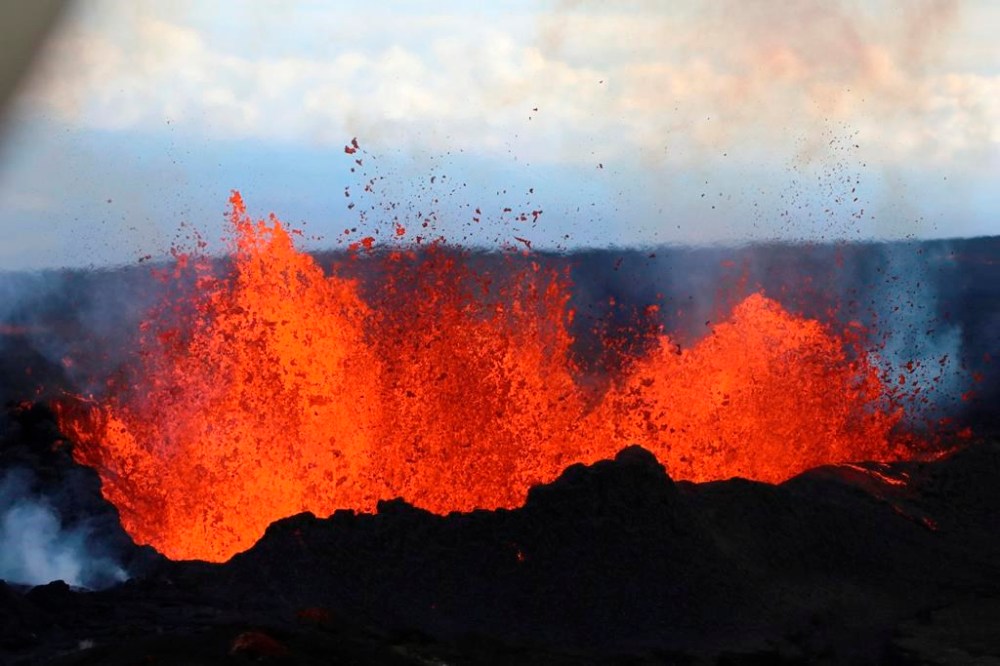
This aerial image courtesy of Hawaii Dept. of Land and Natural Resources shows lava flows on Mauna Loa, the world's largest active volcano, on Wednesday, Nov. 30, 2022, near Hilo, Hawaii. (Hawaii Dept. of Land and Natural Resources via AP)

Humans have rarely had much success stopping lava and, despite the world’s technological advances, doing so is still difficult and dependent on the force of the flow and the terrain. But many in Hawaii also question the wisdom of interfering with nature and Pele, the Hawaiian deity of volcanoes and fire.

Attempts to divert lava have a long history in Hawaii.

In 1881, the governor of Hawaii Island declared a day of prayer to stop lava from Mauna Loa as it headed for Hilo. The lava kept coming.

According to the U.S. Geological Survey, Princess Regent Lili’uokalani and her department heads went to Hilo and considered ways to save the town. They developed plans to build barriers to divert the flow and place dynamite along a lava tube to drain the molten rock supply.

Princess Ruth Ke’elikōlani approached the flow, offered brandy and red scarves and chanted, asking Pele to stop the flow and go home. The flow stopped before the barriers were built.

More than 50 years later, Thomas A. Jaggar, the founder of the Hawaiian Volcano Observatory, asked U.S. Army Air Services to send planes to bomb a Mauna Loa vent to disrupt lava channels.
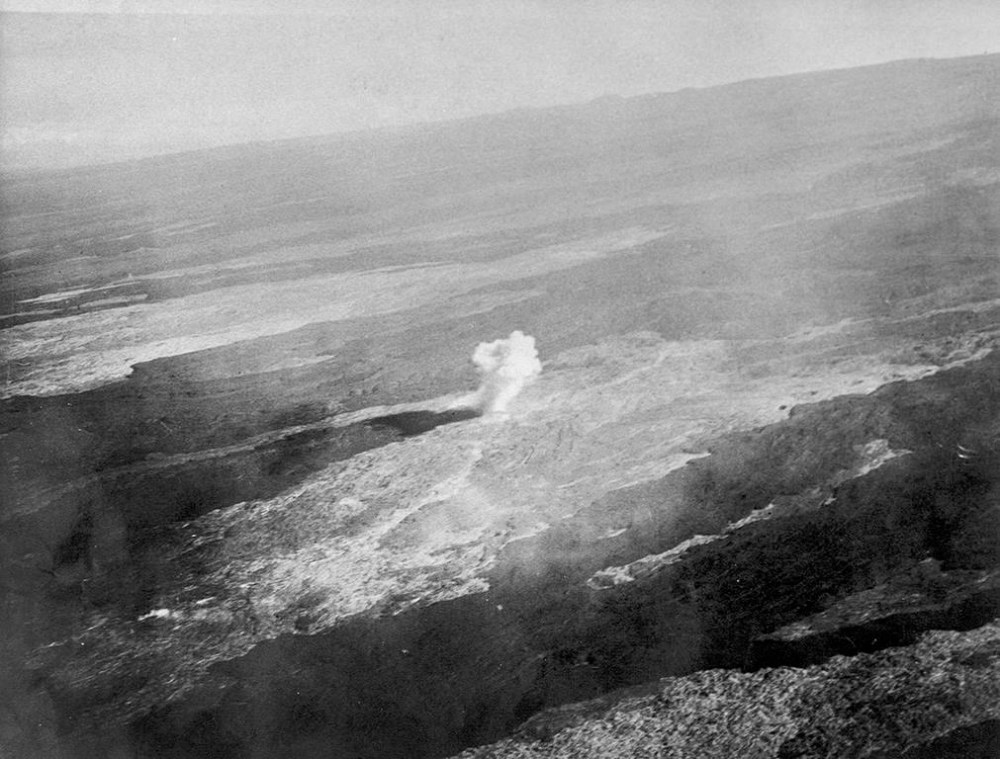
This photo provided by the United States Army Air Corps shows an aerial view of a bomb detonating on Mauna Loa near the 8500-foot elevation source of the 1935 lava flow on the morning of Dec. 27, 1935. Now Mauna Loa — the world's largest active volcano — is erupting again, and lava is slowly approaching a major thoroughfare connecting the Big Island's east and west sides. (United States Army Air Corps, 11th Photo Section via AP)

Lt. Col. George S. Patton (who later became famous as a general in Europe during World War II) directed planes to drop 20 600-pound (272-kilogram) demolition bombs, according to a National Park Service account of the campaign. The bombs each had 355 pounds (161 kilograms) of TNT. The planes also dropped 20 smaller bombs that only had black powder charge.

Jagger said the bombing helped to “hasten the end of the flow,” but Howard Stearns, a U.S. Geological Survey geologist onboard the last bombing run, was doubtful. In his 1983 autobiography, he wrote: “I am sure it was a coincidence.”

According to the park service, geologists today also are doubtful the bombing stopped the lava flow, which didn’t end with the bombing. Instead, the flows waned over the next few days and didn’t change paths.

Rowland said authorities could use a bulldozer to pile a big berm of broken rock in front of Daniel K. Inouye Highway. If the terrain is flat, then lava would pile up behind the wall. But the lava may flow over it, like it did when something similar was attempted in Kapoho town in 1960.

Rapidly moving lava flows, like those from Kilauea volcano in 2018, would be more difficult to stop, he said.

“It would have been really hard to build the walls fast enough for them. And they were heading towards groups of homes. And so you would perhaps be sacrificing some homes for others, which would just be a legal mess,” he said.
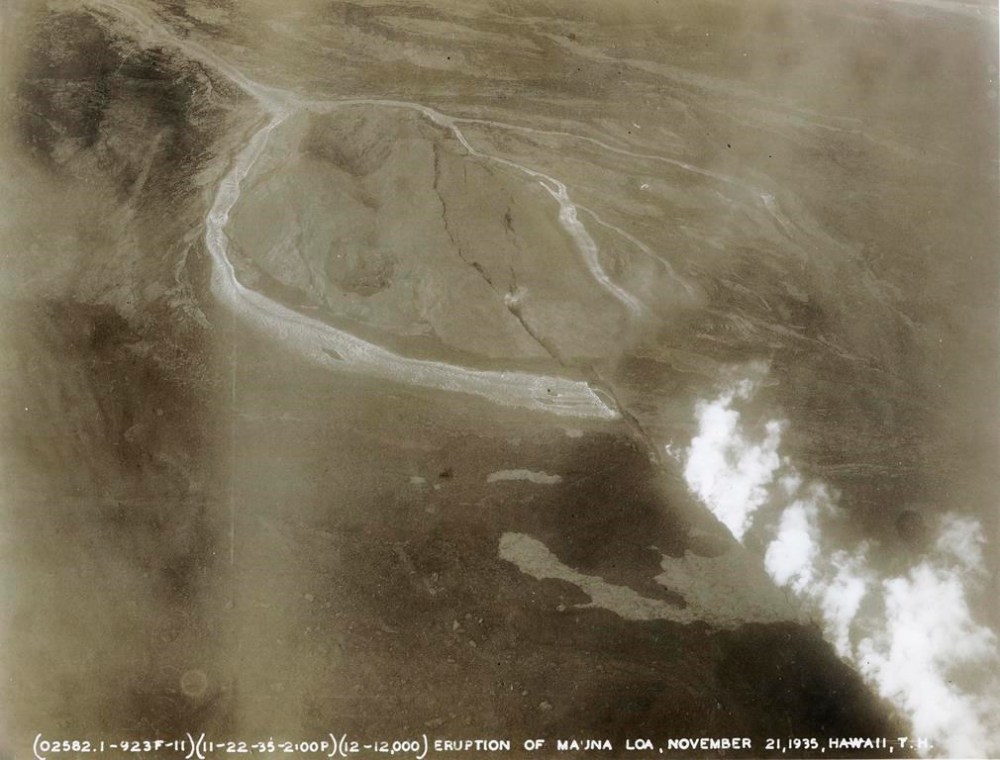
This photo provided by the United States Army Air Corps shows an aerial view of the Mauna Loa eruption on Nov. 21, 1935, captured by the US Army 11th Photo Section. Now Mauna Loa — the world's largest active volcano — is erupting again, and lava is slowly approaching a major thoroughfare connecting the Big Island's east and west sides. (United States Army Air Corps (USAAC), 11th Photo Section via AP)

He said he believes most people in Hawaii wouldn’t want to build a wall to protect the highway because it would “mess with Pele.”

If lava crosses the highway, Rowland said officials could rebuild that section of the road like they did in 2018 when different routes were covered.

Hawaii County’s director of civil defense, Talmadge Magno, said Wednesday the county has no current plans to try to divert the flow, though he has had some discussions about it.

Hawaii Gov. David Ige, who was governor during the 2018 Kilauea eruption, told reporters his experience showed him it’s not possible to overcome nature and Pele.

Thinking you should physically divert lava is a Western idea rooted in the notion that humans have to control everything, said Kealoha Pisciotta, a Native Hawaiian cultural practitioner. She said people need to adjust to the lava, not the other way around.

“We are not separate from nature,” she said. “We are a part of nature.”
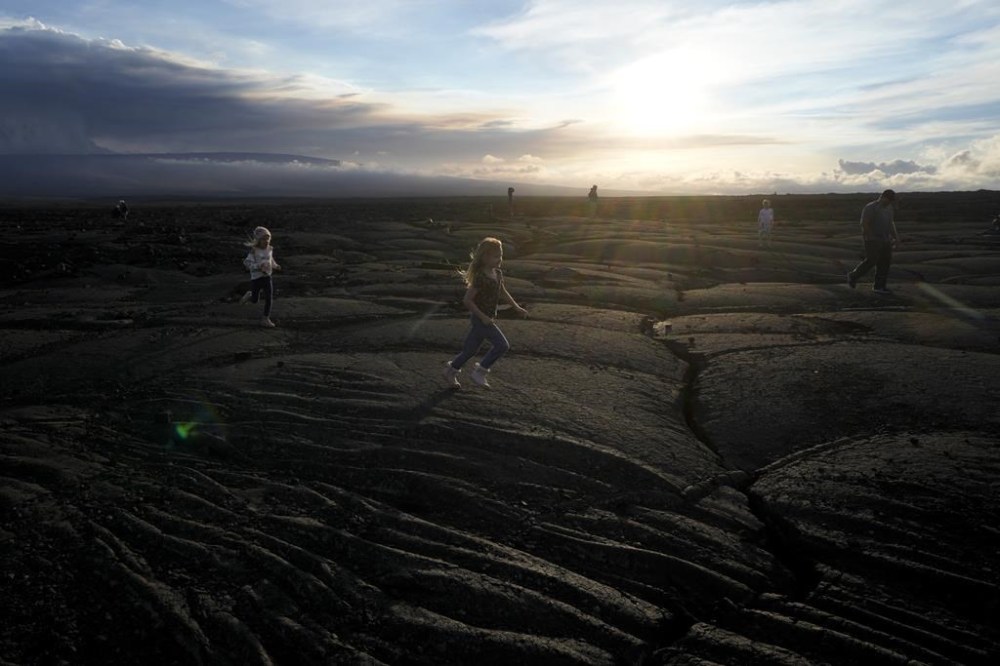
Children run on blackened lava rock from a previous eruption near the Mauna Loa volcano as it erupts Wednesday, Nov. 30, 2022, near Hilo, Hawaii. (AP Photo/Gregory Bull)

___

Associated Press writers Jennifer Sinco Kelleher in Honolulu and Mark Thiessen in Anchorage, Alaska, contributed to this report.

Report Error Submit a Tip

More Stories

Federal Court awards OCN $27M, 62 years after construction of hydro dam

Nicole Buffie 5 minute read Preview

Federal Court awards OCN $27M, 62 years after construction of hydro dam

Nicole Buffie 5 minute read Updated: 12:02 PM CDT

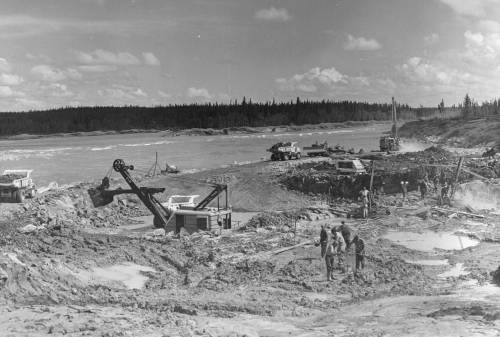
The Federal Court has ordered Ottawa pay Opaskwayak Cree Nation $27 million over damages suffered due to the construction of the Grand Rapids hydro dam in the 1960s.

In a decision dated Sept. 3, Federal Court Justice Sébastien Grammond says the federal government had a fiduciary duty to protect the community from the impacts of the dam.

“When the Crown exercises a discretionary power over an Indigenous interest, it has a fiduciary duty and it must exercise the discretion in the best interests of the Indigenous group,” the ruling said. “Canada breached its fiduciary duty to OCN because it approved the (project) without ensuring that the impacts of the Grand Rapids dam on OCN’s traditional way of life were mitigated or compensated.”

The First Nation took the federal government to court in February over impacts on the community after the dam, located about 145 kilometres southeast of Opaskwayak Cree Nation, was installed on the Saskatchewan River in 1964. The case was heard over 14 days in a judge-alone trial in Winnipeg.

Read
Updated: 12:02 PM CDT

Dynacare must treat workers fairly: health minister

Carol Sanders 3 minute read Preview

Dynacare must treat workers fairly: health minister

Carol Sanders 3 minute read 6:40 PM CDT

Manitoba’s health minister defended the government’s contract with Dynacare, saying the for-profit company is expected to treat its workers fairly — but wouldn’t say if that expectation was spelled out in the deal.

The 350 private lab workers, who are represented by the Manitoba Association of Health Care Professionals, have been without a contract since March 31 and went on strike on Sept. 8.

The Manitoba Labour Board ordered them back to work and they returned to the job one day later.

Health Minister Uzoma Asagwara was asked Wednesday about the lack of an essential services agreement and why the government didn’t intervene in March, knowing that a labour dispute could interrupt community lab services.

Read
6:40 PM CDT

Police cracking down on gangs, organized crime in bars and lounges

Nicole Buffie 4 minute read Preview

Police cracking down on gangs, organized crime in bars and lounges

Nicole Buffie 4 minute read Updated: Yesterday at 6:56 PM CDT

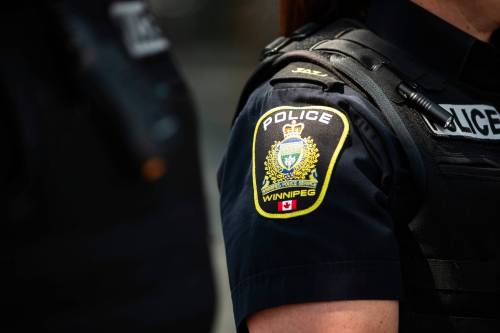
Patrons can expect to see more police officers in and around bars and lounges in the coming months as the Winnipeg Police Service plans to crack down on gangs and organized crime.

Read
Updated: Yesterday at 6:56 PM CDT

CEO, philanthropist Doug Harvey has died

Morgan Modjeski 5 minute read Preview

CEO, philanthropist Doug Harvey has died

Morgan Modjeski 5 minute read Updated: 6:48 PM CDT

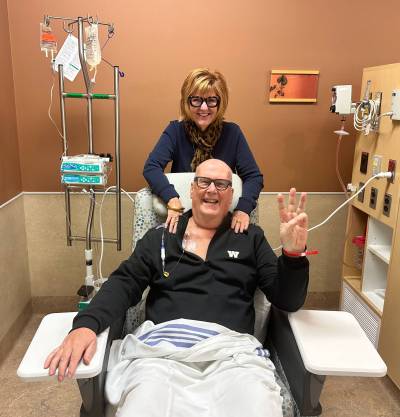
Doug Harvey, a Winnipeg business titan and philanthropist, has died after battling cancer for more than a decade.

Harvey gave millions of dollars to Winnipeg organizations while he was CEO of DLH Group, a nationwide network of businesses that support heavy duty truck and trailer users.

Loren Remillard, CEO and president of the Winnipeg Chamber of Commerce, said the business community is mourning the loss of the influential businessman who helped shape Winnipeg.

“We are a transportation and logistics hub in Winnipeg and it was partly the result of geography, and a big part because of leaders and visionaries like Doug Harvey,” he said.

Read
Updated: 6:48 PM CDT

MMF walks away from bid to buy Fort Garry Hotel

Carol Sanders 3 minute read Preview

MMF walks away from bid to buy Fort Garry Hotel

Carol Sanders 3 minute read Monday, Sep. 14, 2026

The Manitoba Métis Federation won’t buy the historic Fort Garry Hotel, President David Chartrand said Monday.

Read
Monday, Sep. 14, 2026

Seven years sought for serial harasser

Dean Pritchard 5 minute read Preview

Seven years sought for serial harasser

Dean Pritchard 5 minute read Yesterday at 2:01 AM CDT

Alexander Beaton finished serving a two-year jail sentence for criminally harassing six women and didn’t last two days in the community before he was back at it, sending unwanted obscene messages and videos to a dozen women.

Now prosecutors are seeking a seven-year prison sentence for the 30-year-old Winnipeg man, whose latest string of victims includes a police officer who investigated his earlier crimes.

“He essentially continued (offending) unabated,” Crown attorney Brett Rach told provincial court Judge Malcolm McDonald at a sentencing hearing Friday. “It caused more than a nuisance to these victims — it caused them to fear for their safety.”

Beaton pleaded guilty to 14 charges of criminal harassment, sending indecent communications and breaching court orders for a campaign of harassment waged between 2015 and 2025.

Read
Yesterday at 2:01 AM CDT