Ceremony to be held for child’s partial remains found at residential school site
Advertisement
Read this article for free:
or
Already have an account? Log in here »
To continue reading, please subscribe:

Digital Subscription
One year of digital access for only $205*
- Enjoy unlimited reading on winnipegfreepress.com
- Read the E-Edition, our digital replica newspaper
- Access News Break, our award-winning app
- Play interactive puzzles
*First annual payment billed as $205.00 + GST for one year. This annual subscription will automatically renew at $233.00 + GST every 52 weeks (10% off the regular annual price of $259.35). Offer available to new and qualified returning subscribers only. Cancel any time.
To continue reading, please subscribe:
Add Free Press access to your Brandon Sun subscription for only an additional
$1 for the first 4 weeks*
- Enjoy unlimited reading on winnipegfreepress.com
- Read the E-Edition, our digital replica newspaper
- Access News Break, our award-winning app
- Play interactive puzzles
*Your next Brandon Sun subscription payment will increase by $1.00 and you will be charged $17.95 plus GST for four weeks. After four weeks, your payment will increase to $24.95 plus GST every four weeks.
Read unlimited articles for free today:
or
Already have an account? Log in here »
Hey there, time traveller!
This article was published 13/01/2023 (1370 days ago), so information in it may no longer be current.
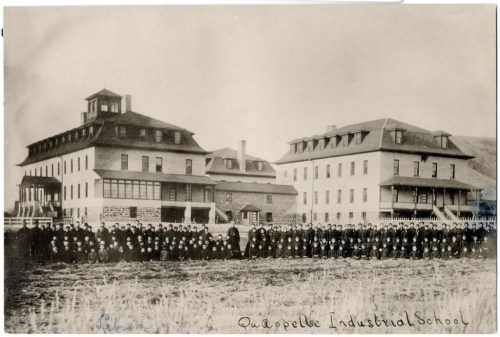
STAR BLANKET CREE NATION – A First Nation in southeastern Saskatchewan is preparing a proper burial after a fragment of a child’s jawbone was found in an unmarked grave during a search of a local residential school site.
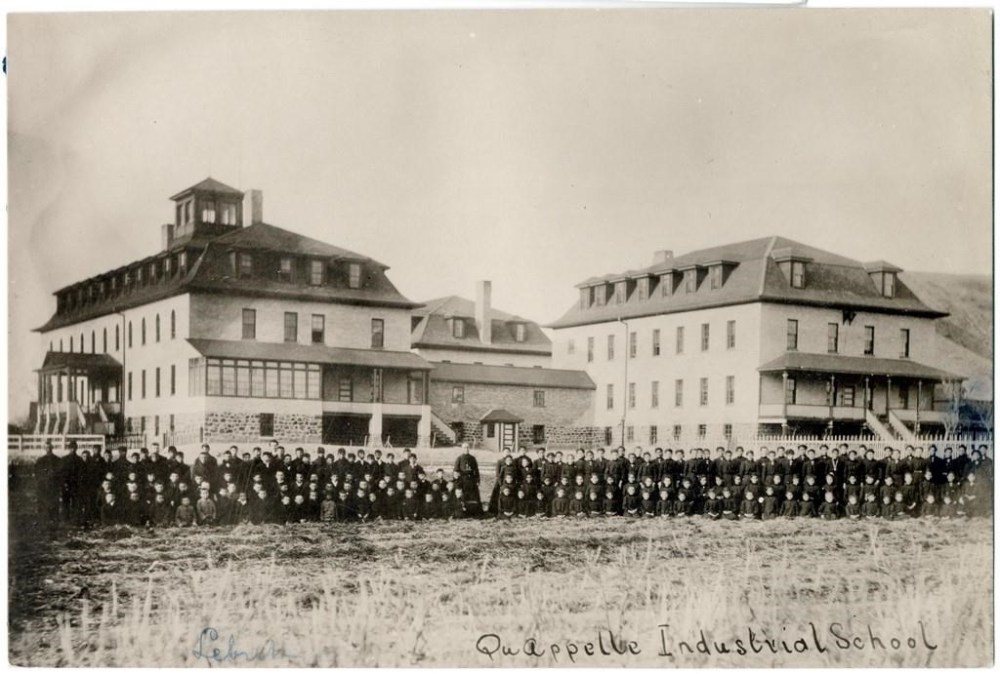
The Star Blanket Cree Nation made the discovery in the fall while the community was searching the site of the former Lebret Indian Industrial School.
The bone was identified by the province’s coroner’s service to be that of a child between the ages of four and six from about 125 years ago. It was not located anywhere near an area that was known to be a graveyard.
During an announcement in the community Thursday, the bone sat on a table in a small, teal box with painted white and black feathers. Attendees offered tobacco, an act of respect in many First Nations cultures, as the announcement took place.
“We have to follow protocol,” project lead Sheldon Poitras said in an interview Friday.
“The direction we got from our knowledge keepers is to have a service to return them to where they found them because, essentially now, that’s a grave site.”
The team is in the process of setting an official date for a burial ceremony. In the meantime, Poitras, said the bone will be stored in a safe and secure location.
The First Nation also found more than 2,000 anomalies while doing a search of the area using ground-penetrating radar.
Poitras said he does not believe these hits all amount to unmarked graves, as further testing needs to be done.
The First Nation has been working with Axiom Exploration, a Saskatoon-based consulting firm.
The team is moving into the next phases of the project, which includes miniature core drilling later this year to enable DNA testing to confirm what is there.
The school, which was one of the longest-running residential schools in the country, went by several names and was run by the Roman Catholic Church through the Missionary Oblates of Mary Immaculate from 1884 to 1973.
The First Nation is working with the nearby Sacred Heart Roman Catholic Church to analyze the oldest part of its cemetery to program the radar system on what it needs to detect, since the school and church sites share the same soil, said Poitras.
“When we do have a final number of what might actually be a higher area of interest, we can move forward with taking a look and getting some samples,” Poitras said.
If more remains are found, identifying them will not be a simple task.
Poitras said community members and knowledge keepers have told the team they can search for remains, but not exhume them.
That direction has shifted a bit since Thursday’s announcement.
“There’s that mindset of justice and accountability,” said Poitras. “Returning these lost individuals to their rightful homes takes a more detailed forensic investigation.”
Poitras added that work could likely take three to five years.
The school had a reputation for strict religious instruction, strenuous physical labour and physical abuse. Survivors told the Truth and Reconciliation Commission about extended periods of kneeling, beds being pushed over with kids still on top and slaps across the face. One survivor shared how he saw a fellow student tied to a heat register.
The National Centre for Truth and Reconciliation has a record of 56 student deaths at the school.
Students who attended the school were from different First Nations and some were from the United States.
To build a DNA database, the team would need to reach out to each community to request samples, said Poitras.
“That’s a big process in itself.”
The National Centre for Truth and Reconciliation said it is committed to carrying out this work and will continue working with communities to provide support.

“This announcement highlights the magnitude of the task ahead of us as we work to recover and bring home all of the missing children who died due to the violence and neglect of residential schools,” the organization said in a statement.
An estimated 150,000 Indigenous children were forced to attend residential schools over a century in Canada.
The Indian Residential Schools Resolution Health Support Program has a hotline to help residential school survivors and their relatives suffering trauma invoked by the recall of past abuse. The number is 1-866-925-4419.
This report by The Canadian Press was first published Jan. 13, 2023.
— By Brittany Hobson in Winnipeg
Related Articles
Trudeau should have visited First Nation during Saskatchewan stop: Indigenous leaders


Advertisement Advertise With Us
Advertisement Advertise With Us
The Free Press acknowledges the financial support it receives from members of the city’s faith community, which makes our coverage of religion possible.