Egypt unveils tombs and sarcophagus in new excavation
Advertisement
Read this article for free:
or
Already have an account? Log in here »
To continue reading, please subscribe:

Digital Subscription
One year of digital access for only $205*
- Enjoy unlimited reading on winnipegfreepress.com
- Read the E-Edition, our digital replica newspaper
- Access News Break, our award-winning app
- Play interactive puzzles
*First annual payment billed as $205.00 + GST for one year. This annual subscription will automatically renew at $233.00 + GST every 52 weeks (10% off the regular annual price of $259.35). Offer available to new and qualified returning subscribers only. Cancel any time.
To continue reading, please subscribe:
Add Free Press access to your Brandon Sun subscription for only an additional
$1 for the first 4 weeks*
- Enjoy unlimited reading on winnipegfreepress.com
- Read the E-Edition, our digital replica newspaper
- Access News Break, our award-winning app
- Play interactive puzzles
*Your next Brandon Sun subscription payment will increase by $1.00 and you will be charged $17.95 plus GST for four weeks. After four weeks, your payment will increase to $24.95 plus GST every four weeks.
Read unlimited articles for free today:
or
Already have an account? Log in here »
Hey there, time traveller!
This article was published 26/01/2023 (1322 days ago), so information in it may no longer be current.
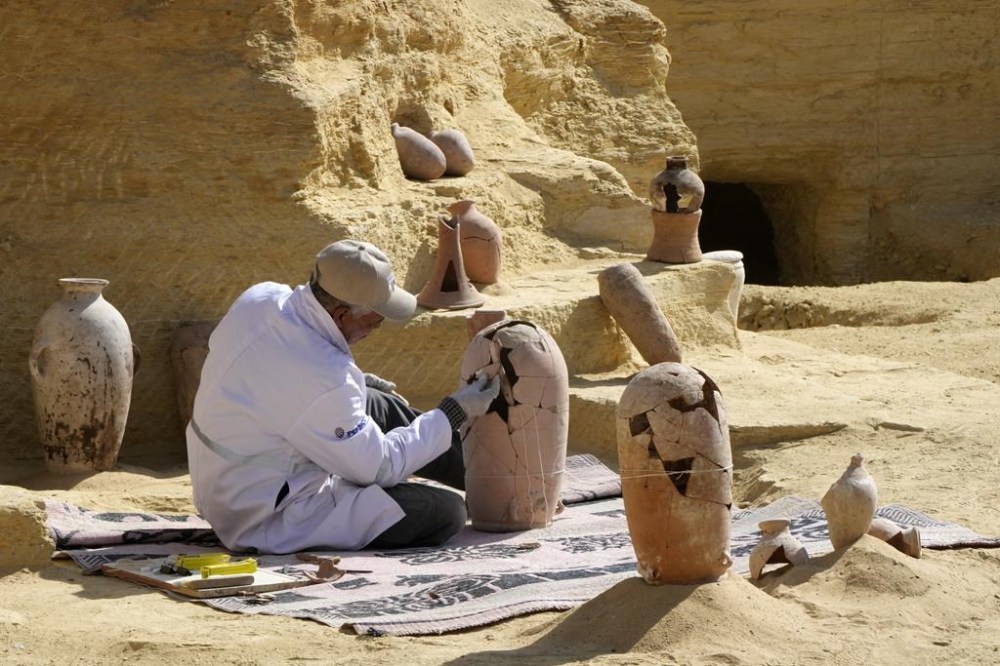
SAQQARA, Egypt (AP) — Egypt on Thursday unveiled dozens of new archaeological discoveries, including two ancient tombs, at a Pharaonic necropolis just outside of the capital Cairo.
The artefacts, unearthed during a year-long excavation, were found beneath an ancient stone enclosure near the Saqqara pyramids and date back to the fifth and sixth dynasties of the Old Kingdom, spanning from roughly 2500 B.C to 2100 B.C., the excavation team said.
One of the uncovered tombs belonged to a priest from the fifth dynasty known as Khnumdjedef, while the other tomb belonged to an official named Meri, a palace official who held the title of “the keeper of the secrets,” the team said. Other major findings from the excavation include statues, amulets, and a well-preserved sarcophagus.
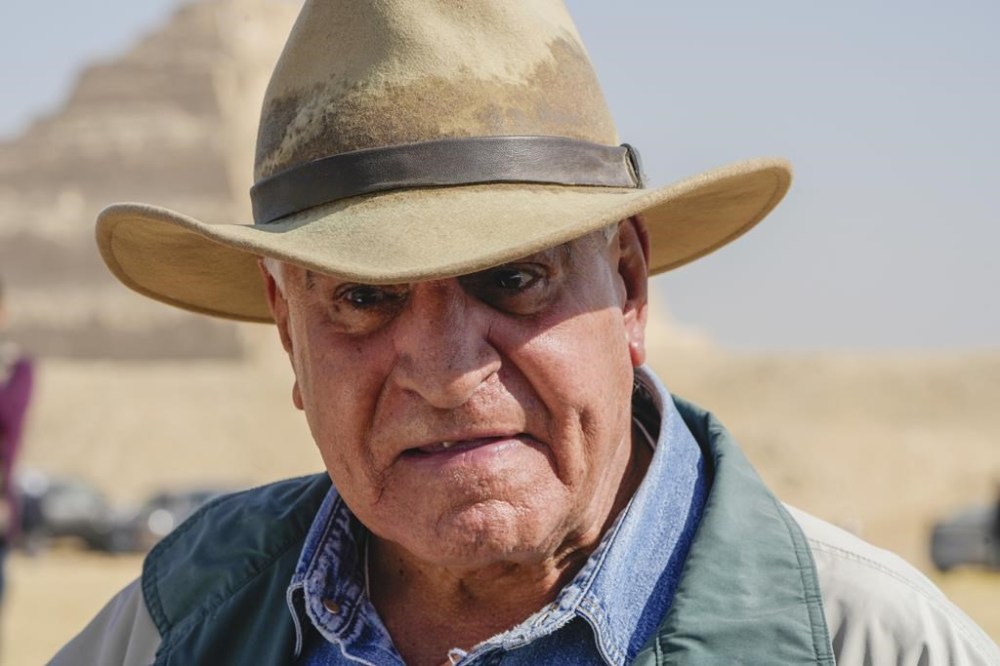
Egypt’s most renowned archaeologist and director of the excavation, Zahi Hawass, personally unveiled the new discoveries from the stone enclosure, known as Gisr al-Mudir.
‘‘I put my head inside to see what was inside the sarcophagus: A beautiful mummy of a man completely covered in layers of gold,’’ Hawass said.
The Saqqara site is part of a sprawling necropolis at Egypt’s ancient capital of Memphis that includes the famed Giza Pyramids as well as smaller pyramids at Abu Sir, Dahshur and Abu Ruwaysh. The ruins of Memphis were designated a UNESCO World Heritage site in the 1970s.
Thursday’s unveiling comes amid a flurry of new discoveries announced by Egyptian authorities over the past week. Near the southern city of Luxor, authorities said they found dozens of burial sites from the New Kingdom era, dating from 1800 B.C. to 1600 B.C. Discovered nearby were the ruins of an ancient Roman city, it said.
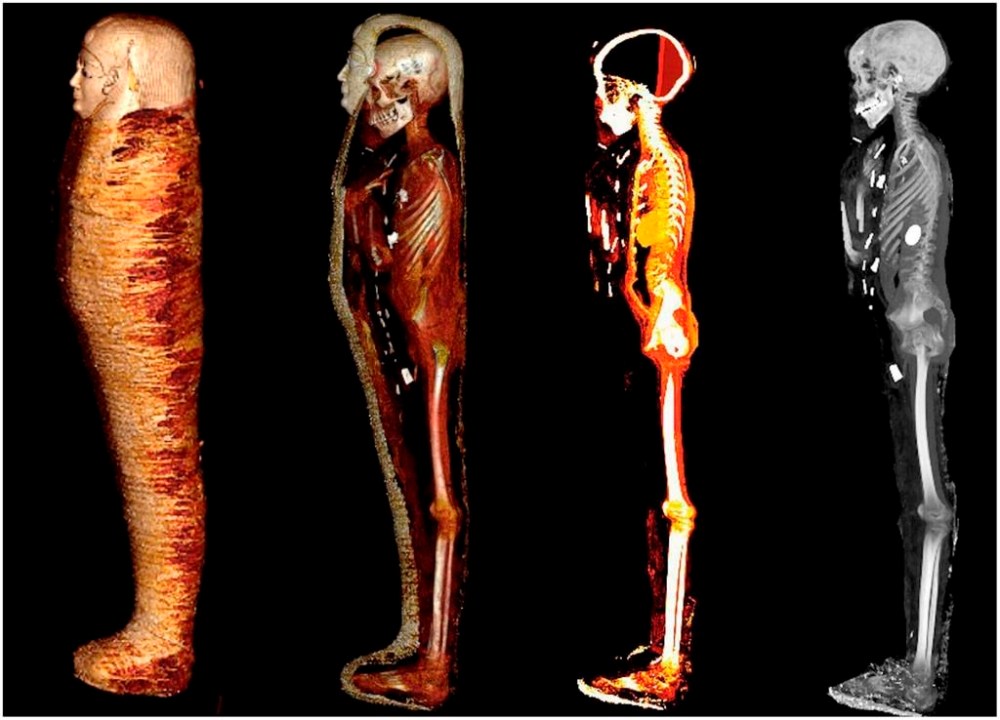
In a separate announcement Tuesday, a group of scientists from Cairo University revealed previously unknown details about a mummified teenage boy dating to about 300 B.C. By using CT scans, the team of scientists were able to shed new light on the boy’s high social status by affirming the intricate details of the amulets inserted within his mummified body and the type of burial he received.
Egypt often publicly touts its ancient discoveries to attract more tourists, a significant source of foreign currency for the cash-strapped North African country. The sector suffered a long downturn after the political turmoil and violence that followed a 2011 uprising.
Egypt’s tourist industry was also hit hard by the coronavirus pandemic and is currently suffering from the fallout from the war in Ukraine. Both Russia and Ukraine formerly comprised a large source of tourists visiting Egypt.
___
Associated Press writer Jack B. Jeffery contributed to this report from Cairo.