

Blood-flavored ice helps zoo animals beat Rio’s heat
Advertisement
Read this article for free:
or
Already have an account? Log in here »
To continue reading, please subscribe:

Digital Subscription
One year of digital access for only $205*
- Enjoy unlimited reading on winnipegfreepress.com
- Read the E-Edition, our digital replica newspaper
- Access News Break, our award-winning app
- Play interactive puzzles
*First annual payment billed as $205.00 + GST for one year. This annual subscription will automatically renew at $233.00 + GST every 52 weeks (10% off the regular annual price of $259.35). Offer available to new and qualified returning subscribers only. Cancel any time.
To continue reading, please subscribe:
Add Free Press access to your Brandon Sun subscription for only an additional
$1 for the first 4 weeks*
- Enjoy unlimited reading on winnipegfreepress.com
- Read the E-Edition, our digital replica newspaper
- Access News Break, our award-winning app
- Play interactive puzzles
*Your next Brandon Sun subscription payment will increase by $1.00 and you will be charged $17.95 plus GST for four weeks. After four weeks, your payment will increase to $24.95 plus GST every four weeks.
Read unlimited articles for free today:
or
Already have an account? Log in here »
Hey there, time traveller!
This article was published 02/02/2023 (1290 days ago), so information in it may no longer be current.
RIO DE JANEIRO (AP) — Rio de Janeiro’s brutal summer heat has reached 50 degrees Celsius (122 degrees Fahrenheit) on some recent days, sending locals to cool off in the ocean. There weren’t many options for residents of the city’s zoo, however, until a team of experts started offering them exotic frozen treats.
The flavors of ice given to the zoo’s carnivores aren’t found at your average summer hotspot: Chicken, minced meat and bovine blood. But 14-year-old lion Simba and the 3-year-old black jaguar Poty lap it up.
“This is a part of our well-being program. We have lots of activities to include something different in their routine,” said Marina Moraes, a biologist at the zoo.
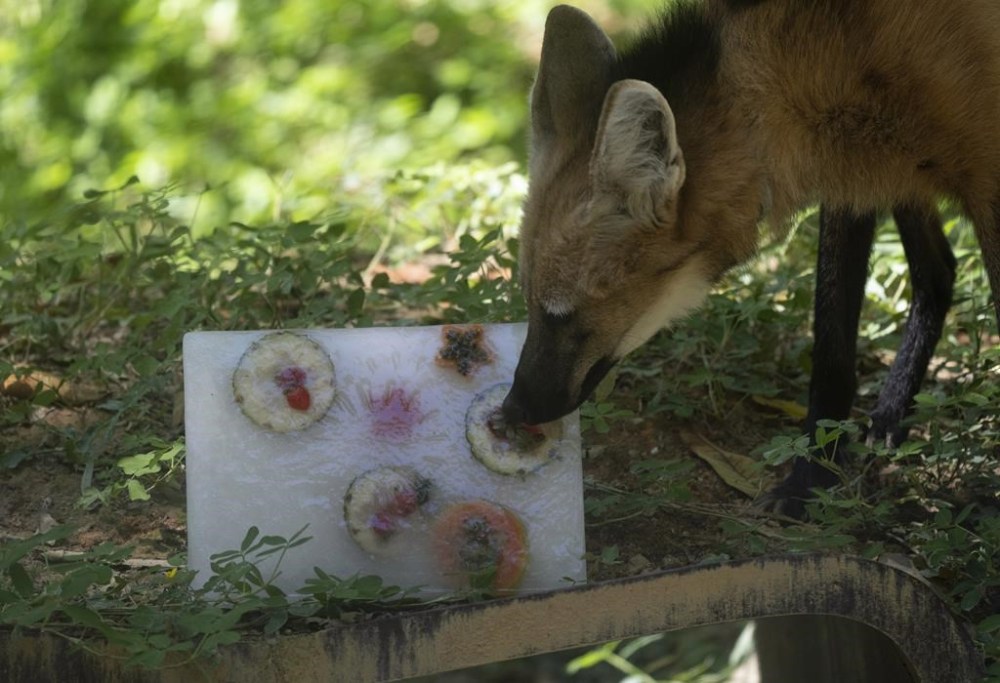
The ice brings cooling relief to the animals, which take their time eating it, and the feeding ritual is a novel sight for visitors. That was the case for an Argentine family that came to the zoo for the first time.
“It’s fantastic because there’s this terrible heat and above all it’s very humid. We sweat even though there’s no sun; it’s different from Argentina,” said lawyer Lorena López, who was with her husband and children. “I think it’s perfect for the animals to have their ice.”
Many of the children seemed fascinated by the activity, and they expressed surprise when they found out the ingredients of the different flavors, which vary according to the species.
“For the primates, we offer fruit ice creams, which are sweet and more colorful,” Moraes said. “The herbivores can taste kale, pumpkin and carrot.”
___
Bridi reported from Brasilia.