

Ottawa tight-lipped on details as Canada, U.S. call out China over balloon
Advertisement
Read this article for free:
or
Already have an account? Log in here »
To continue reading, please subscribe:

Digital Subscription
One year of digital access for only $205*
- Enjoy unlimited reading on winnipegfreepress.com
- Read the E-Edition, our digital replica newspaper
- Access News Break, our award-winning app
- Play interactive puzzles
*First annual payment billed as $205.00 + GST for one year. This annual subscription will automatically renew at $233.00 + GST every 52 weeks (10% off the regular annual price of $259.35). Offer available to new and qualified returning subscribers only. Cancel any time.
To continue reading, please subscribe:
Add Free Press access to your Brandon Sun subscription for only an additional
$1 for the first 4 weeks*
- Enjoy unlimited reading on winnipegfreepress.com
- Read the E-Edition, our digital replica newspaper
- Access News Break, our award-winning app
- Play interactive puzzles
*Your next Brandon Sun subscription payment will increase by $1.00 and you will be charged $17.95 plus GST for four weeks. After four weeks, your payment will increase to $24.95 plus GST every four weeks.
Read unlimited articles for free today:
or
Already have an account? Log in here »
Hey there, time traveller!
This article was published 03/02/2023 (1289 days ago), so information in it may no longer be current.
OTTAWA – Canada announced that it had called China’s ambassador onto the carpet — but otherwise remained tight-lipped — as Ottawa and Washington expressed their disapproval about a high-altitude surveillance balloon found floating over the United States.
Chinese Ambassador Cong Peiwu was summoned for the dressing down from Global Affairs Canada officials on Thursday after the Pentagon revealed the presence of the balloon over the sensitive military sites in the western U.S.
“China’s ambassador to Canada was summoned by officials at Global Affairs Canada,” a department spokeswoman Charlotte MacLeod said in a statement on Friday. “We will continue to vigorously express our position to Chinese officials through multiple channels.”
U.S. officials also announced Secretary of State Antony Blinken was postponing a planned high-stakes weekend diplomatic trip to China, even as the Biden administration weighed a broader response to the discovery of the balloon.
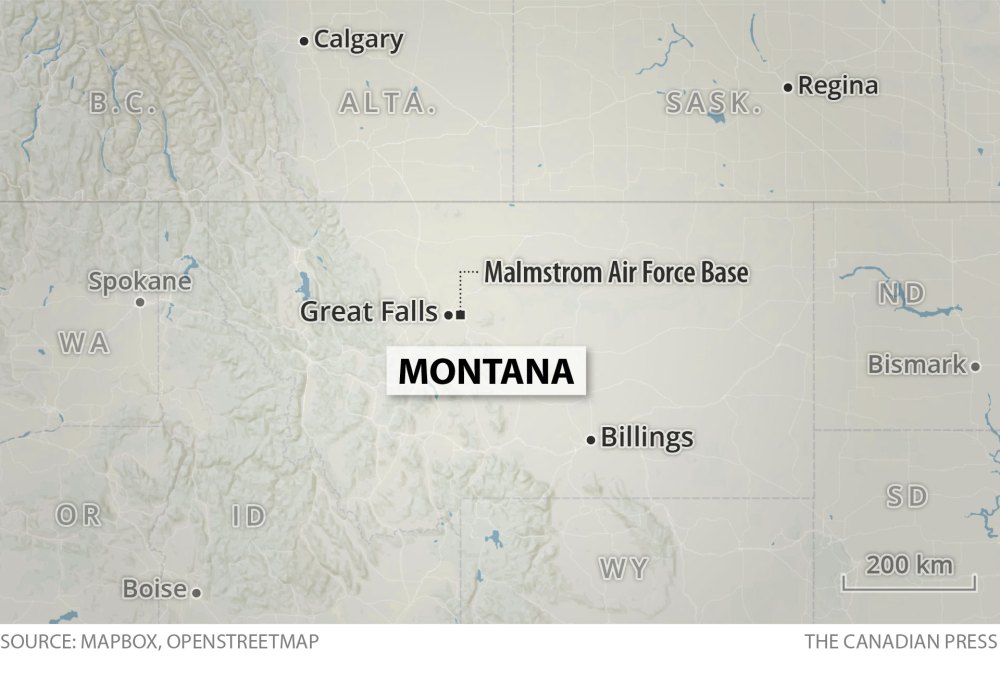
The discovery was announced by Pentagon officials on Thursday, who said one of the places it was spotted was over the state of Montana, which is home to one of America’s three nuclear missile silo fields at Malmstrom Air Force Base.
On Friday, Pentagon spokesman Brig.-Gen. Patrick Ryder described the object as a manoeuvrable surveillance balloon flying at an altitude of about 60,000 feet, or 18,288 metres, with a “payload” or basket underneath.
Ryder did not offer further specifics, including the balloon’s size, what the U.S. military believes it was doing or even how it ended up hovering over Montana. However, he did downplay any potential threat when asked why it wasn’t being shot down.
“In terms of the discussions about whether or not to shoot down this balloon, that was an option,” he said. “Because we assess that currently it does not pose a physical or military risk to people on the ground, for now we’re continuing to monitor and review options.”
At a news conference in Toronto, Finance Minister Chrystia Freeland said that the balloon’s movements were being actively tracked.
She said Norad, the Canadian Armed Forces, the Department of National Defence and other partners were “assessing the situation and working in close co-ordination,” adding that Canadian intelligence agencies are working with American partners.
“We continue to take all necessary measures to safeguard Canada from foreign intelligence threats,” said Freeland.
“We take this very seriously.”
Foreign Affairs Minister Mélanie Joly said on Twitter Friday that she had spoken to U.S. Secretary of State Antony Blinken about the security of Canada’s airspace.
“We are collaborating with our American partners and continue to take all necessary measures to safeguard Canada’s sensitive information,” she said.
Neither Freeland nor the Defence Department said whether the surveillance balloon flew over Canadian airspace. Defence Minister Anita Anand’s office declined to comment.
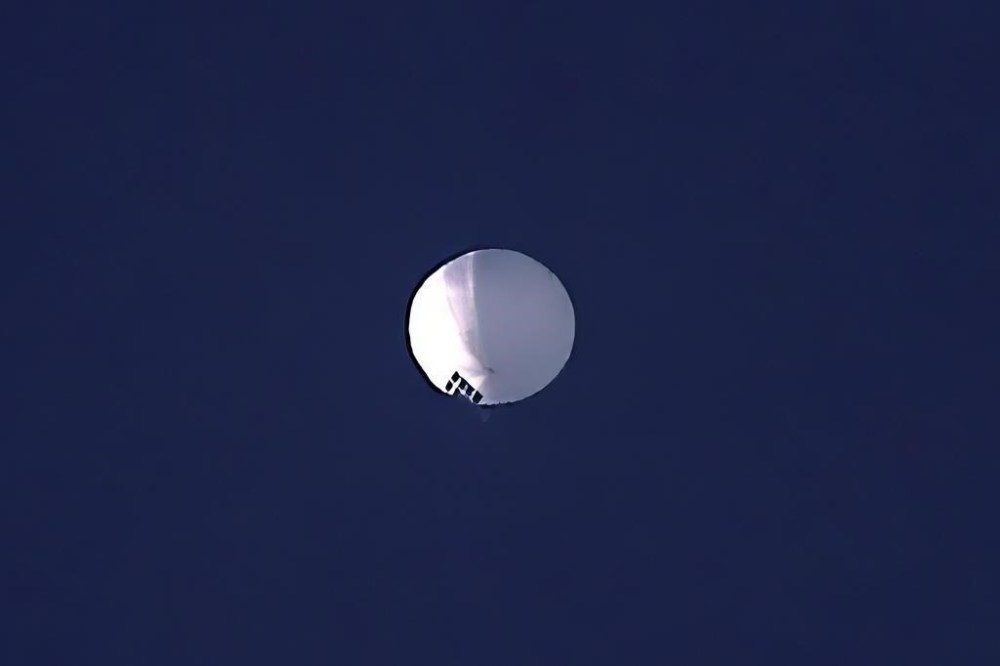
Adding to the confusion, the Defence Department said it was “monitoring a potential second incident.”
However, Ryder said the U.S. military was only tracking one balloon, which was slowly heading east.
China, which angrily denounces surveillance attempts by the U.S. and others over areas it considers to be its territory and once forced down an American spy plane, offered a generally muted reaction to the Pentagon announcement.
In a relatively conciliatory statement, the Chinese Foreign Ministry said the balloon was a civilian airship used mainly for meteorological research. The ministry said the airship has limited “self-steering” capabilities and “deviated far from its planned course” because of winds.
“The Chinese side regrets the unintended entry of the airship into U.S. airspace due to force majeure,” the statement said, citing a legal term used to refer to events beyond one’s control.
Social media was alive on Friday with suggestions based on publicly available flight-tracking data that the Canadian military had deployed aircraft earlier in the week to track the balloon as it travelled over the Rockies in British Columbia and down into the western U.S.
Research consultant Steffan Watkins, who monitors such flight information and noted the continued presence of Canadian military aircraft over Valhalla National Park and other places as early as Tuesday, said the lack of information from the government was troubling.
“I’m sure that Norad has been tracking it the entire time,” Watkins said.
Defence Department spokesman Daniel Le Bouthillier would not confirm any details.
Guy Saint-Jacques, who served as Canada’s ambassador to China from 2012 to 2016, was skeptical of the Chinese government’s explanation. If it were true, he said, Beijing would have notified Ottawa and Washington about what was happening.
The balloon’s appearance represented an awkward moment for the Chinese government and president Xi Jinping, he said.
The Chinese leader had signalled an interest in cooling tensions between China and the U.S. late last year amid growing economic problems and challenges at home, Saint-Jacques said.
“They were counting on the visit of Blinken to restore some kind of dialogue,” he said.
The balloon’s appearance also weakens the Communist Chinese government’s long-standing opposition to incursions into what it considers its territory, including in disputed regions such as the South China Sea.
“They protest every time an American aircraft comes close to Chinese airspace,” Saint-Jacques said.
“So the Americans will say: ‘Who are you to complain? You sent a balloon that is coming over our territory.’ So I think all this makes the Chinese look really clumsy.”
University of Manitoba associate professor Andrea Charron, one of Canada’s foremost experts on Norad, said the balloon’s appearance also underscores the urgent need to modernize the aging North American early warning system.
Military commanders have long warned that the system, including a series of 1980s-era radar stations in Canada’s Far North, has passed its best-before date. The government has announced plans to replace it in the coming years.
“We know we have sort of big gaps in radar coverage that we’re trying to fill with Norad modernization,” Charron said.
This report by The Canadian Press was first published Feb. 3, 2023.
— With files from The Associated Press.
Related Articles
Canada says NORAD tracking high-altitude surveillance balloon detected over the U.S.


Advertisement Advertise With Us
Advertisement Advertise With Us