

Colombia proposes shipping invasive hippos to India, Mexico
Advertisement
Read this article for free:
or
Already have an account? Log in here »
To continue reading, please subscribe:

Digital Subscription
One year of digital access for only $205*
- Enjoy unlimited reading on winnipegfreepress.com
- Read the E-Edition, our digital replica newspaper
- Access News Break, our award-winning app
- Play interactive puzzles
*First annual payment billed as $205.00 + GST for one year. This annual subscription will automatically renew at $233.00 + GST every 52 weeks (10% off the regular annual price of $259.35). Offer available to new and qualified returning subscribers only. Cancel any time.
To continue reading, please subscribe:
Add Free Press access to your Brandon Sun subscription for only an additional
$1 for the first 4 weeks*
- Enjoy unlimited reading on winnipegfreepress.com
- Read the E-Edition, our digital replica newspaper
- Access News Break, our award-winning app
- Play interactive puzzles
*Your next Brandon Sun subscription payment will increase by $1.00 and you will be charged $17.95 plus GST for four weeks. After four weeks, your payment will increase to $24.95 plus GST every four weeks.
Read unlimited articles for free today:
or
Already have an account? Log in here »
Hey there, time traveller!
This article was published 02/03/2023 (1263 days ago), so information in it may no longer be current.
BOGOTA, Colombia (AP) — Colombia is proposing transferring at least 70 hippopotamuses that live near Pablo Escobar’s former ranch – descendants of four imported from Africa illegally by the late drug lord in the 1980s – to India and Mexico as part of a plan to control their population.
The hippos, which are territorial and weigh up to 3 tons, have spread far beyond the Hacienda Napoles ranch, located 200 kilometer (124 mile) from Bogota along the Magdalena River. Environmental authorities estimate there are about 130 hippos in the area in Antioquia province and their population could reach 400 in eight years.
Escobar’s Hacienda Napoles — and the hippos — have become a sort of local tourist attraction in the years since the kingpin was killed by police in 1993. When his ranch was abandoned, the hippos survived and reproduced in local rivers and favorable climatic conditions.
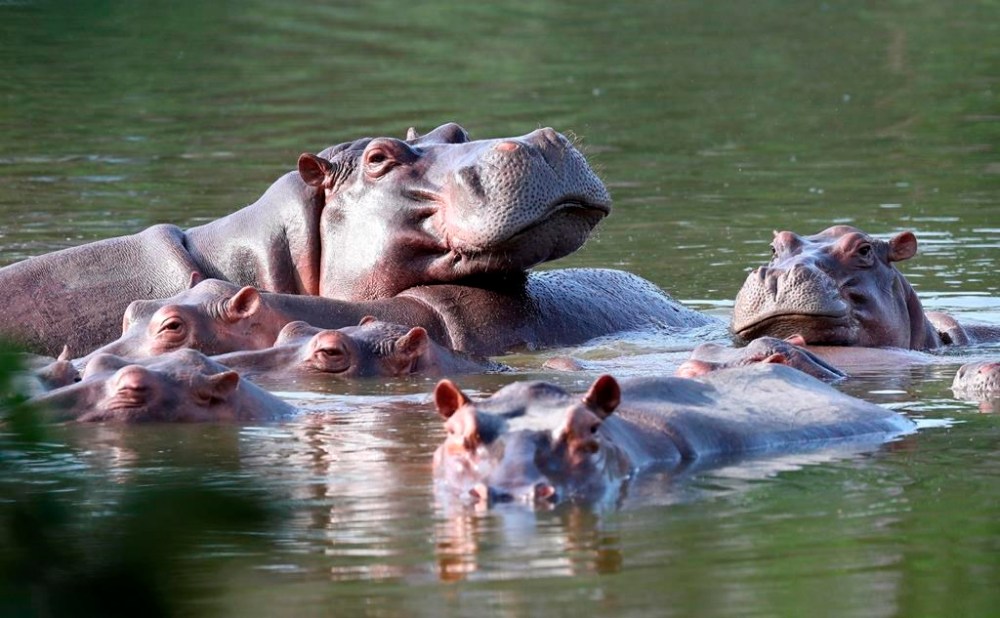
Scientists warn the hippos do not have a natural predator in Colombia and are a potential problem for biodiversity since their feces change the composition of the rivers and could impact the habitat of manatees and capybaras. Last year, Colombia’s government declared them a toxic invasive species.
The plan to take them to India and Mexico has been forming for more than a year, said Lina Marcela de los Ríos Morales, director of animal protection and welfare at Antioquia’s environment ministry.
The hippos would be lured with food into large, iron containers and transferred by truck to the international airport in the city of Rionegro, 150 kilometers away. From there, they would be flown to India and Mexico, where there are sanctuaries and zoos capable of taking in and caring for the animals.
“It is possible to do, we already have experience relocating hippos in zoos nationwide,” said David Echeverri López, a spokesman for Cornare, the local environmental authority that would be in charge of the relocations.
The plan is to send 60 hippos to the Greens Zoological Rescue & Rehabilitation Kingdom in Gujarat, India, which De los Ríos Morales said would cover the cost of the containers and airlift. Another 10 hippos would go to zoos and sanctuaries in Mexico such as the Ostok, located in Sinaloa.
“We work with Ernesto Zazueta, who is the president of sanctuaries and zoos in Mexico, who is the one who liaisons with different countries and manage their rescues,” said the official.
The plan is to focus on the hippos living in the rivers surrounding the Hacienda Napoles ranch, not the ones inside the ranch because they are in a controlled environment and don’t threaten the local ecosystem.
The relocations would help control the hippo population, and though the animals’ native habitat is Africa, it is more humane than the alternate proposal of exterminating them as an invasive species, said De los Ríos Morales.
Ecuador, the Philippines and Botswana have also expressed their willingness to relocated Colombian hippos to their countries, according to the Antioquia Governor’s Office.

Advertisement Advertise With Us
Advertisement Advertise With Us