Climate change threatens Canadian security, prosperity, warns stark spy agency brief
Advertisement
Read this article for free:
or
Already have an account? Log in here »
To continue reading, please subscribe:

Digital Subscription
One year of digital access for only $205*
- Enjoy unlimited reading on winnipegfreepress.com
- Read the E-Edition, our digital replica newspaper
- Access News Break, our award-winning app
- Play interactive puzzles
*First annual payment billed as $205.00 + GST for one year. This annual subscription will automatically renew at $233.00 + GST every 52 weeks (10% off the regular annual price of $259.35). Offer available to new and qualified returning subscribers only. Cancel any time.
To continue reading, please subscribe:
Add Free Press access to your Brandon Sun subscription for only an additional
$1 for the first 4 weeks*
- Enjoy unlimited reading on winnipegfreepress.com
- Read the E-Edition, our digital replica newspaper
- Access News Break, our award-winning app
- Play interactive puzzles
*Your next Brandon Sun subscription payment will increase by $1.00 and you will be charged $17.95 plus GST for four weeks. After four weeks, your payment will increase to $24.95 plus GST every four weeks.
Read unlimited articles for free today:
or
Already have an account? Log in here »
Hey there, time traveller!
This article was published 05/03/2023 (1313 days ago), so information in it may no longer be current.
OTTAWA – Canada’s spy service warns that climate change poses a profound, ongoing threat to national security and prosperity, including the possible loss of parts of British Columbia and the Atlantic provinces to rising sea levels.
A newly released analysis by the Canadian Security Intelligence Service also foresees an increase in ideologically motivated violent extremism from people who want to speed up climate change solutions and those more interested in preserving their current way of life.
The brief was prepared in April 2021 but only recently disclosed to The Canadian Press in response to an Access to Information request filed in October of that year.
CSIS spells out several concerns presented by global warming, ranging from looming dangers to Arctic, coastal and border security to serious pressures on food and water supplies.
The spy service says its preliminary examination determines that climate change “presents a complex, long-term threat to Canada’s safety, security and prosperity outcomes.”
“There will be no single moment where this threat will crystallize and reveal itself, for it is already underway and will incrementally build across decades to come.”
A senior CSIS official flagged the service’s interest in tracking the fallout from climate shifts at a security conference in November 2021, saying the agency must continue to anticipate “the next threat” in order to support other government players.
“It’s not surprising that security agencies are starting to pay more attention to this because clearly climate change is starting to bite,” said Simon Dalby, a professor emeritus at Wilfrid Laurier University who studies climate effects, environmental security and geopolitics.
The CSIS brief is a more sophisticated framing of climate change as a security issue “than we see in most other federal government policies and documents,” said Will Greaves, a political scientist at the University of Victoria.
“It’s refreshing to see it coming from such a pointy security organ of the Canadian state.”
The brief says the Arctic’s receding ice coverage will allow for routine navigation of the Northwest Passage and extraction of oil and mineral deposits in the region might become more economically viable.
“Great power competition for Arctic access, influence and control will likely intensify. There will be an escalating risk from significant Russian military activity and a growing China presence in this vital region.”
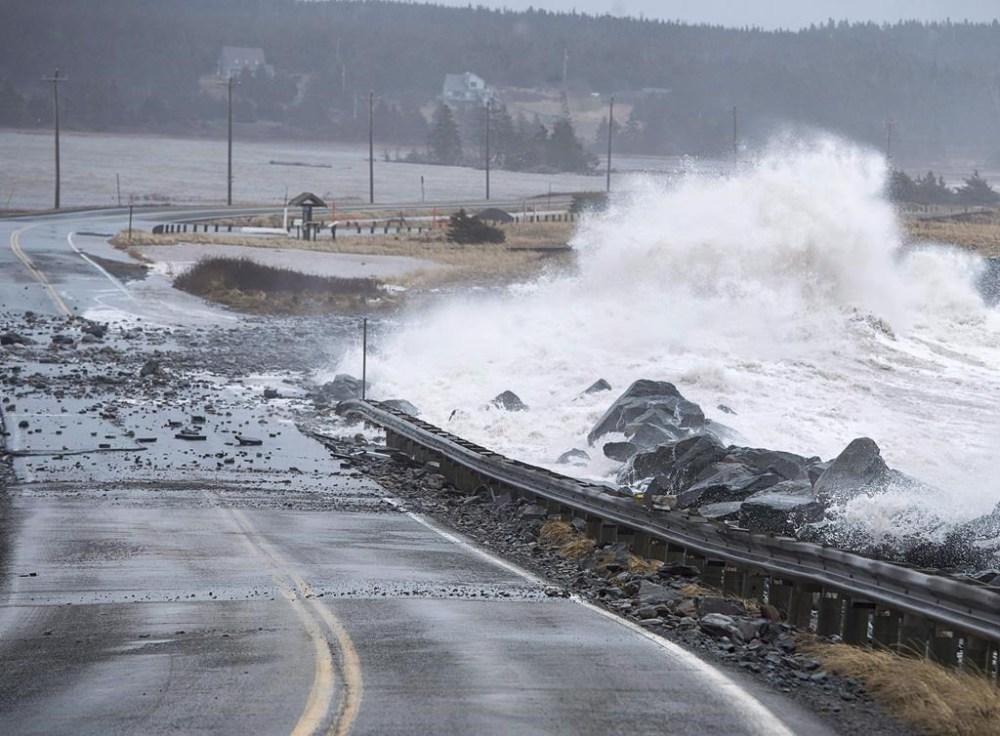
Rising waters could cause irretrievable loss of infrastructure and even whole communities along coastlines, CSIS warns. “For example, modelling shows the potential loss of significant parts of British Columbia and the Atlantic provinces to rising sea levels and flooding.”
Taking steps to lessen the severity of flood and weather risks may be impractical, and buying insurance or rebuilding after a calamity will simply be too expensive in some cases, the brief says.
Anticipating such problems by making bridges and other infrastructure more robust is preferable to responding after a catastrophic event, Dalby said in an interview.
There is a role for the state in ensuring essential services such as communication and transportation networks continue to function, but it’s not always clear who should be acting, he added. “Is this a security issue? Or is it something that is better dealt with by Transport Canada and Environment Canada or some other agencies?”
Among the other effects CSIS anticipates:
— The loss of biodiversity and habitat, coupled with environmental changes, will see people interact more with wildlife, increasing the risk of transmission of animal-borne diseases to humans and possibly more frequent pandemics;
— Arable land will be lost to pollution, human use and desertification, putting more stress on agricultural resources;
— Freshwater resources will shrink due to environmental degradation and climate change pressures at a time when they are increasingly needed. “Water may transition from an unseen commodity to one of the world’s most vital and contested resources.”
Human migration might grow to unprecedented volume due to newly uninhabitable territory, extreme weather events, drought and food shortages, and human conflict zones, CSIS says.
“Canada will likely be seen as a desirable place for future immigration flows, not only due to its stable economy and fundamental rights and freedoms, but also its significant freshwater and agricultural endowments and vast territory that offer options for mass relocation.”
The shift toward renewable or more efficient energy sources will have national economic implications against a broader backdrop of global dynamics, CSIS predicts.
“As climate change becomes an increasingly important geopolitical and policy issue, the range of polarizing narratives regarding both government solutions and the pace of their implementation is dramatically increasing,” the brief says.
In turn, that could fuel the potential for ideologically motivated extremist activity “across the traditional left-right ideological spectrum.”
Greaves agrees with the assessment, saying CSIS might be underplaying “the depths of that social cleavage in Canada.”
In the current highly polarized partisan political context, that gap is likely to grow, with groups on both sides of the spectrum “embracing either disruptive or potentially violent tactics,” he said.
Overall, climate change will undermine global critical infrastructure, threaten health and safety, create new scarcity and spark global competition, and might open the door to regional or international conflicts, the CSIS brief says.
“Put simply, climate change compounds all other known human security issues and serves as an accelerant towards negative security outcomes. No country will be immune from climate change or associated risks.”
This report by The Canadian Press was first published March 5, 2023.