

Amazon in the weeds over damage to tall grass reserve
Online retailer plans donation after contractor removed fences, tore up grass

Advertisement
Read this article for free:
or
Already have an account? Log in here »
To continue reading, please subscribe:

Digital Subscription
One year of digital access for only $205*
- Enjoy unlimited reading on winnipegfreepress.com
- Read the E-Edition, our digital replica newspaper
- Access News Break, our award-winning app
- Play interactive puzzles
*First annual payment billed as $205.00 + GST for one year. This annual subscription will automatically renew at $233.00 + GST every 52 weeks (10% off the regular annual price of $259.35). Offer available to new and qualified returning subscribers only. Cancel any time.
To continue reading, please subscribe:
Add Free Press access to your Brandon Sun subscription for only an additional
$1 for the first 4 weeks*
- Enjoy unlimited reading on winnipegfreepress.com
- Read the E-Edition, our digital replica newspaper
- Access News Break, our award-winning app
- Play interactive puzzles
*Your next Brandon Sun subscription payment will increase by $1.00 and you will be charged $17.95 plus GST for four weeks. After four weeks, your payment will increase to $24.95 plus GST every four weeks.
Read unlimited articles for free today:
or
Already have an account? Log in here »
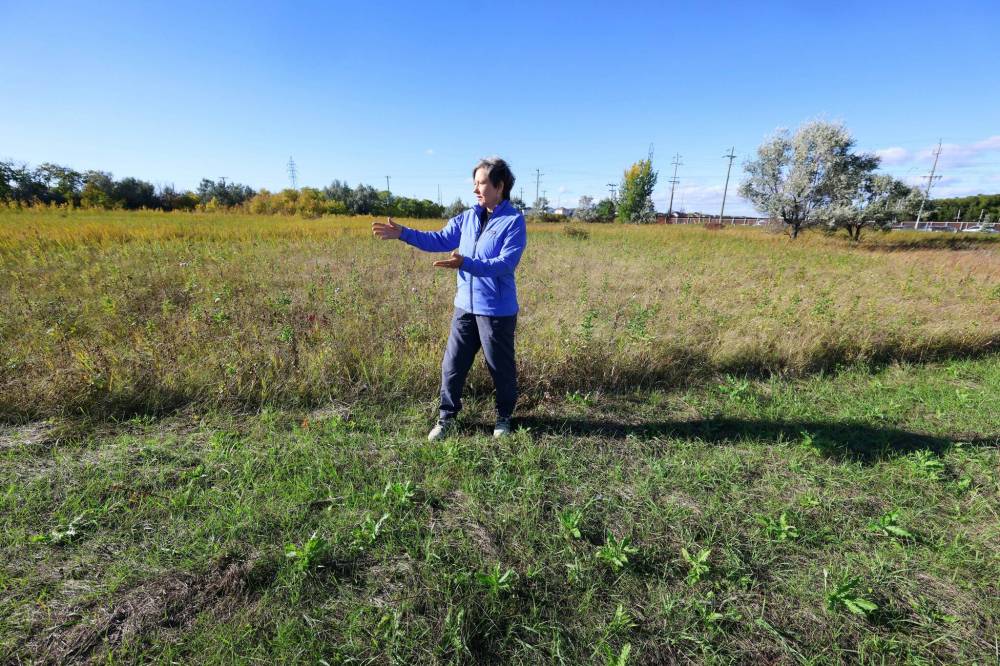
Patricia Dutchak was devastated when she first saw the wide swaths of crushed grass and upturned soil at Winnipeg’s Rotary Prairie Nature Park, a municipal heritage site.
“This is a very rare ecosystem, a remnant of tall grass prairie, there’s barely any left in the world, and to come here and see all this damage was heartbreaking,” Dutchak, chair of the Transcona Rotary Club’s parks committee, says.
The club is responsible for maintaining the protected green space, which was significantly damaged this summer when a fence between the park and the neighbouring Amazon distribution centre was relocated.
SUPPLIED
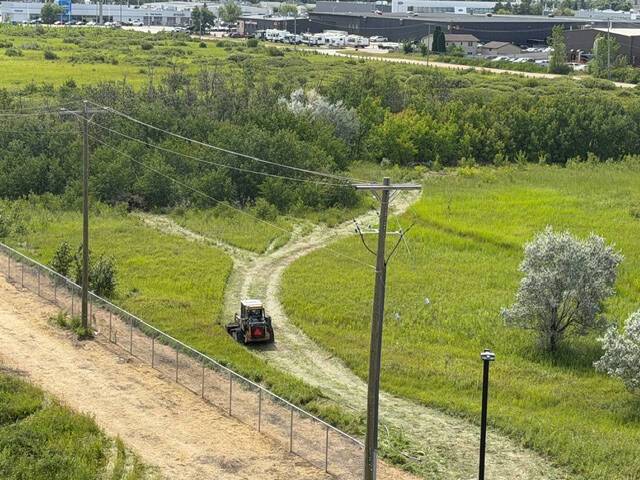
Large swaths of grass and foliage in the protected nature preserve were trampled by heavy equipment in August.
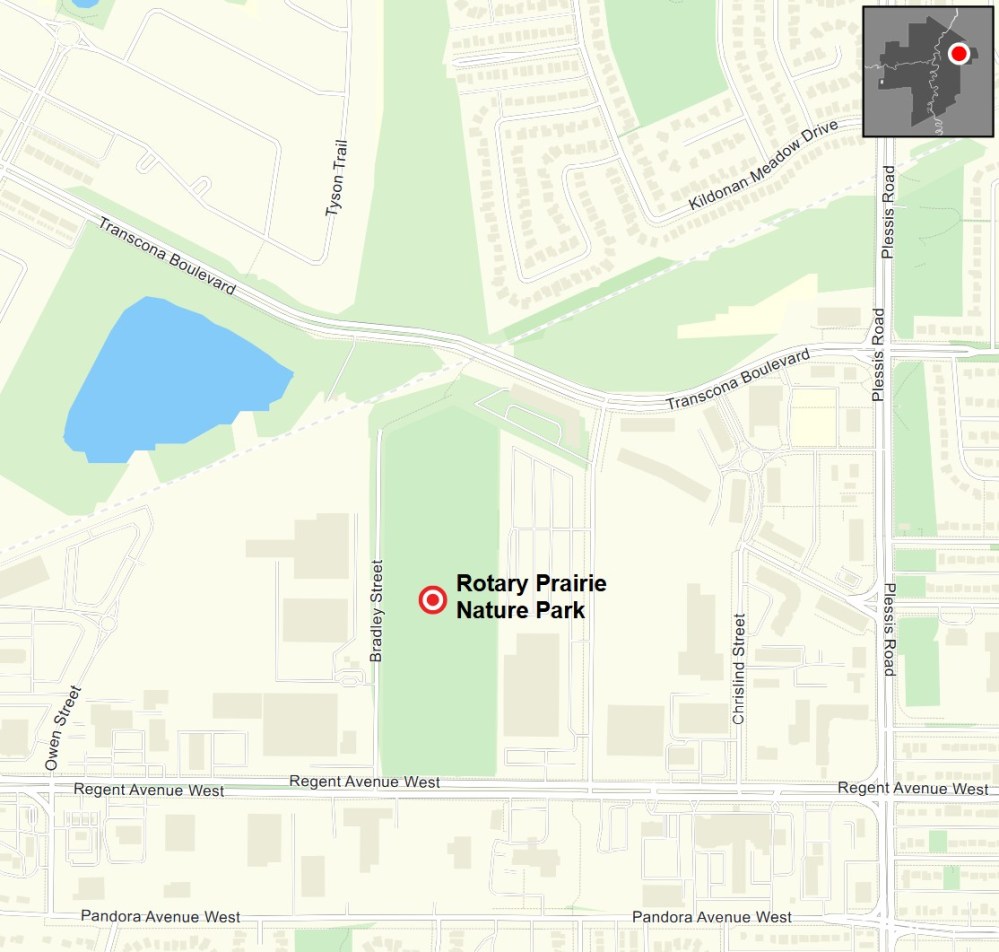
The 20-acre nature preserve is situated on a narrow tract of land on Regent Avenue West in the commercial heart of Transcona. The park received its municipal heritage designation in 1992 and is, today, surrounded by high-traffic streets, industrial warehouses and car dealerships.
In early August, a contractor hired by Amazon moved a section of chain-link fence running along the distribution centre’s parking lot a couple of metres to the west toward the park. The work was carried out to allow for safer snow and ice removal over the winter, an Amazon spokesperson said in an email statement.
During the process, grass and shrubs along both sides of the fence were mowed down and dumped in the park without permission from the Rotary Club. Wooden fence posts marking the western perimeter of the preserve were removed, leaving deep holes in the soil, while a black plastic pipe originating from the Amazon facility was left snaking through the grass.
Dutchak was alerted to the situation by a member of the public, who shared footage of a skid steer being driven inside the park, leaving wide tracks of trampled greenery.
“The person I would really like to talk to is the operator of the equipment. What were you thinking? At the minimum, it’s trespassing,” Dutchak said during an interview at the site last Thursday.
She hopes those responsible for the damage will be held accountable for the park’s restoration.
The city is investigating and working toward a resolution, a city spokesperson said in a statement.
The Amazon spokesperson says the company is reviewing its internal procedures, its oversight of the third-party contractor and plans to make a financial contribution to support the stewardship of the park. The Bezos Earth Fund, an environmental charity started by Amazon founder Jeff Bezos, has committed $2 billion globally to nature conservation projects.
Tall grass prairie was once ubiquitous across North America, covering the central plains of the continent from southern Manitoba to the Gulf of Mexico. As European settlers colonized the prairies, much of the existing grassland was converted to farmland.
Ruth Bonneville / Free Press
Patricia Dutchak, a member of the Rotary Club, says damage to the Rotary Tall Grass Nature Park was ‘heartbreaking.’
Today, less than one per cent of the original tall grass prairie habitat remains, making it one of the most endangered ecosystems in the world.
The Rotary Prairie Nature Park is an example of “wet” tall grass prairie, meaning its heavy clay soil is especially effective at diverting and storing surface water, Rafael Otfinowski, associate professor of biology at the University of Winnipeg, says.
“That could give away why it’s still conserved,” Otfinowski says. “If you’re trying to build or farm, often you go for the best land first. So some of the areas that are best preserved in Manitoba for tall grass prairie … are very rocky and very poorly drained.”
In passing, the Rotary nature preserve looks like an overgrown field with a narrow walking path and a smattering of aspen. The ecological reality is much more complex.
The area is a remnant prairie ecosystem, meaning it has never been ploughed. Surveys by the city’s naturalist services branch have identified 142 different plant species in the park since 1993. The site is also home to a number of rare native Manitoba plants, including blue flowering gentians, mountain sneezeweed and whorled milkweed. Small songbirds can be seen among the flora.
The park’s iconic grass, big bluestem, is commemorated in a metal sculpture at its southern entrance. Unlike the shallow root systems of lawn and ornamental grasses, bluestem roots can extend several metres underground.
“They have very, very deep root systems, which means they can build, essentially, a composter that goes deep into the soil and does all kinds of wonderful things — from nutrients to carbon (sequestration) to water storage,” Otfinowski says. “That takes many years to develop … so they really do require a special, long-term, undisturbed environment where they can thrive.”
Winnipeg has several hectares of unconnected tall grass prairie preserves. These islands act as important seasonal “cafeterias” for pollinators and migrating birds since native plants tend to have longer blooming periods than their cultivated counterparts.
Beyond the ecological benefits, the preservation of these sites can serve as a form of reconciliation, Otfinowski says.
“The cultural reasons, the historic reasons, the social reasons are huge — especially inside an urban area,” he says. “It’s a form of acknowledging what our ecosystems were before settlement.”
Dutchak worries about the external threats facing the green space. She has documented unauthorized encampments and fire pits on the grounds and has heard rumblings from residents about turning the grassland into sports fields.
“I don’t want to be living in the generation where this is going to disappear,” she says.
Restoring damaged tall grass prairie is a time-sensitive process, says John Morgan, a retired ecologist who spent most of his career restoring tall grass prairie ecosystems in Manitoba.
“Within a year or two of disturbance happening, you can have a really bad non-native species takeover,” he says.
Native prairie plants evolved under different circumstances than the opportunistic weeds brought over from Europe during colonization, Morgan explains.
Most non-native species, such as dandelions and Canada thistle, have adapted to grow quickly in bare soil because they evolved alongside western agriculture, where the ground is tilled annually. Tall grass prairies in North America, on the other hand, grew alongside 60 million grazing bison, Morgan says.
While prairie grasslands can withstand harsh above-ground conditions thanks to deep, slow-growing root systems, they struggle to compete with more aggressive plants when their landscape is disturbed.
Ruth Bonneville / Free Press
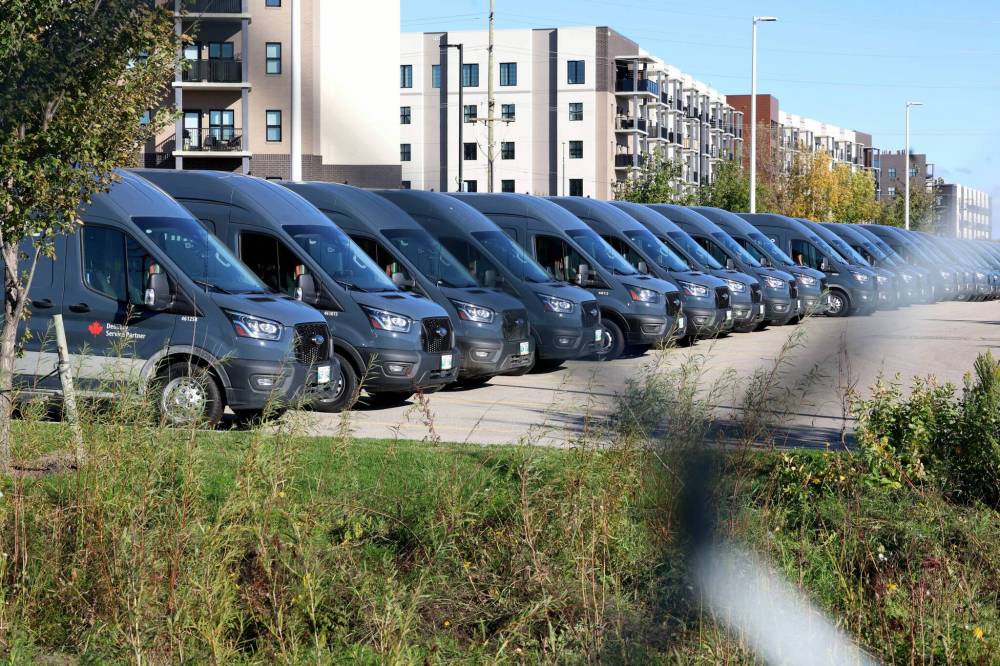
The Amazon fulfillment centre next door to the Rotary Tall Grass Nature Park.

“They’re very tough as far as the climate goes and the vagaries of floods and droughts,” Morgan says.
“(But) most of the grassland species here, with very few exceptions, are not really competitive. They didn’t have to be for thousands of years.”
Within the first few months of damage to a tall grass prairie, Morgan recommends replanting with native seeds and developing a long-term plan for weed control. It can be a challenging but worthwhile endeavour, he says.
“Every little bit that you lose is a significant amount of the remainder,” he says. “We all hear about the South American rainforest and how fast that’s disappearing … in Manitoba we have what I call the rainforest of the prairies, which is the tall grass prairie.”
eva.wasney@winnipegfreepress.com
Eva Wasney covers environmental issues in Manitoba for The Narwhal in partnership with the Winnipeg Free Press. Read more about Eva.
Every piece of reporting Eva produces is reviewed by an editing team before it is posted online or published in print — part of the Free Press‘s tradition, since 1872, of producing reliable independent journalism. Read more about Free Press’s history and mandate, and learn how our newsroom operates.
Our newsroom depends on a growing audience of readers to power our journalism. If you are not a paid reader, please consider becoming a subscriber.
Our newsroom depends on its audience of readers to power our journalism. Thank you for your support.
Eva Wasney covers environmental issues in Manitoba for The Narwhal in partnership with the Winnipeg Free Press. Read more about Eva.
Every piece of reporting Eva produces is reviewed by an editing team before it is posted online or published in print — part of the Free Press‘s tradition, since 1872, of producing reliable independent journalism. Read more about Free Press’s history and mandate, and learn how our newsroom operates.
Our newsroom depends on a growing audience of readers to power our journalism. If you are not a paid reader, please consider becoming a subscriber.
Our newsroom depends on its audience of readers to power our journalism. Thank you for your support.
Related Articles
’Intangible assets’ of big data come with costs thanks to ever-expanding energy, water needs



Advertisement Advertise With Us
Advertisement Advertise With Us