Intel co-founder, philanthropist Gordon Moore dies at 94

Advertisement

Advertise with us

SAN FRANCISCO (AP) — Gordon Moore, the Intel Corp. co-founder who set the breakneck pace of progress in the digital age with a simple 1965 prediction of how quickly engineers would boost the capacity of computer chips, has died. He was 94.

Read this article for free:

or

Already have an account? Log in here »

To continue reading, please subscribe:

Subscribe and receive a limited-edition Free Press branded hat or tote.

Digital Subscription

One year of digital access for only $205*

  • Enjoy unlimited reading on winnipegfreepress.com
  • Read the E-Edition, our digital replica newspaper
  • Access News Break, our award-winning app
  • Play interactive puzzles

*First annual payment billed as $205.00 + GST for one year. This annual subscription will automatically renew at $233.00 + GST every 52 weeks (10% off the regular annual price of $259.35). Offer available to new and qualified returning subscribers only. Cancel any time.

To continue reading, please subscribe:

Add Free Press access to your Brandon Sun subscription for only an additional

$1 for the first 4 weeks*

  • Enjoy unlimited reading on winnipegfreepress.com
  • Read the E-Edition, our digital replica newspaper
  • Access News Break, our award-winning app
  • Play interactive puzzles
Start now

*Your next Brandon Sun subscription payment will increase by $1.00 and you will be charged $17.95 plus GST for four weeks. After four weeks, your payment will increase to $24.95 plus GST every four weeks.

Hey there, time traveller!
This article was published 25/03/2023 (1229 days ago), so information in it may no longer be current.

SAN FRANCISCO (AP) — Gordon Moore, the Intel Corp. co-founder who set the breakneck pace of progress in the digital age with a simple 1965 prediction of how quickly engineers would boost the capacity of computer chips, has died. He was 94.

Moore died Friday at his home in Hawaii, according to Intel and the Gordon and Betty Moore Foundation.

Moore, who held a Ph.D. in chemistry and physics, made his famous observation — now known as “Moore’s Law” — three years before he helped start Intel in 1968. It appeared among a number of articles about the future written for the now-defunct Electronics magazine by experts in various fields.

FILE - Intel Corp. co-founder Gordon Moore smiles next to a wall at Intel headquarters in Santa Clara, Calif., Wednesday, March 9, 2005. Moore, the Intel Corp. co-founder who set the breakneck pace of progress in the digital age with a simple 1965 prediction of how quickly engineers would boost the capacity of computer chips, has died. He was 94. Intel and the Gordon and Betty Moore Foundation say Moore died Friday, March 24, 2023 at his home in Hawaii. (AP Photo/Paul Sakuma, File)

The prediction, which Moore said he plotted out on graph paper based on what had been happening with chips at the time, said the capacity and complexity of integrated circuits would double every year.

Strictly speaking, Moore’s observation referred to the doubling of transistors on a semiconductor. But over the years, it has been applied to hard drives, computer monitors and other electronic devices, holding that roughly every 18 months a new generation of products makes their predecessors obsolete.

It became a standard for the tech industry’s progress and innovation.

“It’s the human spirit. It’s what made Silicon Valley,” Carver Mead, a retired California Institute of Technology computer scientist who coined the term “Moore’s Law” in the early 1970s, said in 2005. “It’s the real thing.”

Moore later became known for his philanthropy when he and his wife established the Gordon and Betty Moore Foundation, which focuses on environmental conservation, science, patient care and projects in the San Francisco Bay area. It has donated more than $5.1 billion to charitable causes since its founding in 2000.

“Those of us who have met and worked with Gordon will forever be inspired by his wisdom, humility and generosity,” foundation president Harvey Fineberg said in a statement.

Intel Chairman Frank Yeary called Moore a brilliant scientist and a leading American entrepreneur.

“It is impossible to imagine the world we live in today, with computing so essential to our lives, without the contributions of Gordon Moore,” he said.

In his book “Moore’s Law: The Life of Gordon Moore, Silicon Valley’s Quiet Revolutionary,” author David Brock called him “the most important thinker and doer in the story of silicon electronics.”

Moore was born in San Francisco on Jan. 3, 1929, and grew up in the tiny nearby coastal town of Pescadero. As a boy, he took a liking to chemistry sets. He attended San Jose State University, then transferred to the University of California, Berkeley, where he graduated with a degree in chemistry.

After getting his Ph.D. from the California Institute of Technology in 1954, he worked briefly as a researcher at Johns Hopkins University.

His entry into microchips began when he went to work for William Shockley, who in 1956 shared the Nobel Prize for physics for his work inventing the transistor. Less than two years later, Moore and seven colleagues left Shockley Semiconductor Laboratory after growing tired of its namesake’s management practices.

The defection by the “traitorous eight,” as the group came to be called, planted the seeds for Silicon Valley’s renegade culture, in which engineers who disagreed with their colleagues didn’t hesitate to become competitors.

The Shockley defectors in 1957 created Fairchild Semiconductor, which became one of the first companies to manufacture the integrated circuit, a refinement of the transistor.

Fairchild supplied the chips that went into the first computers that astronauts used aboard spacecraft.

In 1968, Moore and Robert Noyce, one of the eight engineers who left Shockley, again struck out on their own. With $500,000 of their own money and the backing of venture capitalist Arthur Rock, they founded Intel, a name based on joining the words “integrated” and “electronics.”

Moore became Intel’s chief executive in 1975. His tenure as CEO ended in 1987, thought he remained chairman for another 10 years. He was chairman emeritus from 1997 to 2006.

He received the National Medal of Technology from President George H.W. Bush in 1990 and the Presidential Medal of Freedom from President George W. Bush in 2002.

Despite his wealth and acclaim, Moore remained known for his modesty. In 2005, he referred to Moore’s Law as “a lucky guess that got a lot more publicity than it deserved.”

He is survived by his wife of 50 years, Betty, sons Kenneth and Steven, and four grandchildren.

___

This story corrects the name of California Institute of Technology.
Report Error Submit a Tip

More Stories

Use summer’s hard truth to mend your heart

Maureen Scurfield 4 minute read Monday, Aug. 3, 2026

Dear Miss Lonelyhearts: I refused to go stay at my girlfriend’s cabin in July, because her alcoholic ex-husband still owns the lot beside her. He’s building a big fancy cabin this summer and she’s more than OK with that, even though they’re divorced.

I seriously criticized him — calling him a drunk and a loser — and she actually dumped me before she went off to the lake for all of July!

When she finally came back home I went to see her. She told me I “just wasn’t enough of a lake person” for her.

Then the fight began! I said, “So are you back with him permanently?” and she said, “What do you think? You let me go!”

18-year-old woman shot by Winnipeg police officer

1 minute read Monday, Aug. 3, 2026

A police officer shot and injured an 18-year-old woman early Monday morning while investigating a College Avenue shooting.

A north district unit officer was in the area of Aikins Street and College Avenue at 2:27 a.m. Aug. 3 when he heard multiple gunshots nearby, the Winnipeg Police Service stated in a news release Monday.

The officer went to investigate and "was confronted by a woman and a 16-year-old youth." The officer discharged his gun and the young woman was injured, the police service stated. The woman was taken to hospital in unstable condition and was later upgraded to stable.

Police recovered a gun from the suspects and investigators later linked the 18-year-old woman and 16-year-old male to a shooting that occurred outside of a home in the 300 block of College Avenue. The 16-year-old was arrested.

Sea Bears’ Allen victim of downtown assault

1 minute read Monday, Aug. 3, 2026

Winnipeg Sea Bears' guard Teddy Allen is in hospital after being assaulted in downtown Winnipeg Sunday night.

The club issued a news release Monday stating head coach and general manager Mike Raimbault and chairman David Asper visited Allen at the hospital but didn't release more information about what happened.

"Our focus is on Teddy's health and supporting him and his family," the Sea Bears' news release stated, directing all questions to the Winnipeg Police Service.

Winnipeg Police Service spokesperson Const. Pat Saydak confirmed the police service is investigating but said no further information was available Monday afternoon.

‘Catastrophic’ ending to eventful Manitoba Derby

Mike McIntyre 6 minute read Preview

‘Catastrophic’ ending to eventful Manitoba Derby

Mike McIntyre 6 minute read Yesterday at 5:56 PM CDT

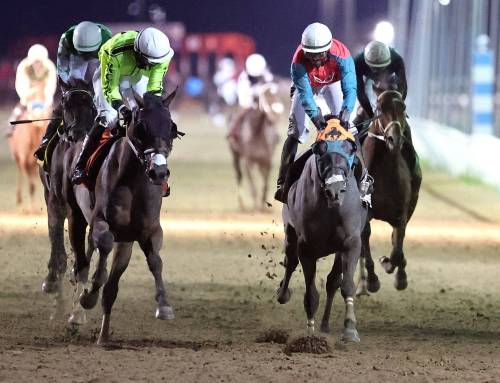
It had everything you could have wanted for the signature racing event of the season, including plenty of drama and excitement in front of a packed crowd at Assiniboia Downs.

Unfortunately, Monday night’s Manitoba Derby also served up another painful reminder of the potential perils of “The Sport of Kings” and what can occasionally happen when these magnificent animals are pushed to their limits.

Forty Twenty, a three-year-old bay colt who was one of the morning line favourites, looked to be in great shape as he approached the final turn and was near the lead in the nine-horse race.

But disaster struck as he approached the final turn and suddenly pulled up as the rest of the packed passed him.

Read
Yesterday at 5:56 PM CDT

Ticked off by Trump’s tantrums

Scott Forbes 5 minute read Preview

Ticked off by Trump’s tantrums

Scott Forbes 5 minute read Yesterday at 2:01 AM CDT

If Mr. Trump isn’t prepared to step up and better manage his ticks, he’s just blowing smoke.

Read
Yesterday at 2:01 AM CDT

Once hailed as sign of strong bond, U.S. consulate in Winnipeg to close

Tyler Searle 6 minute read Preview

Once hailed as sign of strong bond, U.S. consulate in Winnipeg to close

Tyler Searle 6 minute read Yesterday at 6:21 PM CDT

There was much fanfare when the U.S. government re-established a permanent presence in Winnipeg in April 2001 as it unveiled its consulate and hailed it as a major achievement between two friendly nations.

“It is testimony not only to the importance the U.S. government attaches to our bilateral relationship with Canada but also to the increasing prominence of Winnipeg, Manitoba and the western region of the country in bilateral and multilateral affairs,” said U.S. Ambassador to Canada Gordon Giffin at a ceremony with then-premier Gary Doer.

Fast-forward to this week when it was learned the office at Portage and Main is set to close, meaning the U.S. will lose its primary advocate for American business and trade interests in Manitoba.

Dwight MacAulay was chief of protocol for the Manitoba government in 2001, calling it a time of celebration and strength between the countries.

Read
Yesterday at 6:21 PM CDT