No atmosphere found at faraway Earth-sized world, study says

Advertisement

Advertise with us

CAPE CANAVERAL, Fla. (AP) — The Webb Space Telescope has found no evidence of an atmosphere at one of the seven rocky, Earth-sized planets orbiting another star.

Read this article for free:

or

Already have an account? Log in here »

To continue reading, please subscribe:

Subscribe and receive a limited-edition Free Press branded hat or tote.

Digital Subscription

One year of digital access for only $205*

  • Enjoy unlimited reading on winnipegfreepress.com
  • Read the E-Edition, our digital replica newspaper
  • Access News Break, our award-winning app
  • Play interactive puzzles

*First annual payment billed as $205.00 + GST for one year. This annual subscription will automatically renew at $233.00 + GST every 52 weeks (10% off the regular annual price of $259.35). Offer available to new and qualified returning subscribers only. Cancel any time.

To continue reading, please subscribe:

Add Free Press access to your Brandon Sun subscription for only an additional

$1 for the first 4 weeks*

  • Enjoy unlimited reading on winnipegfreepress.com
  • Read the E-Edition, our digital replica newspaper
  • Access News Break, our award-winning app
  • Play interactive puzzles
Start now

*Your next Brandon Sun subscription payment will increase by $1.00 and you will be charged $17.95 plus GST for four weeks. After four weeks, your payment will increase to $24.95 plus GST every four weeks.

Hey there, time traveller!
This article was published 27/03/2023 (1226 days ago), so information in it may no longer be current.

CAPE CANAVERAL, Fla. (AP) — The Webb Space Telescope has found no evidence of an atmosphere at one of the seven rocky, Earth-sized planets orbiting another star.

Scientists said Monday that doesn’t bode well for the rest of the planets in this solar system, some of which are in the sweet spot for harboring water and potentially life.

“This is not necessarily a bust” for the other planets, Massachusetts Institute of Technology astrophysicist Sara Seager, who wasn’t part of the study, said in an email. “But we will have to wait and see.”

This image provided by NASA/JPL-Caltech shows an artist's conception of what the surface of the exoplanet TRAPPIST-1f may look like, based on available data about its diameter, mass and distances from the host star. The Webb Space Telescope has found no evidence of an atmosphere at one of the seven rocky, Earth-size worlds orbiting a nearby star. Scientists say that doesn't bode well for the rest of the planets in this solar system, some of which are in the sweet spot for harboring water and, therefore, life. In a study published Monday, March 27, 2023 a NASA-led team reported little if no atmosphere exists at the innermost planet in the Trappist system, 40 light-years away. (NASA/JPL-Caltech via AP)

The Trappist solar system — a rarity with seven planets about the size of our own — has enticed astronomers ever since they spotted it just 40 light-years away. That’s close by cosmic standards; a light-year is about 5.8 trillion miles. Three of the seven planets are in their star’s habitable zone, making this star system even more alluring.

The NASA-led team reported little if any atmosphere exists at the innermost planet. Results were published Monday in the journal Nature.

The lack of an atmosphere would mean no water and no protection from cosmic rays, said lead researcher Thomas Greene of NASA’s Ames Research Center.

As for the other planets orbiting the small, feeble Trappist star, “I would have been more optimistic about the others” having atmospheres if this one had, Greene said in an email.

If rocky planets orbiting ultracool red dwarf stars like this one “do turn out to be a bust, we will have to wait for Earths around sun-like stars, which could be a long wait,” said MIT’s Seager.

Because the Trappist system’s innermost planet is bombarded by solar radiation — four times as much as Earth gets from our sun — it’s possible that extra energy is why there’s no atmosphere, Greene noted. His team found temperatures there hitting 450 degrees Fahrenheit (230 degrees Celsius) on the side of the planet constantly facing its star.

By using Webb — the largest and most powerful telescope ever sent into space — the U.S. and French scientists were able to measure the change in brightness as the innermost planet moved behind its star and estimate how much infrared light was emitted from the planet.

The change in brightness was miniscule since the Trappist star is more than 1,000 times brighter than this planet, and so Webb’s detection of it “is itself a major milestone,” the European Space Agency said.

More observations are planned not only of this planet, but the others in the Trappist system. Looking at this particular planet in another wavelength could uncover an atmosphere much thinner than our own, although it seems unlikely it could survive, said Taylor Bell of the Bay Area Environmental Research Institute, who was part of the study.

Further research could still uncover an atmosphere of sorts, even if it’s not exactly like what’s seen on Earth, said Michael Gillon of the University of Liege in Belgium who was part of the team that discovered the first three Trappist planets in 2016. He did not take part in the latest study.

“With rocky exoplanets, we are in uncharted territory” since scientists’ understanding is based on the four rocky planets of our solar system, Gillon said in an email.

Launched in late 2021 to an observation post 1 million miles (1.6 million kilometers) away, Webb is considered the successor to the Hubble Space Telescope, orbiting Earth for more than three decades.

In the past, Hubble and the Spitzer Space Telescope scoured the Trappist system for atmospheres, but without definitive results.

“It is just the beginning, and what we can learn with the inner planets is going to be different from what we can learn from the other ones,” MIT’s Julien de Wit, who was not involved in the study, said in an email.

___ The Associated Press Health and Science Department receives support from the Howard Hughes Medical Institute’s Science and Educational Media Group. The AP is solely responsible for all content.

Report Error Submit a Tip

More Stories

Hydro CEO needs to reckon with winds of change

Dan Lett 5 minute read Preview

Hydro CEO needs to reckon with winds of change

Dan Lett 5 minute read Yesterday at 3:28 PM CDT

Methinks Hydro CEO Allan Danroth protests too much.

At a recent hearing in front of the Public Utilities Board, Danroth suggested Hydro’s plan to build a $3-billion natural-gas-powered generating plant near Brandon was being subjected to unfair criticism. The gas turbines are meant to bolster Hydro’s grid in the event that drought lowers output from hydro-generating stations.

After hearing submissions from interveners concerned about the gas-turbine plan, Danroth lashed out at the “constant, uninformed criticism” that has not only shaken trust in Hydro but also triggered threatening responses from the public.

Danroth said Hydro is monitoring “eight credible threats” against employees, five of which targeted the CEO himself. Although Danroth cited some specific incidents — employees being threatened with guns, and one where a homeowner set his dogs on a meter reader — he refused to elaborate on the circumstances.

Read
Yesterday at 3:28 PM CDT

A 29-year-old man is facing an assault with a weapon charge after he allegedly brandished a handgun during a road rage incident on St. James Street early on Monday.

Winnipeg Police Service officers were called to St. James Street and Ness Avenue at about 6 a.m., where they spoke with the victim, a 53-year-old man.

Another man pulled his vehicle next to the 53-year-old and began arguing with him over his driving, but the fight soon escalated into the other man brandishing what appeared to be a black handgun, police said.

The 53-year-old drove off, but the other man followed him, forced him to stop by pulling in front of him, and then got of his vehicle while still brandishing the gun, police said. He got back in his vehicle and peeled off after he saw the victim calling police.

Ticked off by Trump’s tantrums

Scott Forbes 5 minute read Preview

Ticked off by Trump’s tantrums

Scott Forbes 5 minute read 2:01 AM CDT

If Mr. Trump isn’t prepared to step up and better manage his ticks, he’s just blowing smoke.

Read
2:01 AM CDT

240 WestJet flight attendants picket in Winnipeg

Malak Abas 6 minute read Preview

240 WestJet flight attendants picket in Winnipeg

Malak Abas 6 minute read Sunday, Aug. 2, 2026

Winnipeg’s WestJet flight attendants took to the picket line outside of Richardson International Airport on the first day of nationwide strikes Sunday, while inside, frustrated flyers scrambled to re-route cancelled long-weekend flights.

The Canadian Union of Public Employees’ Ontario arm and the airline announced the strike would commence after the strike deadline was passed without a deal early Sunday morning. WestJet attendants have been without a contract since Dec. 31, 2025.

Hours later, the 240 WestJet flight attendants based in Winnipeg had walked off the job and were marching outside of the airport terminal, some carrying signs with slogans including “Tired with WestJet? So are We!” and “Unpaid Work Won’t Fly.”

Key issues causing the stalemate are wages and pay for work on the ground: the union says flight attendants are not being paid for some of that work, while the company says they pay for the work through a “credit hour” system rather than an hourly rate.

Read
Sunday, Aug. 2, 2026

Toronto’s alternative crisis response model deemed a success

Scott Billeck 4 minute read Preview

Toronto’s alternative crisis response model deemed a success

Scott Billeck 4 minute read 2:01 AM CDT

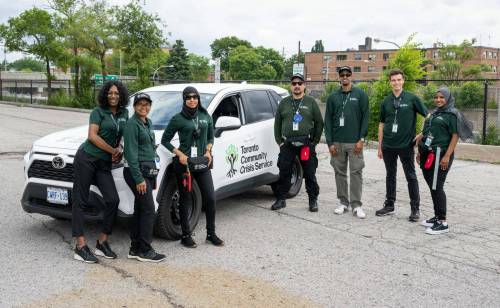
A Toronto emergency response program that helped inspire Winnipeg’s proposed alternative crisis response model has already expanded city-wide, just four years after launching as a pilot project.

The Toronto Community Crisis Service, launched in 2022, has become the city’s fourth emergency service, providing a 24-7, community-based response to people experiencing mental health crises. The service has handled nearly 50,000 calls through 911 and 211, dispatched mobile crisis teams to more than 41,000 incidents, made more than 11,600 referrals to health and social services and resolved the majority of eligible 911 calls without police involvement.

Winnipeg Mayor Scott Gillingham last week proposed creating a similar “fourth crisis response pathway” that would allow 911 calls that aren’t violent or criminal in nature to be transferred to community-based crisis teams.

Under the proposal, which has support from both the Winnipeg Police Service and the Winnipeg Fire Paramedic Service, a centralized crisis dispatch and co-ordination hub would receive triaged calls and match them with citywide response teams, staffed in part through existing community organizations, including the Downtown Community Safety Partnership and The Link’s mobile crisis teams. The goal is to divert appropriate calls away from the WPS and WFPS.

Read
2:01 AM CDT

Puzzles Palace

1 minute read Monday, Jul. 27, 2026

To solve our puzzles, please subscribe with this special offer: |