Horses came to American West by early 1600s, study finds
Advertisement
Read this article for free:
or
Already have an account? Log in here »
To continue reading, please subscribe:

Digital Subscription
One year of digital access for only $205*
- Enjoy unlimited reading on winnipegfreepress.com
- Read the E-Edition, our digital replica newspaper
- Access News Break, our award-winning app
- Play interactive puzzles
*First annual payment billed as $205.00 + GST for one year. This annual subscription will automatically renew at $233.00 + GST every 52 weeks (10% off the regular annual price of $259.35). Offer available to new and qualified returning subscribers only. Cancel any time.
To continue reading, please subscribe:
Add Free Press access to your Brandon Sun subscription for only an additional
$1 for the first 4 weeks*
- Enjoy unlimited reading on winnipegfreepress.com
- Read the E-Edition, our digital replica newspaper
- Access News Break, our award-winning app
- Play interactive puzzles
*Your next Brandon Sun subscription payment will increase by $1.00 and you will be charged $17.95 plus GST for four weeks. After four weeks, your payment will increase to $24.95 plus GST every four weeks.
Read unlimited articles for free today:
or
Already have an account? Log in here »
Hey there, time traveller!
This article was published 30/03/2023 (1276 days ago), so information in it may no longer be current.
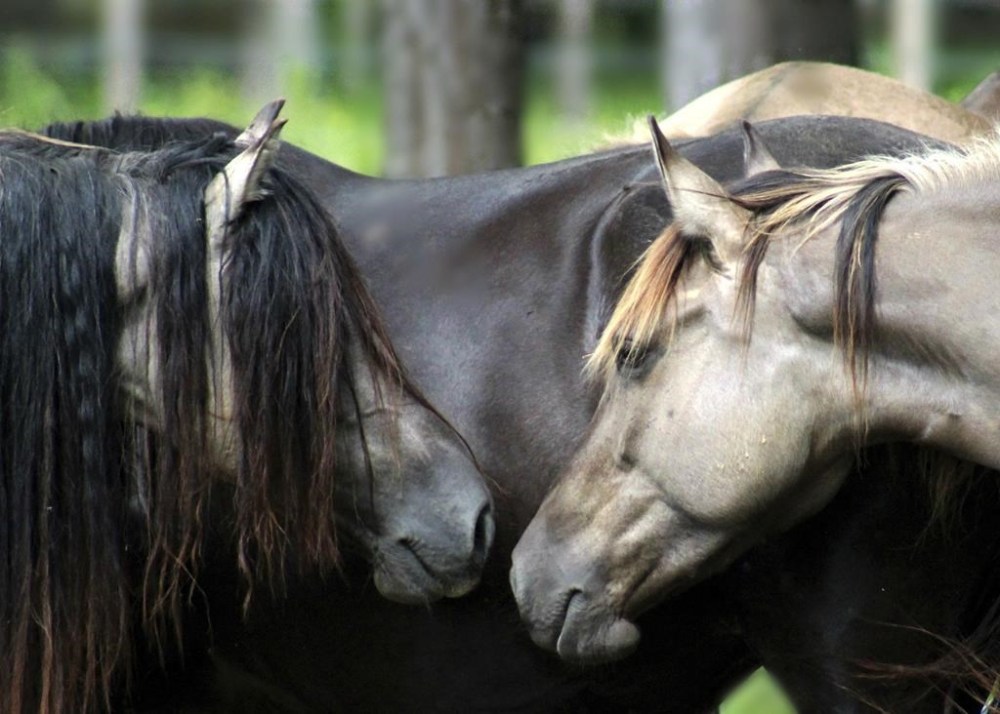
WASHINGTON (AP) — The horse is symbolic of the American West, but when and how domesticated horses first reached the region has long been a matter of historical debate.
A new analysis of horse bones gathered from museums across the Great Plains and northern Rockies has revealed that horses were present in the grasslands by the early 1600s, earlier than many written histories suggest.
The timing is significant because it matches up with the oral histories of multiple Indigenous groups that recount their peoples had horses of Spanish descent before Europeans physically arrived in their homelands, perhaps through trading networks.
The study, published Thursday in the journal Science, involved more than 80 co-authors — including archaeologists and geneticists, as well as historians and scientists from the Lakota, Comanche and Pawnee nations.
Prior genetic research has shown that the ancestors of horses first evolved in North America millions of years ago, before making their way to the central plains of Europe and Asia, where they were domesticated. But those early horse ancestors disappeared from the American archaeological record around 6,000 years ago.
In the new study, scientists examined about two dozen sets of horse remains from sites ranging from New Mexico to Idaho to Kansas to establish that horses were ridden and raised by Indigenous groups by the early 1600s.
“Almost every aspect of the human-horse relationship is manifest in the skeleton in some way,” said University of Colorado at Boulder archaeologist William Taylor, a study author.
The study found that the horses were present in the American West and Southwest several decades before the Pueblo Revolt of 1680 – when allied Indigenous groups pushed Spanish colonizers out of New Mexico.
The retreating armies left behind thousands of horses and livestock, and many historical accounts had inaccurately pinpointed this moment as the entrance of the horse into the cultures of Indigenous groups in North America.
“Now we can wave goodbye to the Pueblo Revolt as an explanation for the spread of the horse into the American West,” said Oxford University archaeologist Peter Mitchell, who was not involved in the study.
But Indigenous groups have long disputed this chronology, as the oral histories of many groups have told of them encountering horses before they met Europeans.
Rather than receiving horses directly from retreating Spanish armies, multiple oral histories suggest that Indigenous groups first encountered horses that had run away from Spanish camps, or been traded through tribal networks, said Jimmy Arterberry, a study author and Comanche tribal member and historian in Medicine Park, Oklahoma.
“We have always known and said that we came across horses before we came across the Spanish,” he said.
Yvette Running Horse Collin, a study author who is an evolutionary geneticist at the Center for Anthropobiology and Genomics of Toulouse in France and a member of the Oglala Lakota Nation, said the findings show that the oral traditions of Indigenous peoples, which have often been neglected by outside historians, have unique value to understanding the past.
“Our cultures have been so misrepresented for so long,” she said. “Too often history has been told around us, without us.”
The ambitious research collaboration, which was initiated by Lakota scholars, is one step in repairing a longstanding mistrust between Indigenous groups and archaeologists, who in the early and mid- 20th century raided tombs and ceremonial sites for cultural artifacts without consent.
The Native American Graves Protection and Repatriation Act of 1990 – which established a process for museums and other institutions that receive federal funds to collaborate with tribes in returning stolen sacred objects – was a key early step in establishing some measure of trust and communication, said Carlton Shield Chief Gover, a study author who is a citizen of the Pawnee Nation and an Indiana University archaeologist.
“Hopefully seeing new research like this will push more Indigenous people to develop their own archaeological and anthropological expertise,” he said.
The study also showed that, over time, the genetics of horses in North America switched from being primarily of Spanish origin to a mixture of British and Spanish, reflecting the ascent of different empires.

“It means that the shift from a Spanish to a British dominant colonial power can be seen even in the horse genome itself,” said Ludovic Orlando, a study author who is an evolutionary geneticist at the Center for Anthropobiology and Genomics of Toulouse.
___
Follow Christina Larson on Twitter at: @larsonchristina
___
The Associated Press Health and Science Department receives support from the Howard Hughes Medical Institute’s Science and Educational Media Group. The AP is solely responsible for all content.