

Ukraine, Finland looking for Canadian help to rebuild economy amid war: ambassadors
Advertisement
Read this article for free:
or
Already have an account? Log in here »
To continue reading, please subscribe:

Digital Subscription
One year of digital access for only $205*
- Enjoy unlimited reading on winnipegfreepress.com
- Read the E-Edition, our digital replica newspaper
- Access News Break, our award-winning app
- Play interactive puzzles
*First annual payment billed as $205.00 + GST for one year. This annual subscription will automatically renew at $233.00 + GST every 52 weeks (10% off the regular annual price of $259.35). Offer available to new and qualified returning subscribers only. Cancel any time.
To continue reading, please subscribe:
Add Free Press access to your Brandon Sun subscription for only an additional
$1 for the first 4 weeks*
- Enjoy unlimited reading on winnipegfreepress.com
- Read the E-Edition, our digital replica newspaper
- Access News Break, our award-winning app
- Play interactive puzzles
*Your next Brandon Sun subscription payment will increase by $1.00 and you will be charged $17.95 plus GST for four weeks. After four weeks, your payment will increase to $24.95 plus GST every four weeks.
Read unlimited articles for free today:
or
Already have an account? Log in here »
Hey there, time traveller!
This article was published 30/03/2023 (1270 days ago), so information in it may no longer be current.
OTTAWA – Ukraine’s ambassador to Canada is urging Canadian businesses to see her country’s eventual recovery as an economic bonanza worth investing in.
“We are fighting, we will win the war with your support and then we’ll have a big path together to rebuild Ukraine,” Yuliya Kovaliv told a Thursday lunch event hosted by corporate groups in Ottawa.
“Many of you who are from the private sector, you need to start to think about your strategy in participating in the rebuilding of Ukraine,” she said.
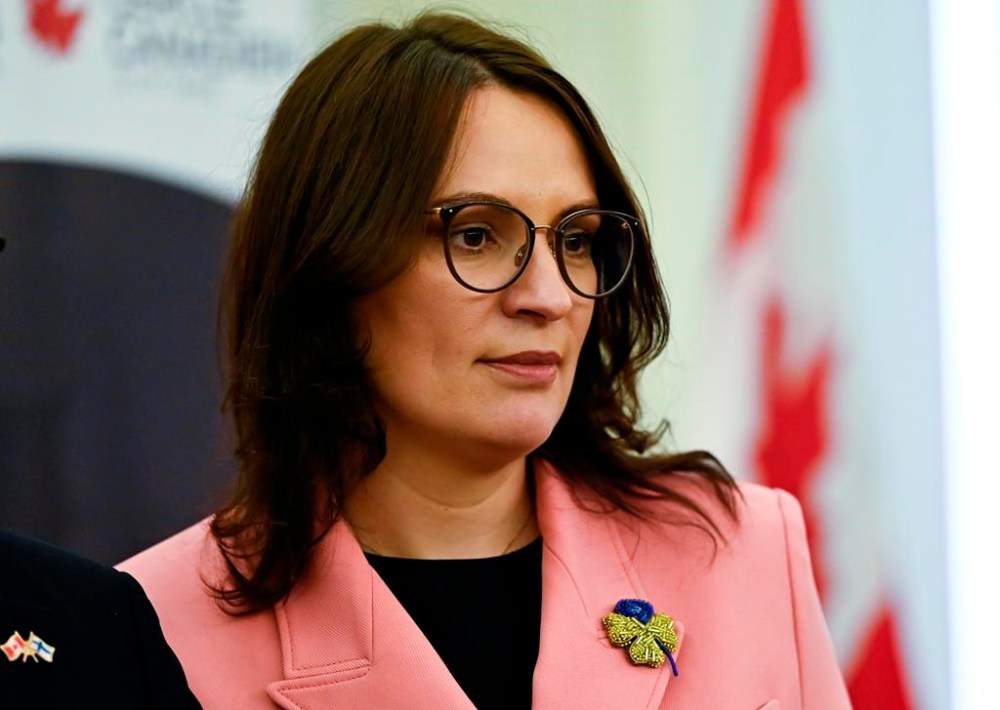
Kovaliv told the Canadian Club of Ottawa that Ukraine will need a Marshall Plan-style funding package to get back on its feet when the war ends, and Canadian businesses should strategize about what role they can play.
Finland’s ambassador to Canada, Roy Eriksson, also told the lunch that Canadian firms can help replace his country’s trade with neighbouring Russia, saying both are familiar with designing products that work in cold climates.
“Because all of our companies have withdrawn from the (Russian) market, we are looking for new possibilities,” he said.
“The relationship between Finland and Canada has never been as close as it is now.”
The European Union’s ambassador in Ottawa, Melita Gabric, similarly said Canada and the bloc had grown closer as a result of the Russian invasion.
“We became aware of how important it is not to be overly dependent on a not-like-minded country,” she said.
“Canada is probably the most like-minded country it the world, when it comes to how we see the world, how we see human rights, how we see democracy, the rule of law and so on.”
The trio noted Finland’s imminent ascension to the NATO security alliance, and work on long-term deals to have Canada supply critical minerals and energy.
But none of the ambassadors foresee Canada as a major supplier of fossil fuels, with Kovaliv and Eriksson instead discussing a shift toward renewable energy, or buying oil and gas from other European countries.
Meanwhile, Natural Resources Minister Jonathan Wilkinson announced Thursday that the International Energy Agency had chosen him to chair a ministerial task force on fuels, market monitoring and supply security.
The task force is trying to shore up energy in European countries that are weaning themselves off of a reliance on Russian fuels.
Wilkinson also told reporters in a call from Berlin that all seven electrical transformers Canada donated to help repair Ukraine’s power grid after Russian attacks have been delivered to the country.
Eriksson added that Finland, Canada and allies need to do a better job at countering Russian disinformation in countries outside Europe. He gave the example of disputes over a deal to export grain from Ukraine to poorer countries, and Moscow’s narrative that the West is blocking those exports.
“We are not as good at trying to provide correct information. That’s something where we are losing out,” he said.
This report by The Canadian Press was first published March 30, 2023.
— With files from Mia Rabson.