Twitter begins removing blue checks from users who don’t pay

Advertisement

Advertise with us

This time it's for real.

Read this article for free:

or

Already have an account? Log in here »

To continue reading, please subscribe:

Subscribe and receive a limited-edition Free Press branded hat or tote.

Digital Subscription

One year of digital access for only $205*

  • Enjoy unlimited reading on winnipegfreepress.com
  • Read the E-Edition, our digital replica newspaper
  • Access News Break, our award-winning app
  • Play interactive puzzles

*First annual payment billed as $205.00 + GST for one year. This annual subscription will automatically renew at $233.00 + GST every 52 weeks (10% off the regular annual price of $259.35). Offer available to new and qualified returning subscribers only. Cancel any time.

To continue reading, please subscribe:

Add Free Press access to your Brandon Sun subscription for only an additional

$1 for the first 4 weeks*

  • Enjoy unlimited reading on winnipegfreepress.com
  • Read the E-Edition, our digital replica newspaper
  • Access News Break, our award-winning app
  • Play interactive puzzles
Start now

*Your next Brandon Sun subscription payment will increase by $1.00 and you will be charged $17.95 plus GST for four weeks. After four weeks, your payment will increase to $24.95 plus GST every four weeks.

Hey there, time traveller!
This article was published 20/04/2023 (1200 days ago), so information in it may no longer be current.

This time it’s for real.

Many of Twitter’s high-profile users are losing the blue check marks that helped verify their identity and distinguish them from impostors on the Elon Musk-owned social media platform.

After several false starts, Twitter began making good on its promise Thursday to remove the blue checks from accounts that don’t pay a monthly fee to keep them. Twitter had about 300,000 verified users under the original blue-check system — many of them journalists, athletes and public figures. The checks began disappearing from these users’ profiles late morning Pacific Time.
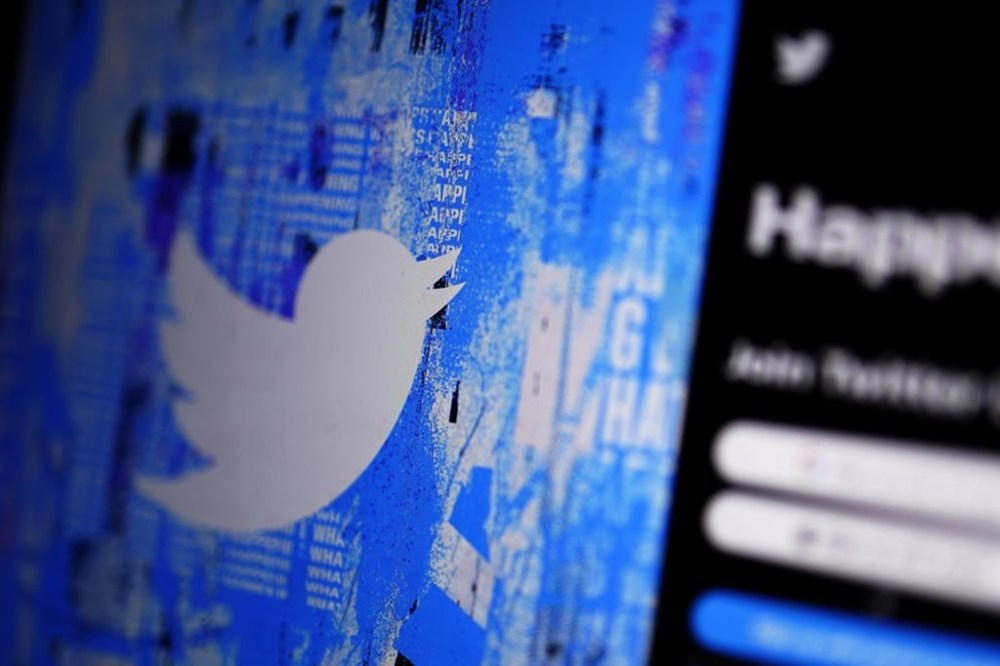
FILE - The Twitter splash page is seen on a digital device, on April 25, 2022, in San Diego. After several false starts, Twitter began making good on its promise Thursday, April 20, 2023, to remove the blue checks from accounts that don't pay a monthly fee to keep them. Twitter had about 300,000 verified users under the original blue-check system — many of them journalists, athletes and public figures. (AP Photo/Gregory Bull, File)

The costs of keeping the marks range from $8 a month for individual web users to a starting price of $1,000 monthly to verify an organization, plus $50 monthly for each affiliate or employee account. Twitter does not verify the individual accounts to ensure they are who they say they are, as was the case with the previous blue check doled out during the platform’s pre-Musk administration.

Celebrity users, from basketball star LeBron James to Star Trek’s William Shatner, have balked at joining. Seinfeld actor Jason Alexander pledged to leave the platform if Musk takes his blue check away.

After buying Twitter for $44 billion in October, Musk has been trying to boost the struggling platform’s revenue by pushing more people to pay for a premium subscription. But his move also reflects his assertion that the blue verification marks have become an undeserved or “corrupt” status symbol for elite personalities, news reporters and others granted verification for free by Twitter’s previous leadership.

Twitter began tagging profiles with a blue check mark starting about 14 years ago. Along with shielding celebrities from impersonators, one of the main reasons was to provide an extra tool to curb misinformation coming from accounts impersonating people. Most “legacy blue checks,” including the accounts of politicians, activists and people who suddenly find themselves in the news, as well as little-known journalists at small publications around the globe, are not household names.

One of Musk’s first product moves after taking over Twitter was to launch a service granting blue checks to anyone willing to pay $8 a month. But it was quickly inundated by impostor accounts, including those impersonating Nintendo, pharmaceutical company Eli Lilly and Musk’s businesses Tesla and SpaceX, so Twitter had to temporarily suspend the service days after its launch.

The relaunched service costs $8 a month for web users and $11 a month for users of its iPhone or Android apps. Subscribers are supposed to see fewer ads, be able to post longer videos and have their tweets featured more prominently.

Report Error Submit a Tip

More Stories

On the night table: Colson Whitehead

1 minute read Preview

On the night table: Colson Whitehead

1 minute read 2:02 AM CDT

Colson Whitehead

Author, Cool Machine

I’ve been reading Caroline Fraser. She has a book called Murderland about serial killers that came out last year. Her previous book, Prairie Fires, was a biography of Laura Ingalls Wilder. She’s a new author for me, and I’m going through that biography now. I never read Wilder’s books, but I liked the TV show when I was a kid; it’s one of those books that’s about a person’s life, but also pulls back to get the larger cultural panorama of America, talking about frontier life and and prairie life — it’s really interesting.

Colson Whitehead will launch Cool Machine, the third book in his Harlem trilogy, on Tuesday at 7 p.m. in the Muriel Richardson Auditorium at WAG-Qaumajuq (300 Memorial Blvd.) in an event presented by McNally Robinson Booksellers.

Read
2:02 AM CDT

Brighter days ahead after Camp Arnes

Joshua Frey-Sam 5 minute read Preview

Brighter days ahead after Camp Arnes

Joshua Frey-Sam 5 minute read 6:00 AM CDT

Keishna Abenstein remembers what it was like to be a teenager who was stuck in her shell.

She also recalls how much going to summer camp at Camp Arnes helped her spread her wings.

Abenstein has watched her middle child, Teagen, go through a similar roller-coaster as a teenager. Teagen, described as a social butterfly in his childhood, has become a bit more reserved in his adolescence after many of his closest elementary school friends went to a different middle school, forcing him to make new friends as he began the next chapter of his education.

Abenstein saw an opportunity for a similar experience at Camp Arnes that could impact her son the same way it did for her.

Read
6:00 AM CDT

‘Good deal of synergy’ brewing in South Osborne

Gabrielle Piché 5 minute read Preview

‘Good deal of synergy’ brewing in South Osborne

Gabrielle Piché 5 minute read Yesterday at 6:56 PM CDT

Pub crawls could become the next South Osborne draw.

At least, that’s the hope of entrepreneurs in the area as three breweries build out locations in the Winnipeg neighbourhood.

Nonsuch Brewing Co. and Good Neighbour Brewing Co. have opened storefronts along the strip in the past three months. Dastardly Villain is creating a taproom and nanobrewery.

“I’m really excited to have these pubs and taprooms,” said Ben Shantz, board chair of the South Osborne Business Improvement Zone.

Read
Yesterday at 6:56 PM CDT

Puzzles Palace

1 minute read Monday, Jul. 27, 2026

To solve our puzzles, please subscribe with this special offer: |

As wildfire season rages, new book explores the frontlines of battling Canadian blazes

Reviewed by GC Cabana-Coldwell 4 minute read Preview

As wildfire season rages, new book explores the frontlines of battling Canadian blazes

Reviewed by GC Cabana-Coldwell 4 minute read 2:02 AM CDT

Mother Nature’s talking but we haven’t been listening, according to Jesse Winter, author of Wild Fire: Dispatches from a Country Ablaze, a book, released earlier this summer detailing Canada’s wildfire woes.

Currently, almost 1,000 wildfires across Northwestern Ontario, British Columbia, the Prairies, Northwest Territories and eastern provinces are burning in Canada. Forest fires also continue to wreak havoc in France, Spain and other European countries, and in the U.S. states of Oregon, California, Florida and Texas. While 2023 still rates as the world’s worst wildfire season, 2026 is hot on its heels.

Winter, a Vancouver-based, award-winning climate disaster photojournalist, spent more than two years on Wild Fire, his first book. In-depth research included working with firefighting crews and environmentalists as well as talking to researchers, politicians and evacuees. He says we need to rethink our views on wildfires or be prepared to watch more land go up in flames.

Canada, Winter writes, is “a country almost perfectly designed to burn.” At least 70 per cent of boreal forests, which cover one-third of the country, are stuffed with highly flammable spruce, fir, pine and tamarack trees as well as aspen, poplar and birch. With a wealth of available fuel, it’s no surprise, he writes, that an area twice the size of Vancouver Island burns every summer in Canada.

Read
2:02 AM CDT

We’re giving, they’re taking — where’s the win?

Editorial 4 minute read Preview

We’re giving, they’re taking — where’s the win?

Editorial 4 minute read Yesterday at 2:00 AM CDT

In the give-and-take of negotiations so far, Canada seems to be doing all the giving, while the United States does all the taking.

In the last few days, the Canadian government said it was backing away from a five per cent levy to be paid by American streaming services such as Amazon and Netflix after, earlier, dropping the three per cent digital services tax. Then, there was what now appears to be succumbing to American President Donald Trump over the Gordie Howe International Bridge, where Canada agreed to let the U.S. share the net revenues from the bridge, even though Canada paid for the entire construction.

Now, Prime Minister Mark Carney is signalling he won’t use energy exports to the United States as a bargaining chip in the current talks on the Canada-U.S.-Mexico free trade agreement, saying he didn’t “see the value” of using Canada’s energy exports to the U.S. as a trade bargaining chip.

“Canadians are reliable,” Carney said Wednesday in Red Deer, Alta. “One of the biggest commodities, arguably the best, is trust. People trust us, and so, when you’re a supplier of a key commodity, key service, you’ve got to think really hard about not supplying.”

Read
Yesterday at 2:00 AM CDT