More sanctions for deadly fentanyl if bill becomes law
Advertisement
Read this article for free:
or
Already have an account? Log in here »
To continue reading, please subscribe:

Digital Subscription
One year of digital access for only $205*
- Enjoy unlimited reading on winnipegfreepress.com
- Read the E-Edition, our digital replica newspaper
- Access News Break, our award-winning app
- Play interactive puzzles
*First annual payment billed as $205.00 + GST for one year. This annual subscription will automatically renew at $233.00 + GST every 52 weeks (10% off the regular annual price of $259.35). Offer available to new and qualified returning subscribers only. Cancel any time.
To continue reading, please subscribe:
Add Free Press access to your Brandon Sun subscription for only an additional
$1 for the first 4 weeks*
- Enjoy unlimited reading on winnipegfreepress.com
- Read the E-Edition, our digital replica newspaper
- Access News Break, our award-winning app
- Play interactive puzzles
*Your next Brandon Sun subscription payment will increase by $1.00 and you will be charged $17.95 plus GST for four weeks. After four weeks, your payment will increase to $24.95 plus GST every four weeks.
Read unlimited articles for free today:
or
Already have an account? Log in here »
Hey there, time traveller!
This article was published 25/04/2023 (1262 days ago), so information in it may no longer be current.
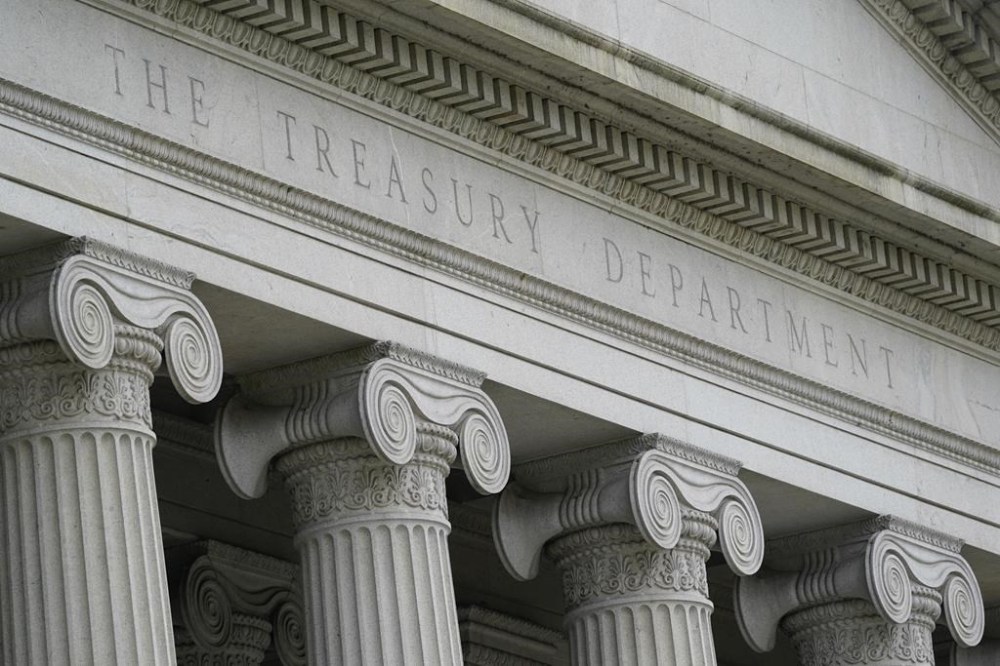
WASHINGTON (AP) — Over the past year, the U.S. Treasury Department has used its sanctions powers to impose wide-ranging financial penalties on Russia in response to its invasion of Ukraine — turning Russia into the most sanctioned country in the world.
Now, the federal agency is facing increasing pressure, including from legislation introduced Tuesday in the Senate, to use those tools with similar vigor against the people, financial institutions and companies that have participated in the explosion of fentanyl use and distribution in the U.S.
“As a matter of policy we are dealing with drug cartels who have tremendous economic gain to be made,” said Paul DelPonte, executive director of the nonprofit National Crime Prevention Council, which is pushing for tougher action against those behind the scourge of drug overdose and death. “There are a lot of hands involved in this crime.”
Fentanyl is the deadliest drug in the U.S. today. The Centers for Disease Control and Prevention estimates that 71,000 people died from overdosing on synthetic opioids such as fentanyl in 2021, up from almost 58,000 in 2020.
Mexico and China are the primary source countries for fentanyl and fentanyl-related substances trafficked directly into the U.S., according to the Drug Enforcement Administration, which is tasked with combating illicit drug trafficking. Nearly all the precursor chemicals that are needed to make fentanyl are coming from China.
Growing tensions between the U.S. and China on multiple fronts have made efforts to stop the importation of illicit fentanyl more difficult, a Congressional Research Service report states. China officially suspended its counternarcotic and law enforcement cooperation with the U.S. last August.
Treasury hasn’t been idle. The department has imposed sanctions on fentanyl producers and traffickers in recent years — and as recently as this month issued a set of sanctions on a group of Mexican and Chinese fentanyl distributors. But with the number of overdose deaths exploding in recent years, there are calls for more action, including a national emergency declaration similar to the one at the start of the COVID-19 pandemic.
Such a declaration could lead to tougher sanctions, DelPonte said.
“It would empower the CDC to collaborate with people at Treasury, for instance, to save some very young innocent people.”
Lawmakers are making a bipartisan effort to get that declaration, with legislation sponsored by the leaders and ranking members of the Senate Banking and Armed Services Committees that was introduced Tuesday. That bill would compel the Biden administration to prioritize the fight against fentanyl trafficking and prod Treasury to use its sanctions authority to quell the proliferation of the drug in the U.S.
Declaring international fentanyl trafficking a national emergency, the legislation would require Treasury to sanction drug cartels It also would impose reporting requirements and enable the president to confiscate sanctioned property of fentanyl traffickers to use for law enforcement efforts.
“This legislation takes decisive action to cut off the deadly flow of fentanyl at the source,” said Sen Tim Scott of South Carolina, the ranking Republican on the Banking Committee and a potential GOP presidential candidate.
Committee Chairman Sherrod Brown, D-Ohio, said he hears “over and over that we need new, more powerful tools to prevent the flow of fentanyl into our neighborhoods.” Fentanyl was involved in 81% of 2020 overdose deaths in Ohio, according to the Ohio Department of Health.
“This bipartisan bill will add effective new sanctions to target the illicit fentanyl supply chain, from China through Mexico, to help stop increasingly dangerous forms of this drug before they ever reach our communities,” Brown said.
In his February State of the Union address, President Joe Biden outlined how his administration would crack down on trafficking. Since then, U.S. Customs and Border Protection has conducted historically large seizure operations, and Treasury and the Justice Department have sanctioned and charged Mexican Sinaloa cartel members that use Chinese precursor chemicals to produce fentanyl.
But critics say that’s not enough.
“When it comes to drug-trafficking, we haven’t enforced sanctions against banks seriously,” said David Asher, a senior fellow at the conservative Hudson Institute specializing in U.S. foreign policy and law enforcement.
”If we can sanction Russian oligarchs and banks, why can’t we do the same thing to Mexican drug lords and their bankers and bank accounts and banks — especially when we know who they are.”
Treasury had no comment on the proposed new legislation.

Vanda Felbab-Brown, a senior fellow at the Brookings Institution, called for wider sanctions on Chinese firms.
“I don’t think sanctions will change the behavior of the Chinese government, to willingly enforce drug laws within China,” she said, “But I do believe there is potential that sanctions will impact Chinese industry actors if sanctions are done in fairly large numbers.”
“Sanctions are a tool that would most motivate Chinese industry actors to start observing best practices, to ensure that they’re not selling to cartels,” she said.
Jessie Abell, a vice president at Sayari — a commercial platform that compiles publicly available data on firms, said Chinese chemical and trading companies that supply Mexican criminal organizations with fentanyl precursors often operate within extended networks of related companies, making it possible to track the criminal organizations.
Publicly available data “can uncover these illicit networks and illuminate how they adapt,” she said.