

Foundation prints 3D prosthetics, gives them free in Uruguay
Advertisement
Read this article for free:
or
Already have an account? Log in here »
To continue reading, please subscribe:

Digital Subscription
One year of digital access for only $205*
- Enjoy unlimited reading on winnipegfreepress.com
- Read the E-Edition, our digital replica newspaper
- Access News Break, our award-winning app
- Play interactive puzzles
*First annual payment billed as $205.00 + GST for one year. This annual subscription will automatically renew at $233.00 + GST every 52 weeks (10% off the regular annual price of $259.35). Offer available to new and qualified returning subscribers only. Cancel any time.
To continue reading, please subscribe:
Add Free Press access to your Brandon Sun subscription for only an additional
$1 for the first 4 weeks*
- Enjoy unlimited reading on winnipegfreepress.com
- Read the E-Edition, our digital replica newspaper
- Access News Break, our award-winning app
- Play interactive puzzles
*Your next Brandon Sun subscription payment will increase by $1.00 and you will be charged $17.95 plus GST for four weeks. After four weeks, your payment will increase to $24.95 plus GST every four weeks.
Read unlimited articles for free today:
or
Already have an account? Log in here »
Hey there, time traveller!
This article was published 27/04/2023 (1238 days ago), so information in it may no longer be current.
MONTEVIDEO, Uruguay (AP) — The first thing 11-year-old Mia Rodríguez says she did with her new prosthetic hands was draw a picture of a kitten.
The Uruguayan girl, whose fingers never fully developed, put on the prosthetic hands and demonstrated the grasping movement she can now make.
“Now I can hold the pencil with one hand. Before, I had to do it with both hands because my fist wouldn’t close,” she said, while her mother Ana Van López watched excitedly.
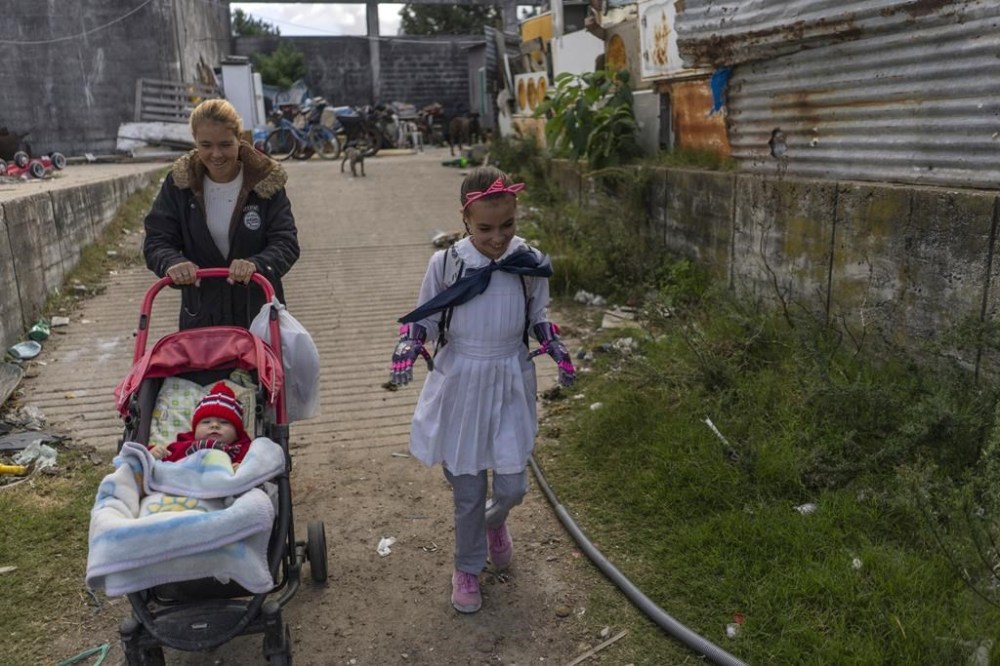
Rodríguez received the protheses from the Uruguayan Manos de Héroes foundation, which designs and prints hands and arms with 3D technology for children and adults across the South American country.
Since 2020, the foundation has provided more than 100 free prostheses, most of them for families in vulnerable situations.
Van López, 28, lives with her partner and their four children in an abandoned factory in Salinas, about 40 kilometers (25 miles) from Montevideo, and her income comes from informal work, such as selling firewood or pineapples. The family has a monthly income of about 8,000 pesos, or US$200.
“I am very grateful, I thought my daughter was the only one with this problem. She had never come across someone like her in the hospital or on the street. It’s very difficult for us,” said Van López, who is trying to obtain a state disability benefit for the girl equivalent to a little more than 15,000 pesos a month, or $380. In addition, they receive a similar amount of state support, she said.
Almost 16% of the Uruguayan population registers some level of disability, the majority mild, according to a 2011 census by the National Statistics Institute.
Rodríguez’s prosthetic hands move with threads that are taut from the motion of her wrists. They are violet with pink, colors she says she chose because they go well together, and are decorated with unicorn decals. Other children prefer the colors of their favorite soccer club or superhero.
The prostheses can be mechanical or electronic. They are placed on the hands, forearm, elbow or shoulder, according to the needs of each person.
Designing a hand, printing it, and putting it together takes a couple of weeks, said Andrea Cukerman, an electrical engineer and founder and of Manos de Héroes, or Hands of Heroes.
The prostheses are free and the foundation is financed with contributions from private companies and donations. In Europe, a prosthetic hand with much more advanced technology can cost as much as $100,000, the foundation said.
On one of the walls of the foundation’s office there are photos of children and adults who have received prostheses. The images show children striking poses with hands and arms in vibrant colors – orange, green – or like those of Spiderman.
“The idea is that they don’t feel alone,” Cukerman said.
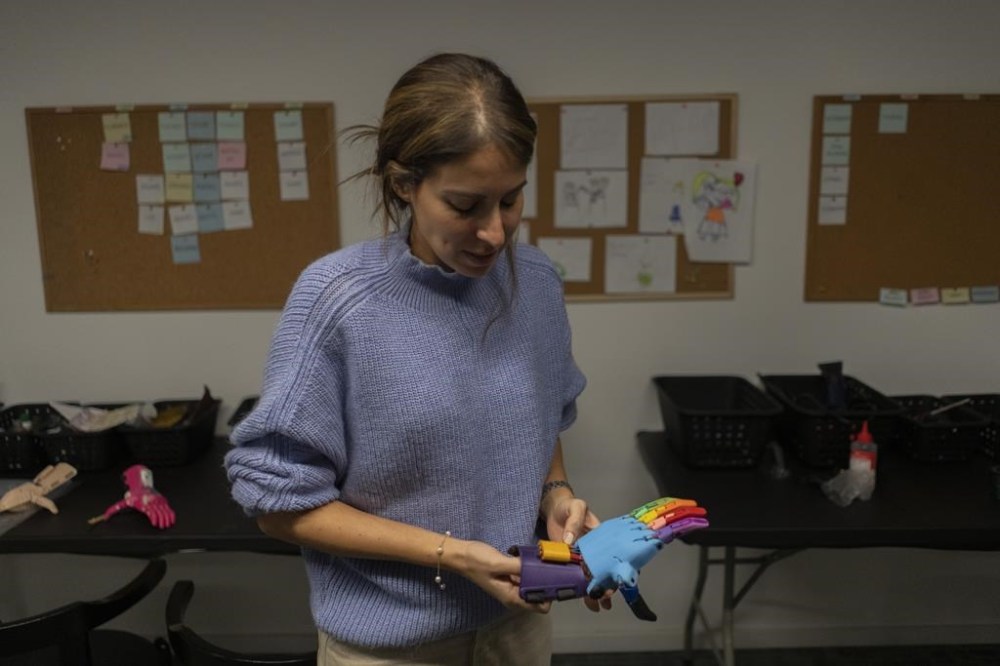
The photos of adults are more subdued; most of their prostheses imitate the color and details of the skin.
Cukerman shows the prostheses she is currently printing: the arm of an adult who had an accident.
The day of the test, Rodríguez kept looking at everything in front of her, Cukerman recalled.
“When we showed her her hands, her face lit up, her big eyes, she hardly spoke,” she said.
They explained how the prosthetic hands worked, what movement she had to make to open and close her fist, and warned that some adjustments might have to be made.
Rodríguez put her hands on and began to try movements.
“It took a few seconds, they were perfect,” said her mother.