Key radar antenna stuck on Europe’s Jupiter-bound spacecraft
Advertisement
Read this article for free:
or
Already have an account? Log in here »
To continue reading, please subscribe:

Digital Subscription
One year of digital access for only $205*
- Enjoy unlimited reading on winnipegfreepress.com
- Read the E-Edition, our digital replica newspaper
- Access News Break, our award-winning app
- Play interactive puzzles
*First annual payment billed as $205.00 + GST for one year. This annual subscription will automatically renew at $233.00 + GST every 52 weeks (10% off the regular annual price of $259.35). Offer available to new and qualified returning subscribers only. Cancel any time.
To continue reading, please subscribe:
Add Free Press access to your Brandon Sun subscription for only an additional
$1 for the first 4 weeks*
- Enjoy unlimited reading on winnipegfreepress.com
- Read the E-Edition, our digital replica newspaper
- Access News Break, our award-winning app
- Play interactive puzzles
*Your next Brandon Sun subscription payment will increase by $1.00 and you will be charged $17.95 plus GST for four weeks. After four weeks, your payment will increase to $24.95 plus GST every four weeks.
Read unlimited articles for free today:
or
Already have an account? Log in here »
Hey there, time traveller!
This article was published 28/04/2023 (1222 days ago), so information in it may no longer be current.
CAPE CANAVERAL, Fla. (AP) — A critical antenna is jammed on a Jupiter-bound spacecraft launched two weeks ago, the European Space Agency reported Friday.
The 52-foot (16-meter) radar antenna on Juice unfolded only one-third of the way following liftoff, according to the space agency.
Engineers suspect a tiny pin may be protruding. Flight controllers in Germany plan to fire the spacecraft’s engine in hopes of shaking the pin loose. If that doesn’t work, they said they have plenty of time to solve the problem.
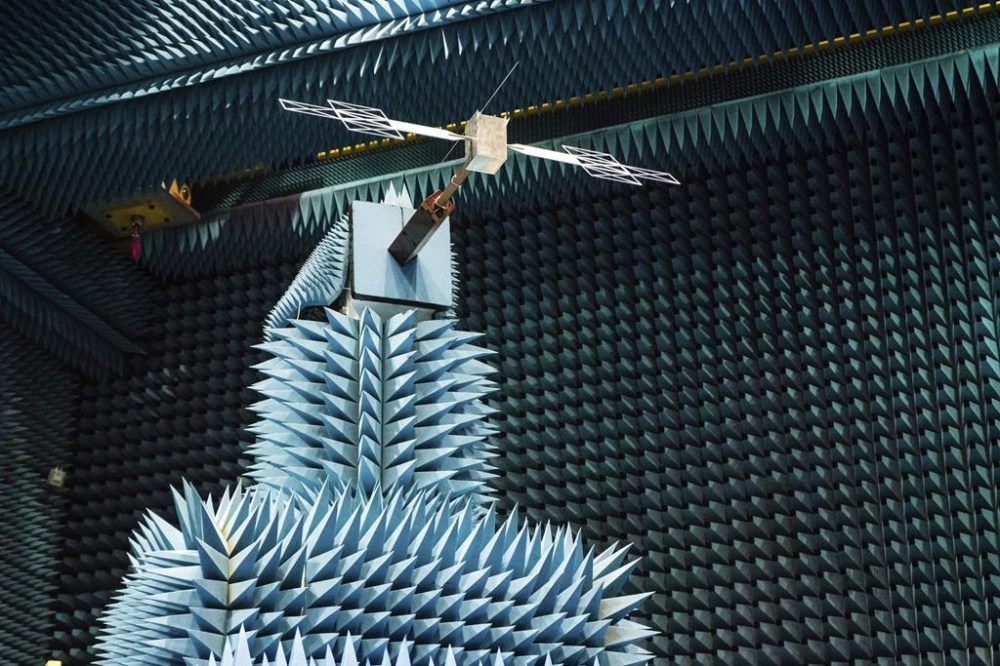
Juice, short for Jupiter Icy Moons Explorer, won’t reach the giant planet until 2031. It’s taking a roundabout path to get there, including gravity-assist flybys of Earth and our moon, and Venus.
The radar antenna is needed to peer beneath the icy crust of three Jupiter moons suspected of harboring underground oceans and possibly life, a major goal of the nearly $1.8 billion mission. Its targets include Callisto, Europa and Ganymede, the largest moon in the solar system.

The space agency said everything else is going well with the spacecraft, about the size of a small bus. A radio antenna, solar panels and a 35-foot (10.6-meter) boom for measuring Jupiter’s magnetic field have all been successfully deployed.
___ The Associated Press Health and Science Department receives support from the Howard Hughes Medical Institute’s Science and Educational Media Group. The AP is solely responsible for all content.