

22 dead women, no names: Interpol seeks clues on cold cases
Advertisement
Read this article for free:
or
Already have an account? Log in here »
To continue reading, please subscribe:

Digital Subscription
One year of digital access for only $205*
- Enjoy unlimited reading on winnipegfreepress.com
- Read the E-Edition, our digital replica newspaper
- Access News Break, our award-winning app
- Play interactive puzzles
*First annual payment billed as $205.00 + GST for one year. This annual subscription will automatically renew at $233.00 + GST every 52 weeks (10% off the regular annual price of $259.35). Offer available to new and qualified returning subscribers only. Cancel any time.
To continue reading, please subscribe:
Add Free Press access to your Brandon Sun subscription for only an additional
$1 for the first 4 weeks*
- Enjoy unlimited reading on winnipegfreepress.com
- Read the E-Edition, our digital replica newspaper
- Access News Break, our award-winning app
- Play interactive puzzles
*Your next Brandon Sun subscription payment will increase by $1.00 and you will be charged $17.95 plus GST for four weeks. After four weeks, your payment will increase to $24.95 plus GST every four weeks.
Read unlimited articles for free today:
or
Already have an account? Log in here »
Hey there, time traveller!
This article was published 10/05/2023 (1232 days ago), so information in it may no longer be current.
PARIS (AP) — The 22 women mostly met violent deaths. Their bodies, some dismembered, were found in Germany, Belgium and the Netherlands over a span of 43 years — the most recent in 2019. Police say some showed signs of abuse or starvation.
But who they were is unknown, frustrating detectives’ hunts for their killers.
Police hope that may change with the launch Wednesday of Operation Identify Me. The international appeal with Interpol is seeking public help to put names to the women. Such a breakthrough would, at a minimum, enable police to no longer have to identify the victims by their distinguishing features or apparel — “the woman with the flower tattoo,” “the woman with the artificial nails” — or locations where their remains were discovered.
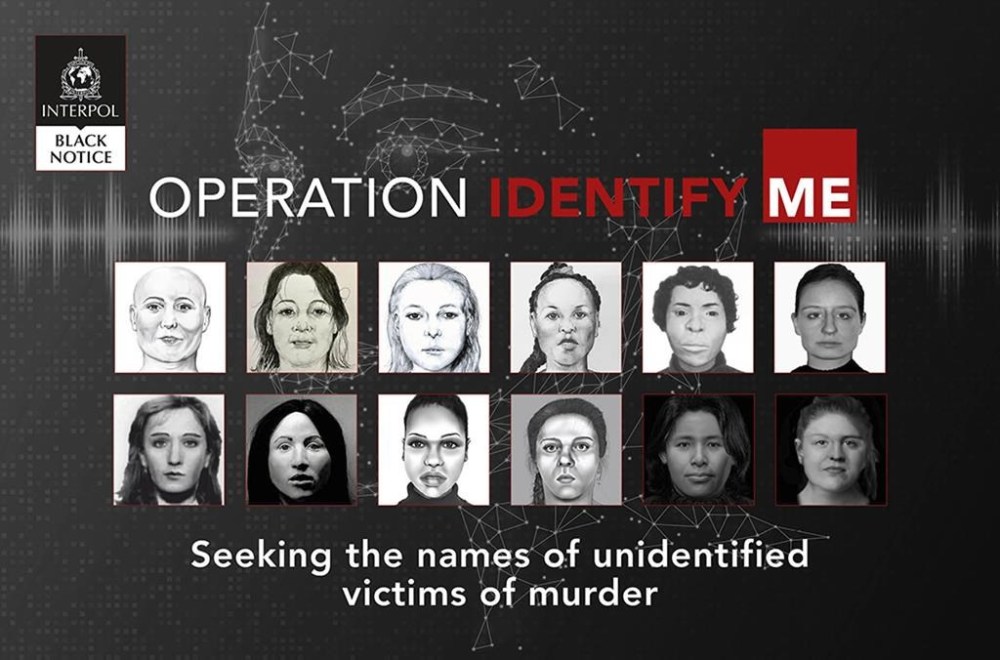
The oldest of the cold cases, “The girl in the parking lot,” dates back to 1976. Her body was found along the A12 highway in the Netherlands. She is believed to have been between 13 and 20 years old when she died. Interpol, the international police liaison organization based in Lyon, France, distributed black-and-white facial reconstructions of some of the victims. Hers showed a young woman with long, dark hair and bright eyes.
In a statement that quoted Dutch, German and Belgian police, Interpol said some of the women are believed to have come from Eastern Europe and that their bodies were possibly left in Belgium, the Netherlands and Germany to confound investigations.
“Most of the 22 victims died violently, and some were also abused or starved before they died,” Dutch police said.
Police hope that learning their names might also provide evidence about possible perpetrators. It might also allow them to establish whether any of the cases are linked.
“In similar investigations, establishing the victim’s identity ultimately has led to the arrest of a suspect,” said Anja Allendorf of the German police.
Interpol is making details about each case public on its website, at www.interpol.int/IM. As well as facial reconstructions of some of the women, it also includes images of jewelry and other items found with their remains, and contact forms for people who may have any information about the cases.
Susan Hitchin, who coordinates Interpol’s DNA unit, said identifying the women could help bring closure to their family members.
“It’s horrendous to go all these years without having any news, not knowing what’s happened. And however dreadful it may be to get that confirmation that their loved one has died, it is part of an important process in order to grieve and to move forward,” she said in a phone interview.
“Hopefully a member of the public will able to bring some new elements that the police can use that will ultimately provide the identity to these victims and ideally help lead to the perpetrator, if there is one.”